Performing Arts · Peking Opera
Peking Opera
The Sound of Oriental Grand Opera — And Where You Can See It
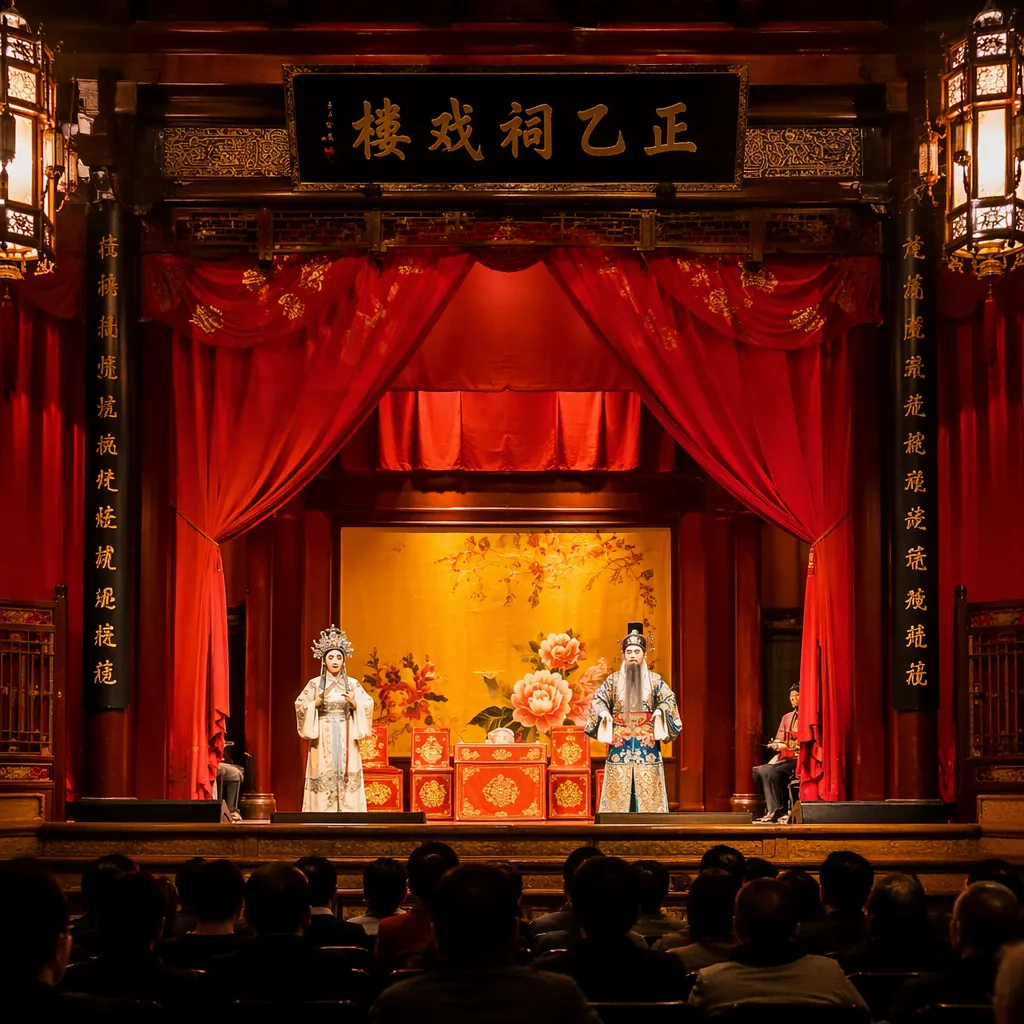
You step into a two-hundred-year-old opera house. The wooden floorboards creak beneath your feet. The air is filled with the faint scent of tea and aged timber. Then the gongs ring out — "Clang! Clang! Clang!" — and a painted face emerges from the wing. You freeze. Not because you don't understand, but because of that impact. You don't need a translation.
The audience is already full: well-dressed elderly locals who have been coming here for decades, tourists with cameras dangling from their necks, young parents with children who have never seen anything like this. Everyone is waiting for something. The entire theater hums with anticipation, like a balloon waiting to be popped.
The lights dim. Three beats of gongs and drums ring out — "Clang! Clang! Clang!" The sound seems to rise from deep underground, vibrating through your chest. It doesn't come from speakers — it comes from the musicians on stage, dressed in black Chinese gowns, some striking gongs, some beating drums, some drawing a bow across the huqin fiddle. The sound cuts straight through the air, raw and alive.
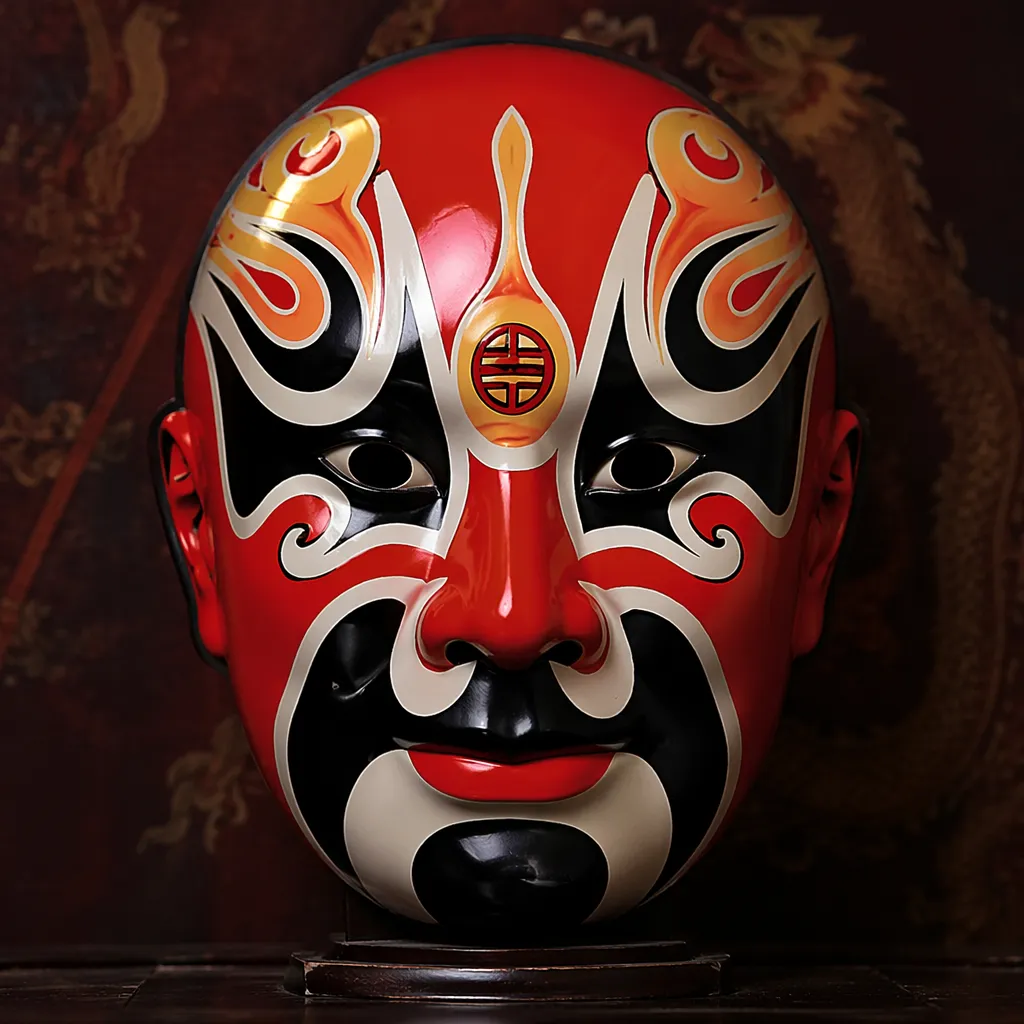
Every color tells a story — red for loyalty, black for integrity, white for treachery
When the lights come back up, a painted face emerges from the wing. The eyes on the mask are larger than a bowl, their corners raised upward as if they could see through everything. The eyebrows are painted into inverted V-shapes, like two small knives. The face is red — the color of loyalty, the color of courage, the color of Guan Gong himself. The performer opens his mouth to sing, and a sound emerges that seems to drift from very far away, yet grow from inside your own heart.
This is Peking Opera. Not the fragments you may have glimpsed in movies, not the static exhibits in museum glass cases. It is a living, breathing art — still performed, still evolved, still capable of stopping time for two hours in a packed theater. It has been performed in China for over two hundred years, and in this moment, you become part of those two hundred years.
In 2010, UNESCO inscribed Peking Opera on the Representative List of the Intangible Cultural Heritage of Humanity. Alongside Traditional Chinese Medicine, calligraphy, and martial arts, it is known as one of China's "Four Great National Treasures" — a comprehensive performing art that integrates singing, speaking, acting, and martial arts into a single, breathtaking whole.
If we must use a familiar comparison, Peking Opera is "the opera of the East." But this explanation is not quite accurate — it is far richer than Western opera. Opera is primarily about singing, but Peking Opera demands four essential skills known as the "four gongfu": chang (singing), nian (speaking), zuo (acting), and da (martial arts). Think of it as Broadway musical, Shakespearean drama, and a circus combined — the premium version.
"Chang" is singing, but not random melody. Peking Opera's vocal music is strictly standardized, built on two major tune systems: Xipi and Erhuang. Xipi has a bright, ornate register, often used for lyrical scenes and joyful emotions — Princess Yang Gui Fei dancing in the imperial garden. Erhuang is darker, more solemn, expressing suppressed sorrow — The Injustice of Dou E, which will wring tears from your eyes without you realizing it. Within these systems, the rhythm shifts through manban (slow), yuanban (moderate), and liushui (flowing water, fast) — each changing the emotional temperature of a scene.
"Nian" is spoken dialogue — but it is no ordinary speech. It is rhythmic, musical language. A skilled performer can draw applause with a single line. In Peking Opera, even the way a character speaks reveals their personality: a dignified minister uses precise, measured tones; a comedic servant rattles off lines like a firecracker.
"Zuo" is the art of movement — every gesture, every glance, every tilt of the body carries meaning. A performer does not need to speak to make you feel anger, sorrow, or joy. There are specific names for hand positions — "orchid fingers" for a gentle lady, "sword fingers" for a warrior. A single table on stage can become a bed, a mountain, or a city wall. A performer circling with a horse whip in hand represents traveling ten miles. This is Peking Opera's unique "virtual" quality — achieving the complex through the simple, winning more with less.
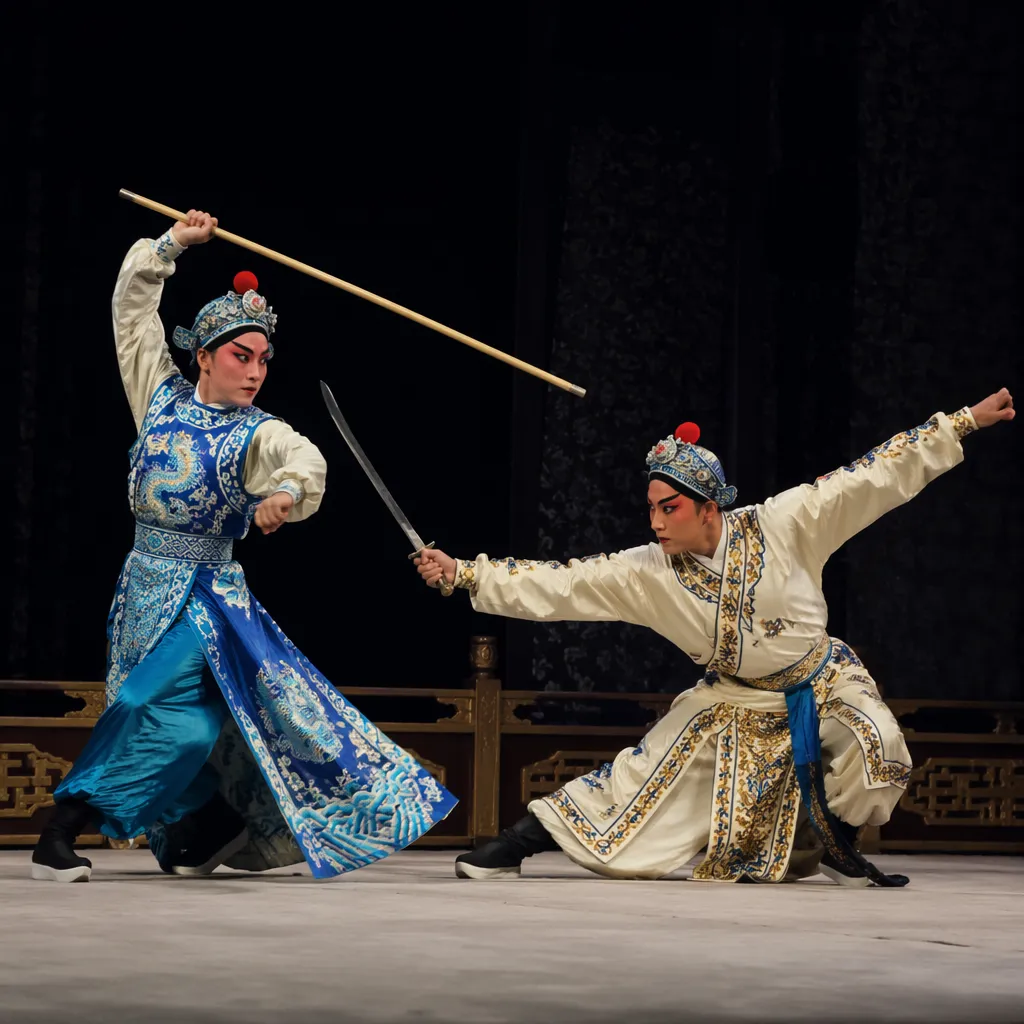
The martial arts of Peking Opera are real skill — tumbling jumps trained since childhood, swords wielded with decades of practice
"Da" is martial arts — and this is no movie choreography. Those tumbling jumps are real kung fu, trained since the age of six. Those sword fights use real weapons. In the classic "Battle of Changbanpo," a single performer executes thirty-eight consecutive front flips on stage. When he lands, the audience erupts with "Hao!" — a roar of approval that sounds like a World Cup goal.
The face paints — the lianpu — are a language of their own. Color is code: red stands for loyalty and courage (Guan Yu, the god of war); black for integrity and uprightness (Zhang Fei, the righteous general); white for treachery and cunning (Cao Cao, the cunning strategist); blue and green for heroic outlaws; gold and silver for gods and spirits. You do not need to understand Chinese to know who is good, who is evil, and who is divine.
Peking Opera roles are divided into four main types, called "hangdang." Sheng are male roles — subdivided into laosheng (bearded elders, singing with natural voice), xiaosheng (handsome young men, singing in falsetto), and wusheng (martial men). Dan are female roles — from the dignified qingyi (wearing dark robes) to the lively huadan (colorful costumes) and the martial daomadan (horse-riding warrior women). Jing are the painted-face roles — powerful male characters whose elaborate facial patterns are the most iconic visual element of the entire art form. Chou are the comic roles, white patches on their noses, providing laughter and wit between the drama.
Male roles — from dignified elders to handsome youths
Female roles — the most beautiful makeup on stage
Painted-face roles — vivid colors, powerful voices
Comic roles — wit and humor between the drama
Then there are the costumes — "xingtou" — which are magnificent. The mang (imperial robe) is embroidered with dragons and waves, reserved for emperors and high officials. The kao (armor) transforms a performer into a battlefield general, with flags on the back that flutter as he moves. Every garment follows strict rules of color and pattern, telling the audience at a glance the character's rank, status, and personality. The emperor wears yellow; high ministers wear red; young scholars wear sky blue; warriors wear the armor of the kao.
Aim for center-front seats — the stage is low, and back rows obscure the performers' subtle expressions. Arrive 30 minutes before showtime to read the synopsis. Start with a martial-arts-heavy piece like "The Battle of Changbanpo" or the humorous "The Crossroads" — they rely less on lyrics and more on breathtaking physical performance. And if you can, bring binoculars: the micro-expressions of a dan performer's "orchid fingers" are worth zooming in on.
The world once had three great dramatic traditions: Greek tragedy and comedy, Indian Sanskrit drama, and Chinese opera. The first two have faded into history. Chinese opera has not only survived but evolved into more than three hundred regional forms — and Peking Opera is the brightest jewel among them.
In 1790, during the reign of Emperor Qianlong of the Qing Dynasty, four opera troupes from the south — Sanqing, Sixi, Chuntai, and Hechun — arrived in Beijing to celebrate the emperor's 80th birthday. They stayed, collaborated, and fused. They absorbed elements from Kunqu, Qinqiang, and the Han tune of Hubei province, blending the best of China's many regional operatic traditions. Over the next several decades, Peking Opera was born.
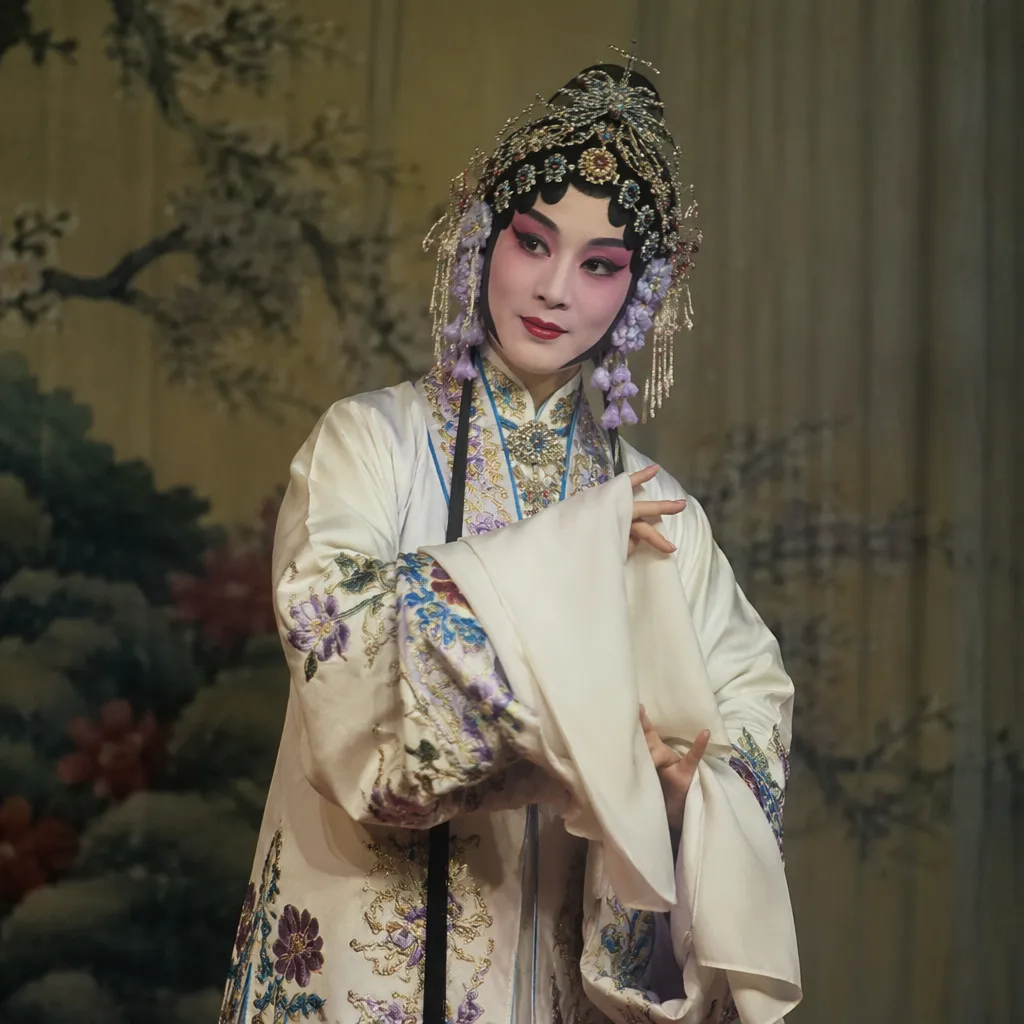
Mei Lanfang, who brought Peking Opera to Broadway in 1930 — "Our performance itself is speaking"
In the twentieth century, Peking Opera produced a titan: Mei Lanfang. In 1930, he crossed the Pacific and performed on Broadway in New York — "Fishing at the River," "Sword Dance," Kunqu. The New York Times asked him: "You have no dialogue. How can the audience understand?" Mei Lanfang smiled and answered: "Our performance itself is speaking." That year, he showed America that drama does not need words — it can tell a complete story through the body, through the eyes, through a single gesture.
Mei Lanfang became a global legend, and Peking Opera became China's brightest cultural calling card. His name is still taught in art classrooms around the world. Today, Peking Opera troupes tour internationally, selling out theaters from London to Tokyo to New York — proving that the language of performance is truly universal.
Mei Lanfang's New York run lasted two weeks at the 49th Street Theatre. Tickets sold for $3.85 — expensive for the time, yet every show was packed. The New York critics, notoriously hard to please, wrote rapturous reviews. One called his performance "the most exquisite thing I have ever seen on any stage." Mei Lanfang returned to China having proven what he had always believed: that beauty needs no translator.
You have read the stories and seen the images. Now, where can you experience this for yourself? Here are the finest venues in Beijing and Shanghai, each with its own character and charm.
Just east of Tiananmen Square, this is the most convenient venue for visitors. Shows every night, tickets from 80 yuan (about $11 USD). Every performance includes Chinese and English subtitles — perfect for first-timers. Classic works like "Princess Yang Gui Fei" and "The Empty City Strategy" are regularly staged here.
Named after the master himself, on the western Second Ring Road. World-class acoustics, elegant classical architecture. Tickets from 100 yuan. The National Peking Opera Company's finest performers appear here — the orchestra seats in particular offer an unforgettable experience.
A tea-house style theater where you drink tea while watching the show — relaxed and lively. Tickets from 120 yuan include tea and snacks. Chinese and English subtitles are provided. The atmosphere is less formal and wonderfully immersive.
Over three hundred years old, this is one of China's oldest wooden opera theaters — a "living fossil." Carved wooden windows, vermilion columns, an ancient stage. Tickets are 200-300 yuan, and advance booking is essential. Walking through its doors is like stepping back a century.
Known as the "First Theater of the Far East," built in 1926. Mei Lanfang, Cheng Yanqiu, and Xun Huisheng all performed here on this very stage. Tickets from 120 yuan, with outstanding performances every night by the Shanghai Peking Opera House troupe.
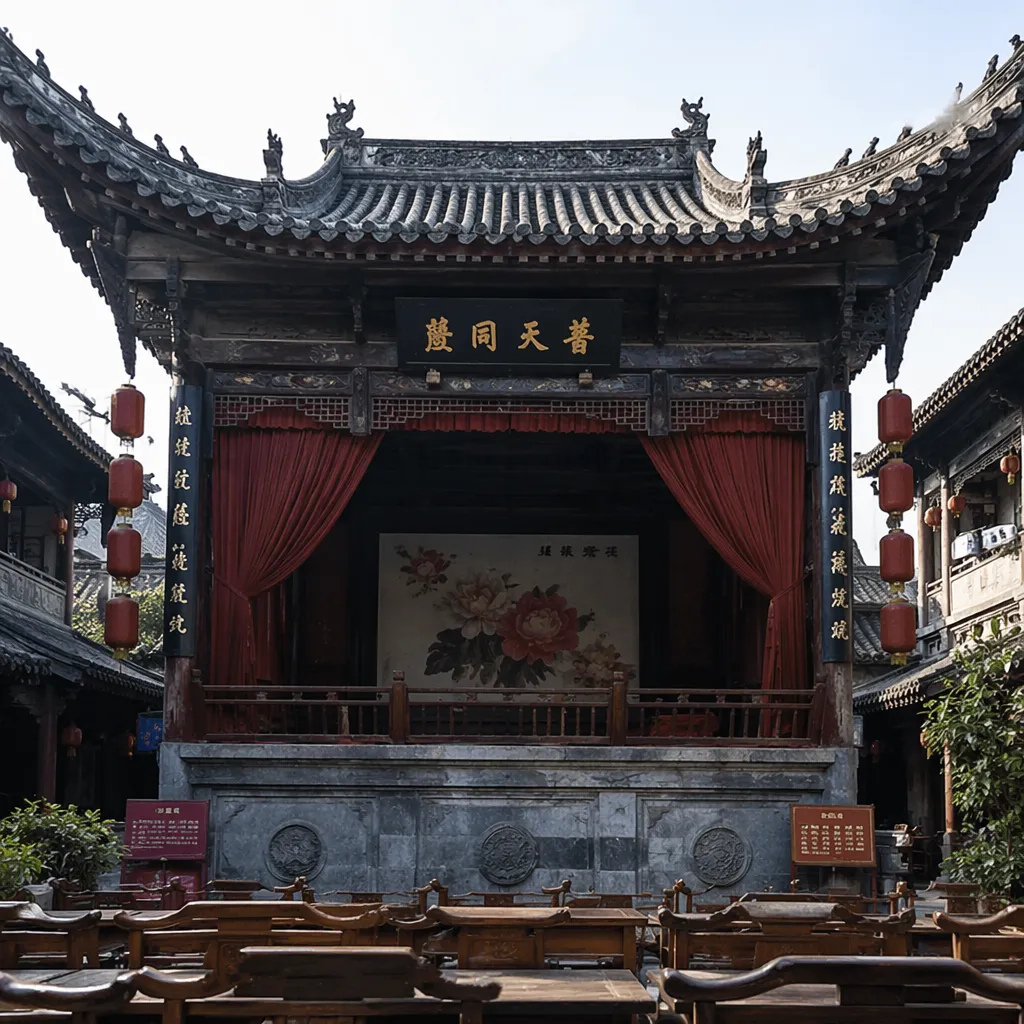
A traditional opera house — carved wood, vermilion columns, and two centuries of stories on stage
You walk out of the theater. The autumn evening breeze brushes against your face. Those painted eyes from the stage still linger in your mind — that raised eyebrow, those colors, that voice. The gongs and drums still echo in your ears — "Clang! Clang! Clang!" — each beat changing the rhythm of your heart. You glance back. The theater lights are still on, like history waving goodbye.
Beauty is universal. Those gestures, those glances, those melodies — they all speak the most universal feelings of human experience. Throughout history, life is opera, and opera reflects life. A few people on a small stage, telling the grandest stories. From galloping horses to battlefield warfare, from garden pavilions to palace halls — the charm of Peking Opera must be experienced in person, with your own eyes and your own ears.
Next time you visit China, add "watch a Peking Opera show" to your itinerary. You will not regret it.
Center-front seats are best — the stage is low, and back rows miss the performers' expressions. Arrive 30 minutes early. For first-timers, start with a martial-arts piece or a comedy — they are easier to follow without knowing the language. Look for the "Hao!" shouts from the audience: they are the Chinese equivalent of "Bravo!" — and you are absolutely allowed to join in.