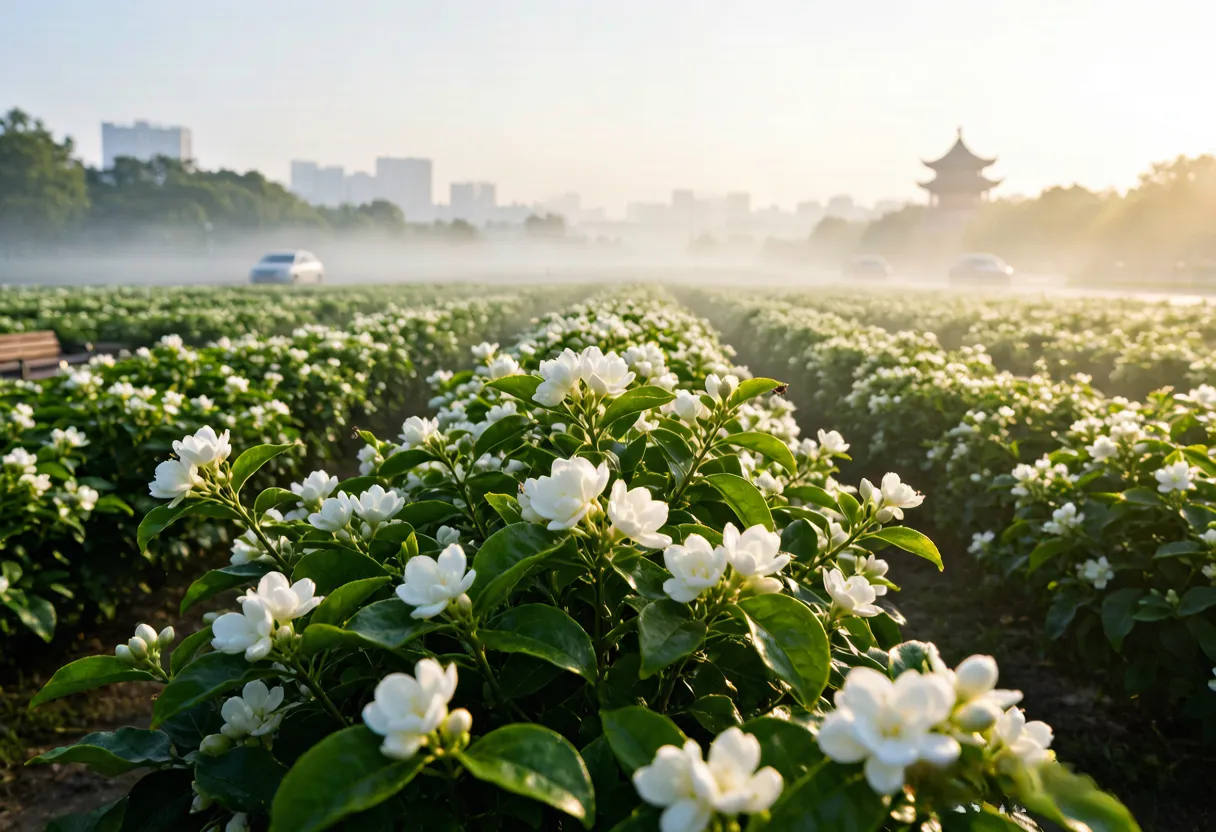
Folk Song · Jasmine Flower
The Global Journey of a Jasmine Flower
From Yangzhou's Alleyways to the World Stage
June in Yangzhou. The air carries a faint, sweet fragrance. You walk along the stone-paved road of Dongguan Street, flanked by Ming and Qing dynasty houses. Then you hear the singing — not from a phone, not from a speaker, but drifting from an old teahouse deep in the alleyway. "What a beautiful jasmine flower..." And suddenly you realize: you have heard this song everywhere — at Vienna's Golden Hall, at the Olympics, at history's most momentous ceremonies. But you have never asked: where did this song come from?
The answer begins in Jiangsu Province, in the cities of Yangzhou and Nanjing — places you may never have visited, yet whose melody you already know by heart.
Yangzhou is a city that breathes with jasmine. In 2003, the Yangzhou Municipal People's Congress designated "Jasmine Flower" as the official city song — a rare honor that reflects how deeply this melody is woven into the city's identity. You can hear it everywhere: at Slender West Lake, where boat ladies sing it from the bows of painted boats as they glide across the water, their voices carrying clearly across the misty surface. On Dongguan Street, where folk artists in old teahouses play it on the pipa, the sound carrying the patina of ages. At Mingyue Lake Park in the evening, where residents gather spontaneously — no microphone, no stage — and sing it together in the most natural voices imaginable.
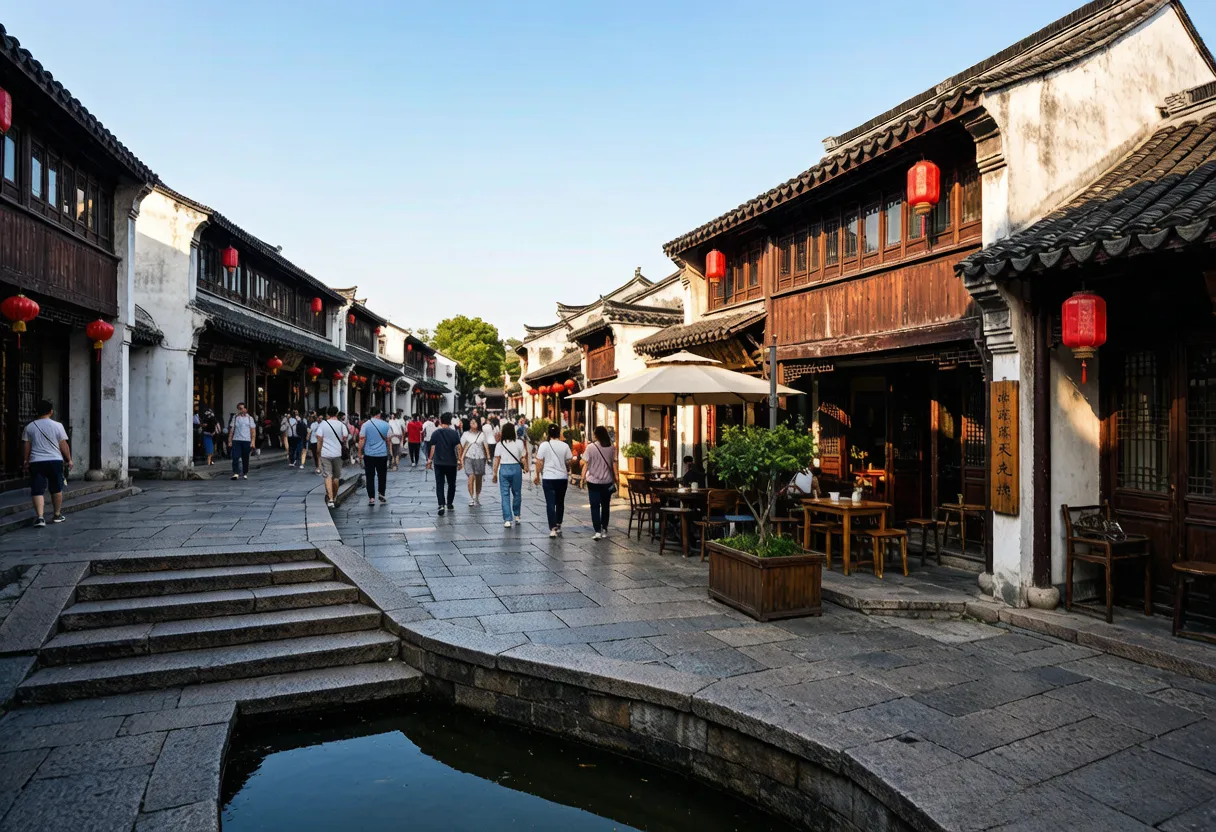
Dongguan Street — where the melody of jasmine still drifts from old teahouses after two centuries
In 2026, Yangzhou launched an AI Folk Song Experience Museum where visitors can "harmonize" with an AI that performs "Jasmine Flower" in opera, modern, and world-music styles. The ancient city is telling its oldest story with the most cutting-edge technology. And the "Follow Jasmine Flower to Tour Yangzhou" themed route connects Grand Canal heritage sites with the song's landmarks — the entire city becomes a living museum of its own melody.
Dongguan Street — old teahouses with pipa performances. Slender West Lake — rent a painted boat (60-100 yuan) and listen to the boat lady sing. Mingyue Lake Park — evening chorus at sunset, free and spontaneous. Shaoyaoyuan Storytelling Hall — inside Changle Inn on Dongguan Street, enjoy Yangzhou Qingqu version with traditional tea and snacks.
The story begins over two hundred years ago, during the Qianlong period of the Qing Dynasty. Farmers working the fields around Yangzhou and Nanjing hummed a simple tune while they labored. The song was originally called "Fresh Flower Tune" — Xianhua Diao — with straightforward lyrics: "What a lovely flower, what a lovely flower, everyone praises when the flower blooms..."
The melody was passed down orally, generation to generation, until 1837, when a man named Chu Xiang Zhuren from Yizheng, Jiangsu, compiled a book called "Collection of Little Wisdom." He included the musical notation of "Fresh Flower Tune" — the earliest written record of the melody that would become "Jasmine Flower." Nearly two hundred years later, we can still read those notes and recognize the song.
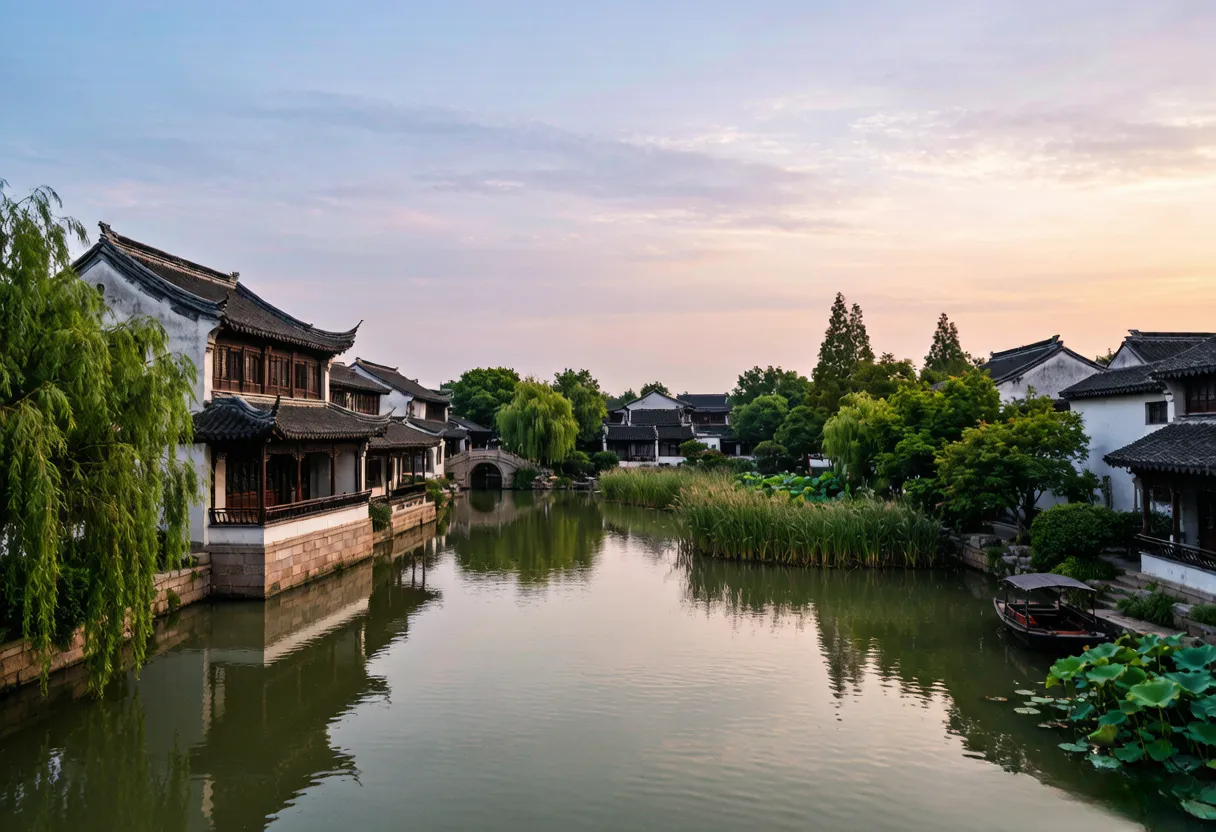
The canals and gardens of Jiangsu — where a simple field tune became the world's favorite Chinese melody
But the person who truly introduced this song to the world was an Englishman. In 1804, British diplomat John Barrow published a book called "Travels in China" after years of traveling through the country. In it, he introduced "Jasmine Flower" to the Western world, writing: "This is the most popular song in China, almost every Chinese child can sing it. It has the status of a national anthem."
Barrow translated "Moli Hua" as "Moo-Lee-Hwa," but the melody he transcribed was preserved intact. The book caused a sensation across Europe. For the first time, people in London, Paris, and Vienna heard a song from the distant East — a melody that flowed like a clear spring through European concert halls.
"This is the most popular song in China, almost every Chinese child can sing it. It has the status of a national anthem."
The earliest known musical score of "Jasmine Flower" appears in the 1837 book "Collection of Little Wisdom" (Xiao Hui Ji) by Chu Xiang Zhuren. The notation uses the traditional Chinese gongche system — characters representing notes rather than the Western staff. Modern musicians have reconstructed the original, and it is unmistakably the same melody we know today. The song has been passed down through at least twelve generations of Chinese singers.
Forty years after Barrow's book, an Italian read about this song. His name was Giacomo Puccini — one of the greatest opera composers in history. He never visited China in his lifetime, but he was captivated by the simple, elegant melody of "Jasmine Flower." He decided to weave it into his final opera, "Turandot" — the story of a Chinese princess.
In 1926, "Turandot" premiered at La Scala in Milan. When the orchestra began the melody of "Jasmine Flower" in the first act, the entire theater fell silent. An Italian composer who had never set foot in China had used a Chinese folk song — born in the rice fields of Yangzhou — to write an opera about China. In that moment, the melody completed its journey from the soil of Jiangsu to the heart of European opera. It is one of the most beautiful stories of East-West cultural exchange ever told.
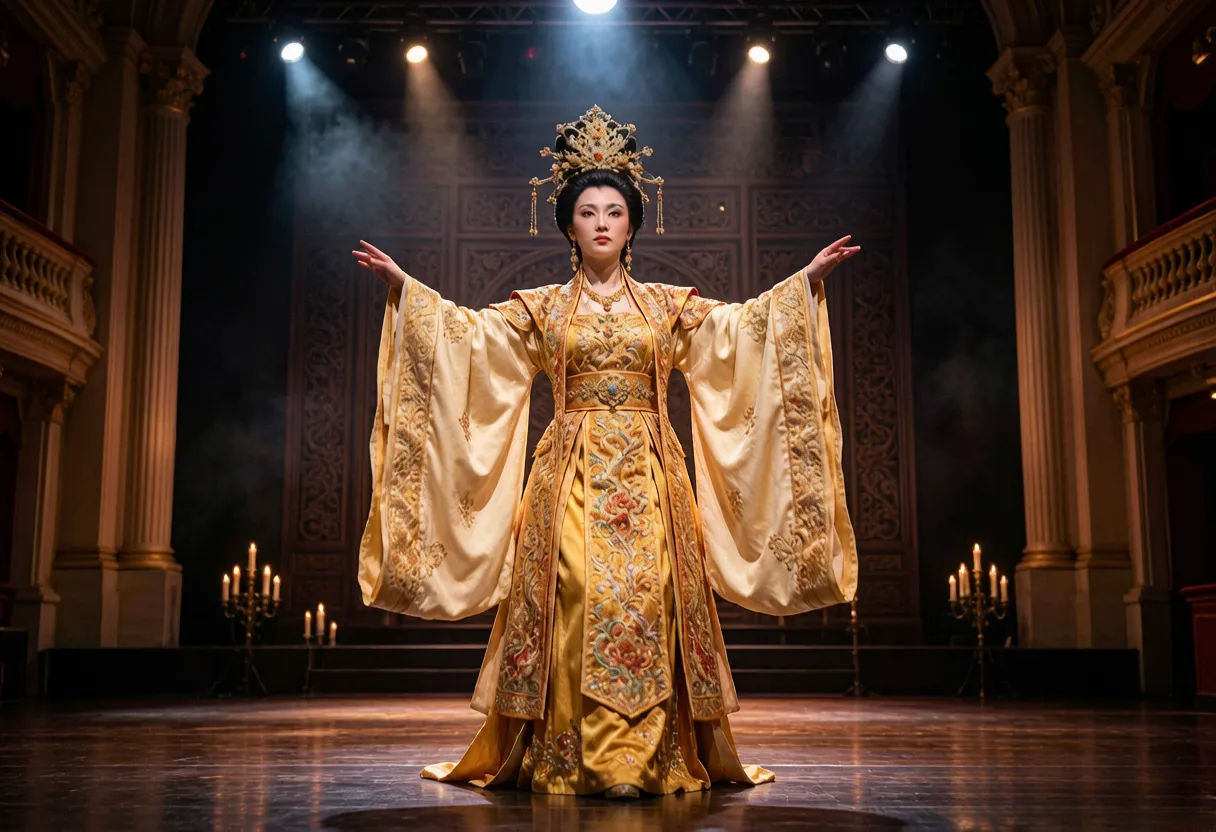
Puccini's Turandot (1926) introduced "Jasmine Flower" to opera audiences worldwide — an Italian composer's tribute to China
From that point on, "Jasmine Flower" became China's musical ambassador to the world. Its journey is a timeline of modern Chinese history itself:
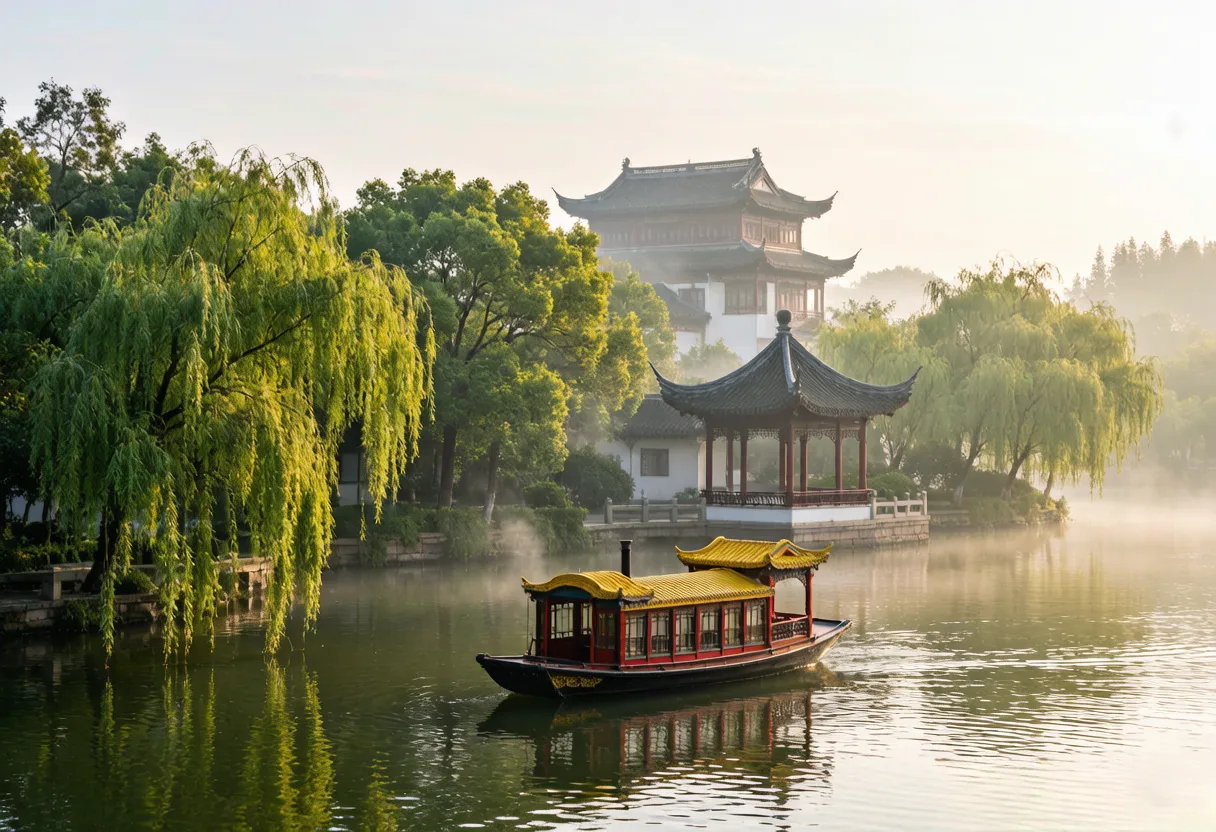
Slender West Lake — listen to the melody from a painted boat as mist drifts across the water
The lyrics have been translated into more than thirty languages. During the Soviet era, it was adapted into a waltz called "MOCKBA," with new lyrics set to the same melody — a Chinese folk song that found itself on the Cold War political stage. Sarah Brightman has performed it. Yo-Yo Ma has recorded it. It has been played by symphony orchestras, street musicians, and anything in between.
But ask almost any foreigner on the street which Chinese city this song comes from, and almost no one can answer. That is the most magical thing about "Jasmine Flower": the whole world has heard its melody, but its homeland has always been a secret — waiting for you to discover it.
"I first heard this song in Puccini's Turandot. Later I visited China and heard it sung by a boat lady on the Grand Canal in Yangzhou. I cried. It's like hearing an old friend in a foreign land."
Why jasmine flower? Hidden in the lyrics is the Chinese understanding of beauty. The fragrance of jasmine symbolizes something beautiful; picking it to give to another symbolizes sharing and generosity. This is not triumphant singing — it is gentle, understated, reserved. And that, exactly, is the Chinese aesthetic: subtle yet profound. The song does not shout its beauty; it offers it quietly, like the scent of jasmine on a summer evening, and waits for you to notice.
Hear the boat lady sing at Slender West Lake. Explore Dongguan Street and listen to pipa in an old teahouse. Visit the AI Folk Song Experience Museum (2026).
Visit the Jasmine Flower Festival at Xiucheng Park (April-May, 29.9 yuan). See the Qinhuai River at night with painted boats and folk musicians.
Nianhua Bay's "Jasmine Flower Boat" night cruise — the most beautiful night cruise in China, many say. Classical garden concerts at Suzhou's Tongli water town and Tuisi Garden.
Three hundred years ago, this song set off from the alleyways and fields of Jiangsu and went out to the world. It was translated into over thirty languages, adapted into a waltz, written into an Italian opera, performed at Olympic ceremonies, and witnessed history at the handovers of Hong Kong and Macau. But it never forgot its roots. Today, you can still hear it on Yangzhou's Grand Canal, on Nanjing's Qinhuai River, in Wuxi's Zen town, in Suzhou's classical gardens.
The same melody, but the feeling at each place is different. Some melodies can only be truly understood when you stand on the land where they were born.
Best season: April-June (jasmine season) and September-November (pleasant autumn). Getting there: High-speed rail from Shanghai to Yangzhou takes 1.5-2 hours; Shanghai to Nanjing about 50 minutes. Don't miss: Painted boat at Slender West Lake (60-100 yuan), tea at an old teahouse on Dongguan Street, the AI Folk Song Experience Museum, and Nianhua Bay night cruise in Wuxi.