Architecture · Imperial Palace
The Secrets of the Forbidden City
Why the Palace Museum Is Worth a Special Trip to Beijing
Six hundred years ago, an emperor named Yongle decided to move his capital to Beijing. With a single decree, a hundred thousand craftsmen left their hometowns and spent fourteen years building a city. How big was this city? 720,000 square meters, 9,999 rooms — legend has it that the Jade Emperor's heavenly palace had 10,000 rooms, so the emperor dared not surpass that number, building one less. Six centuries later, this city still stands in the heart of Beijing — the red walls undimmed, the golden tiles still gleaming. It has had twenty-four masters, witnessed the rise and fall of dynasties, the smoke of war, and the birth of new China. It is the Forbidden City. The Palace Museum.
This is the largest and most complete ancient palace complex still standing anywhere in the world. Not a replica, not a scaled-down version — it's six hundred years of real, intact history. Every step you take within its walls is measured against the weight of history. Every brick you touch has borne the footsteps of emperors. The Forbidden City belongs to no one — it belongs to time. And all you need to do now is push open that door.
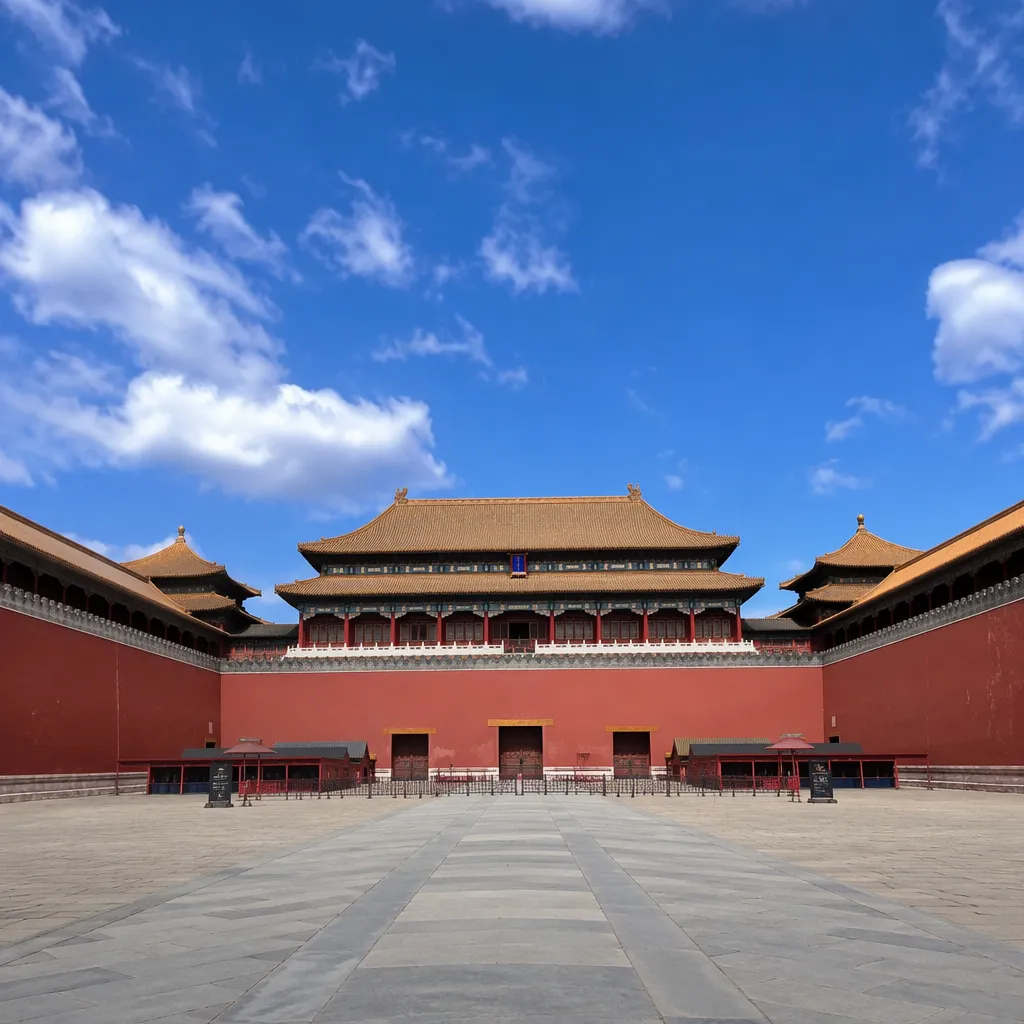
From the Meridian Gate to the Shenwu Gate, from the Hall of Supreme Harmony to the Imperial Garden — every corner awaits you. This is a place you must visit yourself, see yourself, feel yourself. No matter how high-definition the photos online, they cannot capture that tangible sense of history. No matter how vivid the words, they cannot match the shock of standing before the hall itself.
The moment you enter through the Meridian Gate, you step into the Forbidden City. First to greet you is the Hall of Supreme Harmony — the heart of the Forbidden City, the emperor's home. This hall is the largest single building in the entire palace complex, spanning eleven bays front to back and five bays deep, with its ridge towering thirty meters high like a small mountain.
Inside, seventy-two Phoebe Zhennan pillars support the entire space — each pillar carved from a single Phoebe Zhennan tree over a thousand years old. Reach out and touch one: the wood grain is as fine as human skin, smooth and cool, with a subtle oily luster. Six hundred years ago, these trees were felled in the deep mountains of Sichuan and Yunnan, then transported along the Grand Canal all the way to Beijing. Each pillar was worth a fortune.
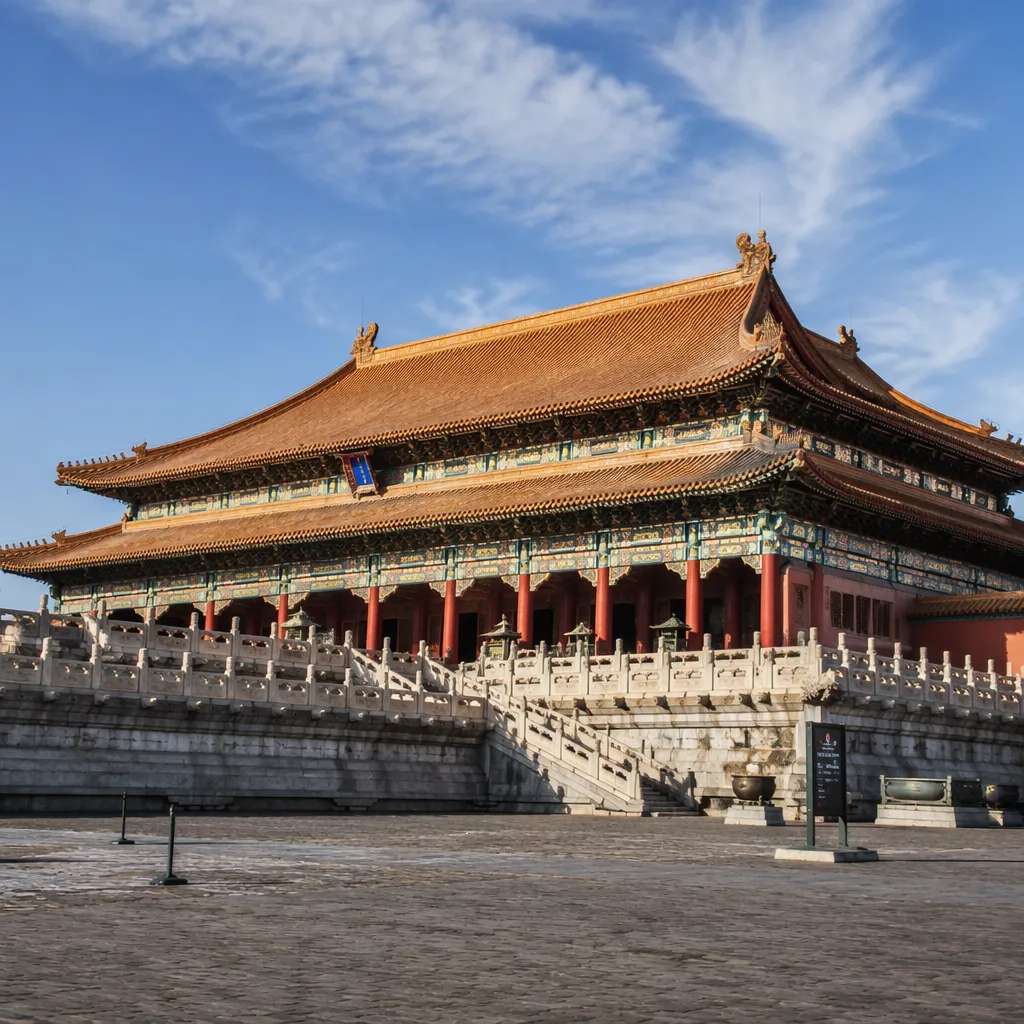
The heart of the Forbidden City — eleven bays wide, thirty meters high, six centuries of imperial power
On the ridge of the hall's roof sit ten ornamental beasts: dragon, phoenix, lion, celestial horse, sea horse, suanni, xiayu, xiezhi, douniu, and xingshi. These are the most ornamental beasts you'll find on any ancient Chinese building, representing supreme imperial authority. When the sun rises, the golden tiles reflect dazzling light so bright you have to squint. Try to imagine: six hundred years ago, in this hall, someone in bright yellow dragon robes sat on the dragon throne, with rows of ministers kneeling before them, shouting "Long live the Emperor!" What must that kind of authority have felt like?
In front of the Hall of Supreme Harmony sits a three-tiered white marble platform called the "Three Terraces." Each tier is surrounded by exquisite stone railings, with the panels carved with dragon, phoenix, and cloud patterns, and the column tops carved with mythical creatures. As you step onto the stairs, you'll notice deep grooves worn into the stone — marks left by countless people prostrating over centuries. Every step you take is on the thickness of history.
Walking out of the Hall of Supreme Harmony, your eyes will inevitably be drawn to a pair of bronze lions. These are among the most famous lions in the Forbidden City, cast during the Qing Dynasty under Emperor Qianlong. The male lion has an embroidered ball under his paw, while the female has a cub, symbolizing "eternal prosperity" and "abundant offspring."
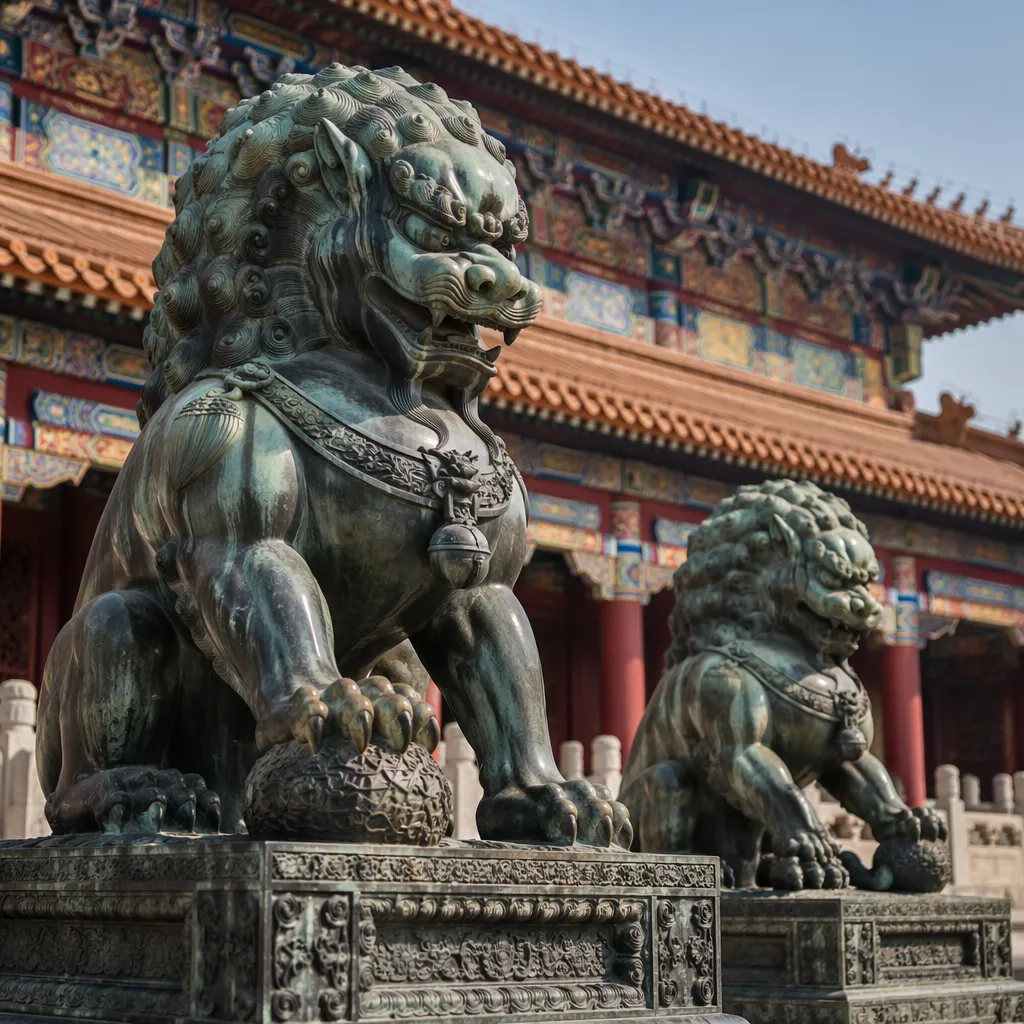
Six hundred years of silent guardians — their eyes have watched every visitor who passed through this gate
Get closer and you'll notice the lion's eyes protrude outward — this was intentional, crafted by craftsmen six hundred years ago so that they always seem to be watching every visitor. Those eyes, spanning centuries, remain bright and piercing. Wind sweeps across the plaza, stirring up fallen leaves that rustle loudly. Standing before them, you suddenly realize how small you are.
This pair of bronze lions witnessed the most glorious moments of the Forbidden City, as well as its most humiliating ones. In 1900, when the Eight-Nation Alliance invaded Beijing, Empress Dowager Cixi fled westward in panic, and the foreign powers pillaged and burned their way through the Forbidden City. But these lions still stand here, like silent guardians, keeping the secrets of this city.
Continuing deeper, you arrive at the Golden Water Bridge. This bridge spans the moat, with five stone bridges side by side. The middle one is the widest and most magnificent — the "Imperial Road Bridge" that only the emperor could use.
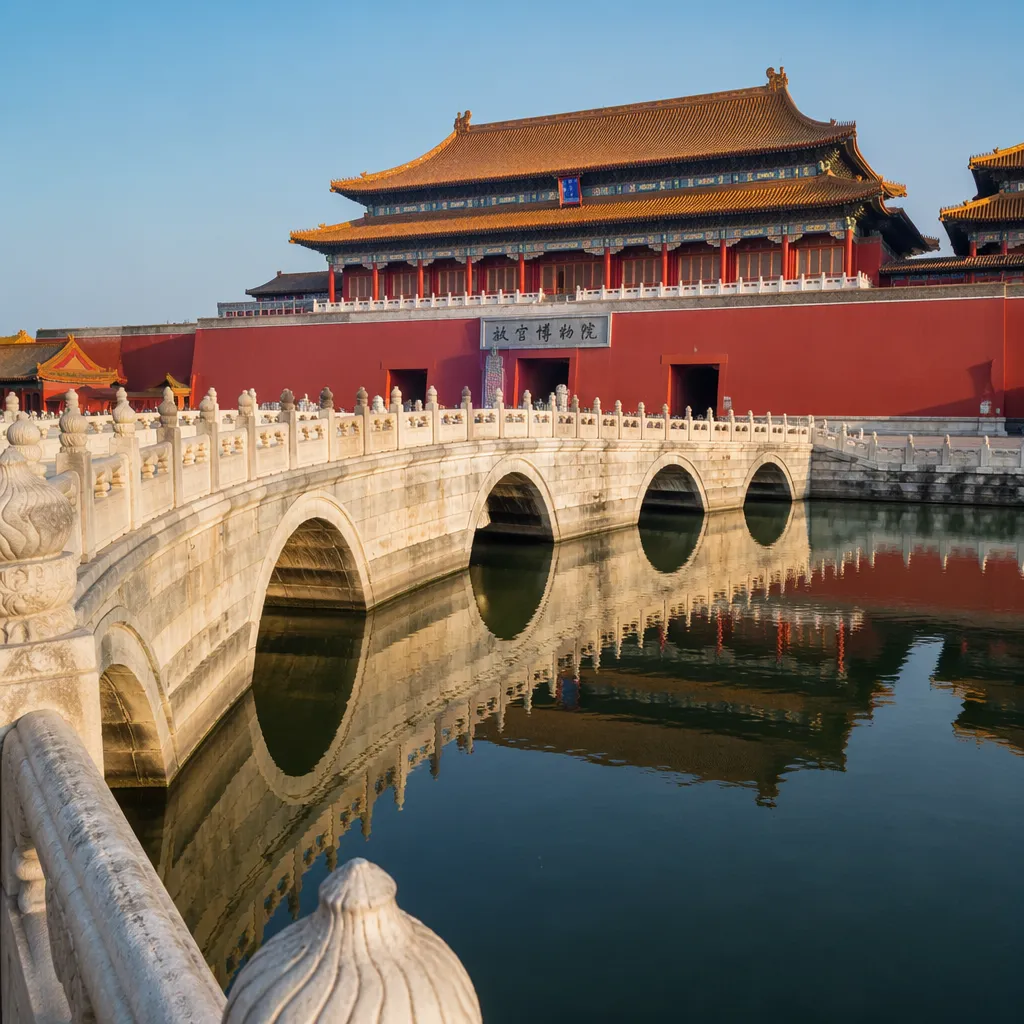
Five bridges, five paths — the middle one belonged only to the emperor
You step onto the middle bridge. The stone slabs beneath your feet are polished bright as mirrors, with some showing obvious depressions — footprints layered on top of each other over hundreds of years. Reach out and touch the bridge railing — stone, cold, carved with exquisite dragon patterns. The water beneath the bridge is flowing, clear enough to see koi fish swimming about.
Crossing the Golden Water Bridge brings you to the Meridian Gate — the main entrance of the Forbidden City and the gate with the highest specifications. The gate openings are U-shaped, also called "arch gates." The middle gate could only be used by the emperor; the empress could use it only once on her wedding day; and the top three scholars in the imperial examination could use it once on the day the results were announced. All other civil and military officials could only use the side gates.
Standing beneath the Meridian Gate, you can't help but look up. Those five gate openings are like five enormous mouths, waiting to swallow something. The folk saying goes "taken out through the Meridian Gate for execution" — though the actual executions took place at Caishikou to the west. But this saying alone is enough to inspire awe for the Meridian Gate.
If you're interested in cultural relics, the Clock and Watch Gallery is a must-see. Located in the Hall of Divine Purity, this gallery houses over 150 pieces of Qing Dynasty palace clocks and watches, all originally gifted to the Qing emperors from Britain, France, Switzerland, and other countries.
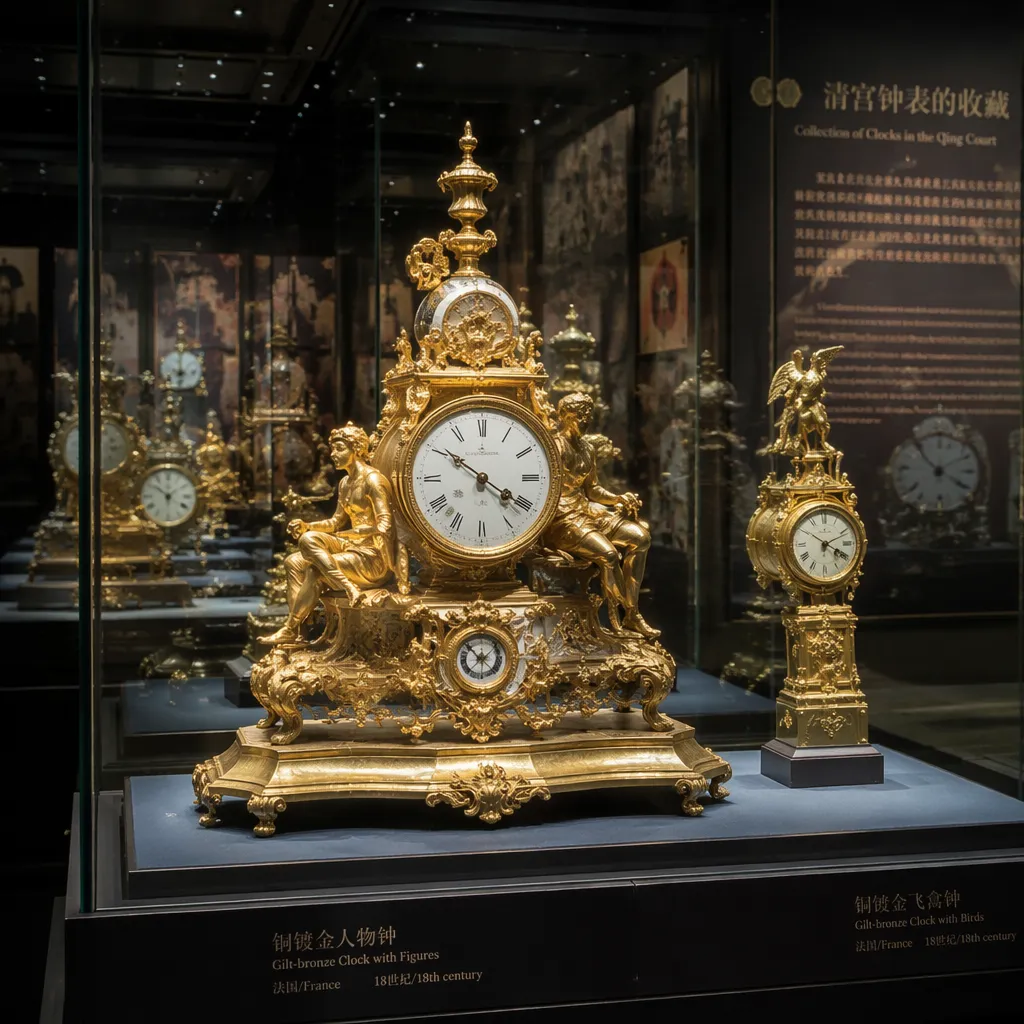
More than 150 palace timepieces — each one a masterpiece of craftsmanship from a different continent
Those clocks are truly wonders from another world. The copper-gilt enamel clocks from Britain feature exquisite floral patterns on their enamel faces; the automatons from France have small figures that emerge at scheduled times to strike the bells and announce the hour, while others feature tiny birds that pop out from among the flowers at the appointed time, chirping melodiously.
Most remarkably, all these clocks still work. Six hundred years later, they keep ticking. As you stare at an 18th-century British clock, you watch the hands move second by second, the tick-tock echoing clearly through the quiet exhibition hall. It suddenly hits you: these aren't just old objects — they are still-beating hearts.
Emperor Qianlong was obsessed with clocks and watches — the palace collected over 4,000 of them. He spent time appreciating these clocks every day and even personally participated in their design. These clocks weren't just timekeepers — they were artworks, witnesses to the cultural exchange between East and West at that time.
From the Clock and Watch Gallery, you can head to the Treasure Gallery. Located in the Hall of Supreme Clemency, this gallery displays precious cultural relics from the Qing Dynasty: gold and silver ware, jade, gemstones, lacquerware, and more. The most breathtaking is that golden pagoda.
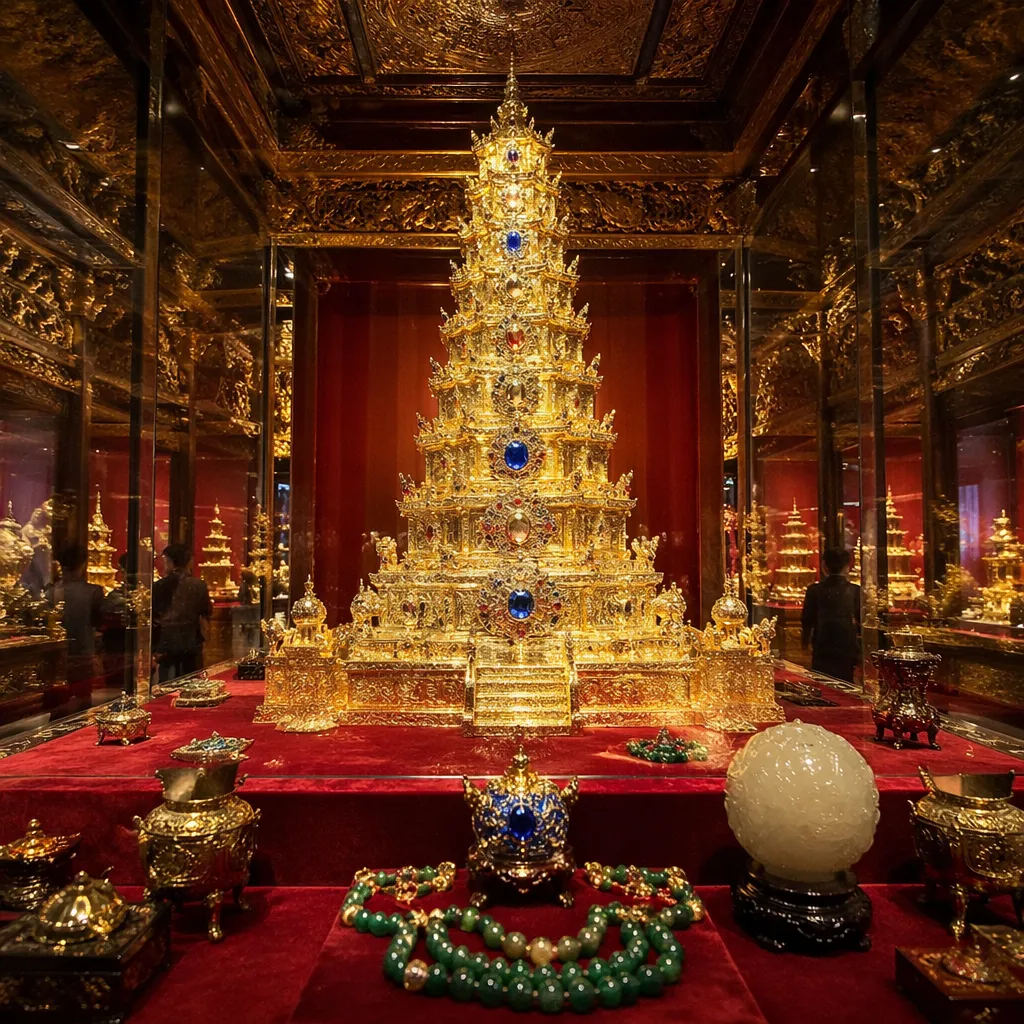
A six-meter pagoda made entirely of gold, inlaid with rubies, sapphires, and emeralds
This pagoda stands six meters tall, made entirely of gold, inlaid with rubies, sapphires, and emeralds, with a large Oriental pearl at the tip. Get closer and you'll see that the gold surface, oxidized by time, has taken on a warm, mellow yellow — not blinding like new gold. Light from the display case ceiling shines down, and the pagoda's interior reflects a subtle halo of glow. That luster — you can't find words for it; you can only stand there, transfixed.
Beyond the golden pagoda, the Treasure Gallery holds countless other wonders: jadeite cabbage, coral trees, jade burial suits, the Nine-Dragon Wall… Each piece is invaluable, each carries a piece of history. You can't help but wonder: how many people once fought desperately for these treasures? And how many of those who possessed them still weren't happy?
Standing before these treasures, you understand one truth: power and wealth can never truly be eternal. But the beauty of art and craftsmanship can transcend time, still touching hearts six hundred years later.
When you exit through the Shenwu Gate, don't leave just yet. Right across from the Forbidden City is Jingshan Park. Admission is only two yuan. Climb up, and the entire Forbidden City spreads out beneath you — red walls, golden tiles, blue sky, all at a glance.
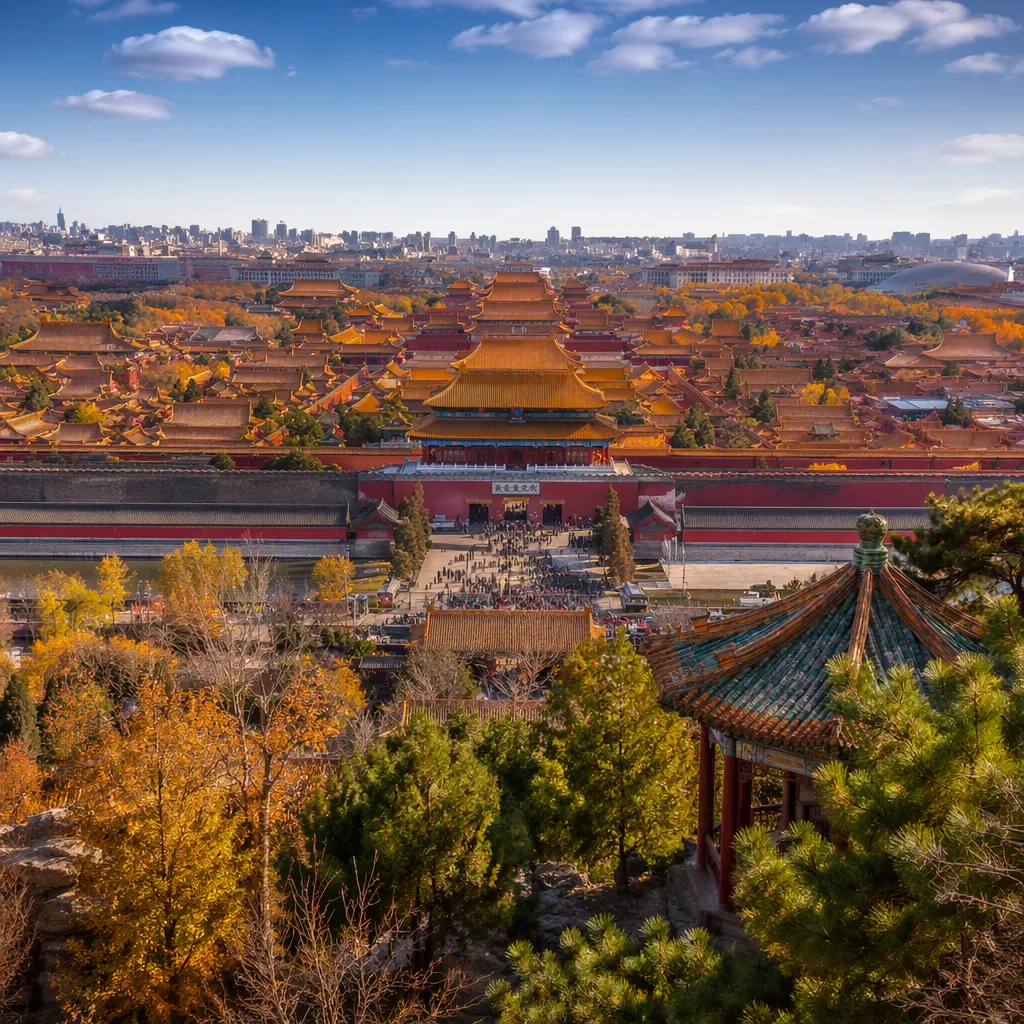
From the top of Jingshan Hill, the entire Forbidden City lies at your feet — two yuan, and a view that will stay with you forever
The Wanchun Pavilion is the highest point of Jingshan Hill and also the central point of Beijing. You spin around looking in all four directions: the entire city lies within your view — the gray roofs of old hutongs, the glass walls of new buildings, the CCTV building's "big pants," all part of the scenery. You take a deep breath, cool air filling your lungs. Then you turn back — the Forbidden City is right behind you, those red walls and golden tiles gleaming brilliantly in the sunset.
You think back to the lion's eyes in front of the hall, to the dragon throne in the Hall of Supreme Harmony, to the stone railing on the Golden Water Bridge, to the ticking sounds in the Clock and Watch Gallery. You think about everything that happened here over six hundred years: twenty-four emperors born, grew old, and died within these walls; dynasties rose and fell; war and peace; countless people walked in through the Meridian Gate and walked out through the Shenwu Gate.
So what if the tickets were hard to get? You're here now. You've seen the dragon throne in the Hall of Supreme Harmony, touched the stone railing on the Golden Water Bridge, heard the ticking in the Clock and Watch Gallery. Those images will stay with you for the rest of your life.
You stand on the Wanchun Pavilion in Jingshan Park, looking back. Those red walls still stand there, golden tiles still glinting in the sunset. For six hundred years, they've stood there, watching dynasties come and go, witnessing both golden ages and decline. They've seen the most extravagant royal ceremonies and the most humiliating colonial pillaging. But they've always been here — like a silent old guardian, keeping secrets that cannot be told.
Push open that door and walk in. Six hundred years of stories are waiting for you. You don't need to have read many history books — you just need to bring a heart willing to feel. The Forbidden City will tell you everything — about power, about wealth, about beauty, about time, about where we came from and where we're going.
You'll come back. Next time you visit, you may have forgotten how hard the tickets were to get, but you'll remember the height of the Hall of Supreme Harmony, the eyes of the bronze lions, the koi under the Golden Water Bridge, that view of red walls and golden tiles from Jingshan Hill. That's the magic of the Forbidden City — it's not a tourist checkbox, but a reunion with history.
"Push the door open and walk in.
Six hundred years of stories are waiting for you."