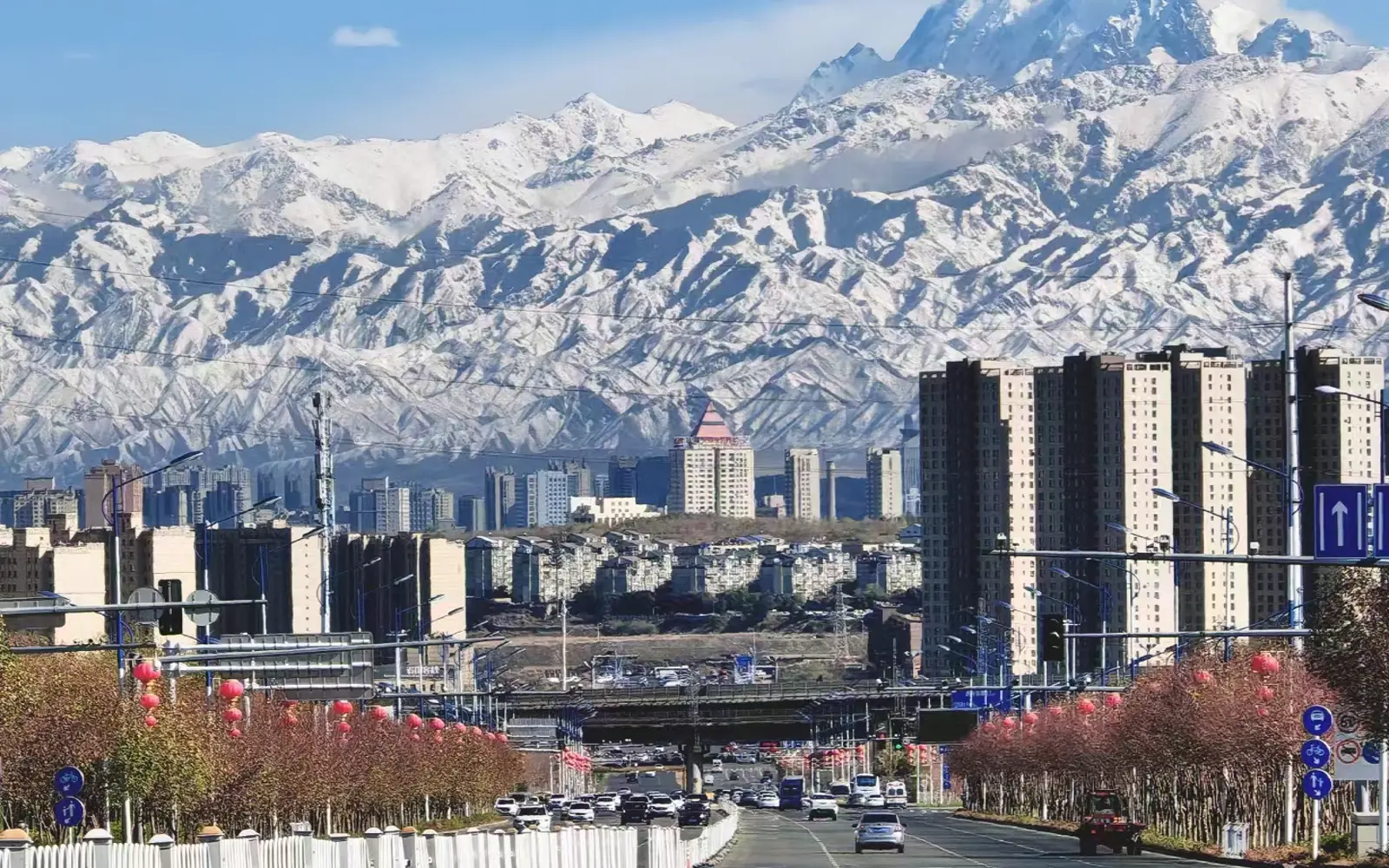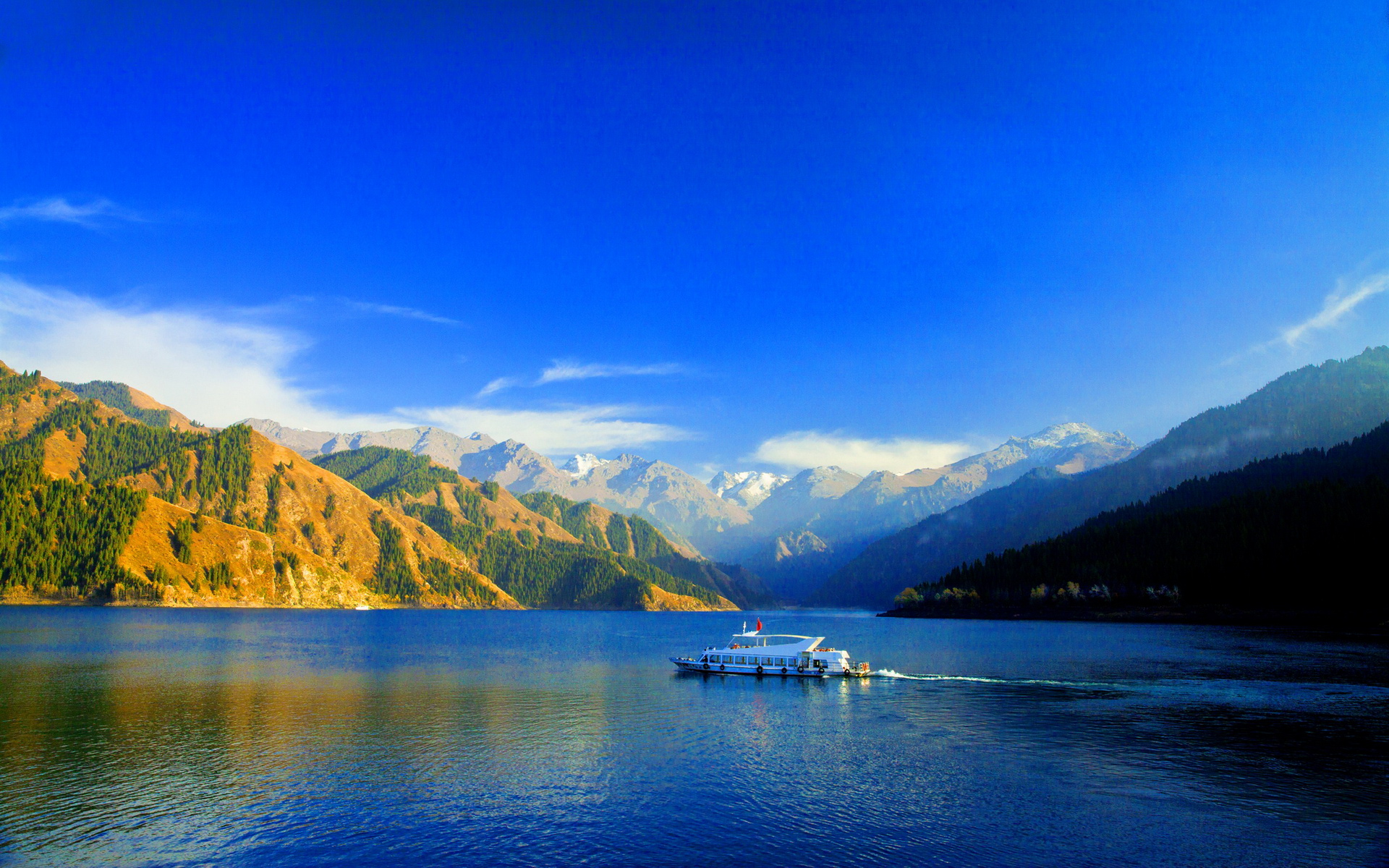
The Tianshan Mountains don't just dominate the geography of Central Asia. They make geography possible. Without this 2,500-kilometer spine of rock and ice — stretching from western China to Uzbekistan — the Taklamakan and Gurbantunggut deserts would have merged into a single, lifeless sea of sand. There would be no Silk Road. No oases. No Uyghur melons or Kazakh horsemen. No Xinjiang at all, really.
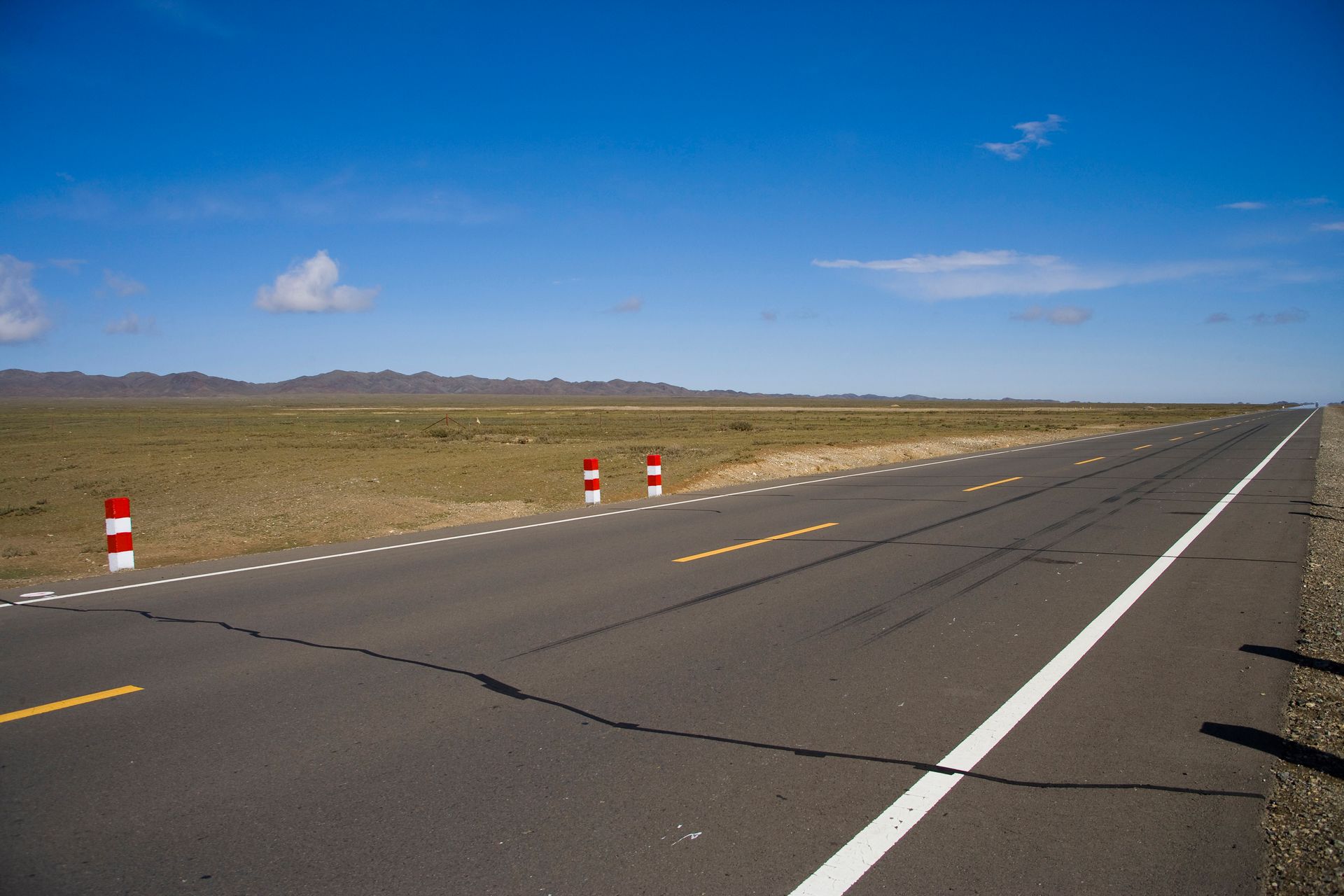
The mountains rise, the glaciers melt, the water flows, and civilizations cluster in the green margins like lines of a poem. And what a poem it is. Drive the Duku Highway — the legendary road connecting northern and southern Xinjiang — and in a single day you'll pass from desert into alpine meadow, from grasslands studded with sheep into forests of dark spruce, up and over snowbound passes where the air thins and the world falls silent.
The Lakes
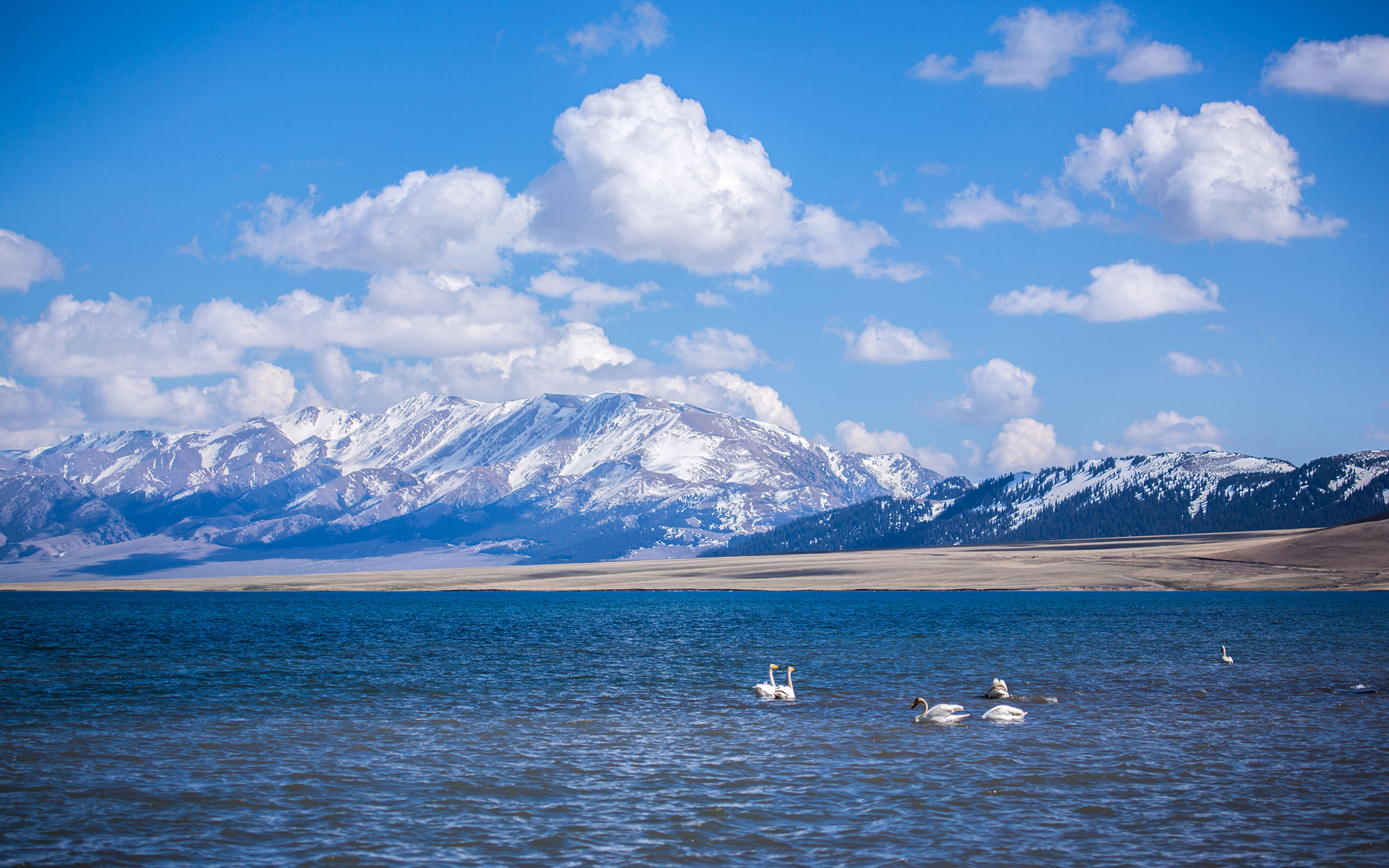
The lakes of Tianshan are something else entirely. Sayram Lake, on the northern slopes at 2,070 meters, is what locals call "the last teardrop of the Atlantic" — the furthest point east where moisture from that distant ocean still makes itself felt. The water is a blue so saturated it looks photoshopped. Kazakh herders bring their horses to drink at the shore. In June, wildflowers carpet the alpine meadows around it.
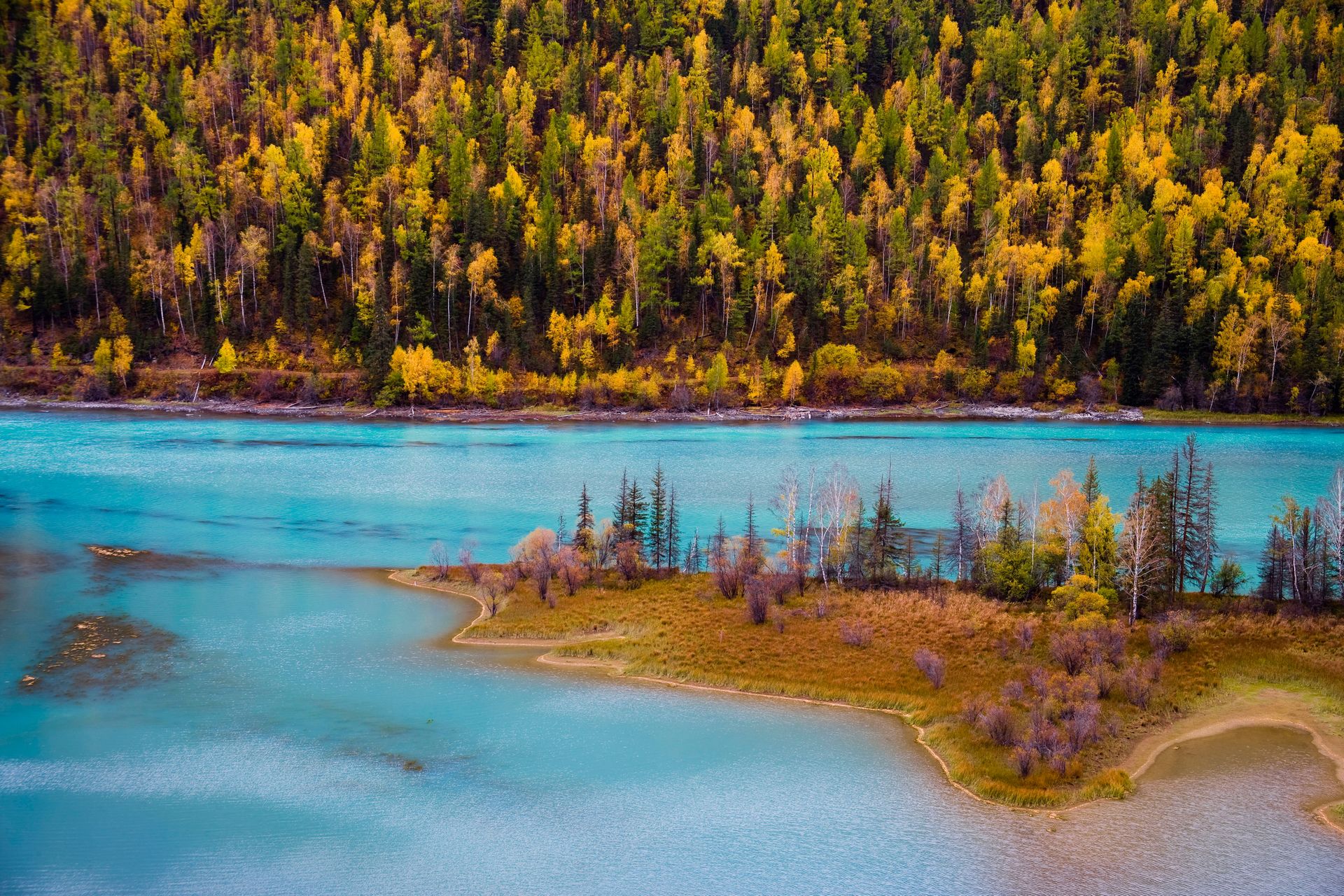
Then there's Kanas, in the far north near the borders with Kazakhstan, Russia, and Mongolia. The lake is long and narrow, 24 kilometers of deep green water squeezed between forested slopes. In autumn, the birch and larch forests around it turn every shade of gold and crimson. The locals will tell you about the "Kanas monster," a creature that's been spotted in the lake since the 1980s. It's almost certainly a very large fish. But in the misty mornings, when the water is still and the forest is silent, you're not entirely convinced.
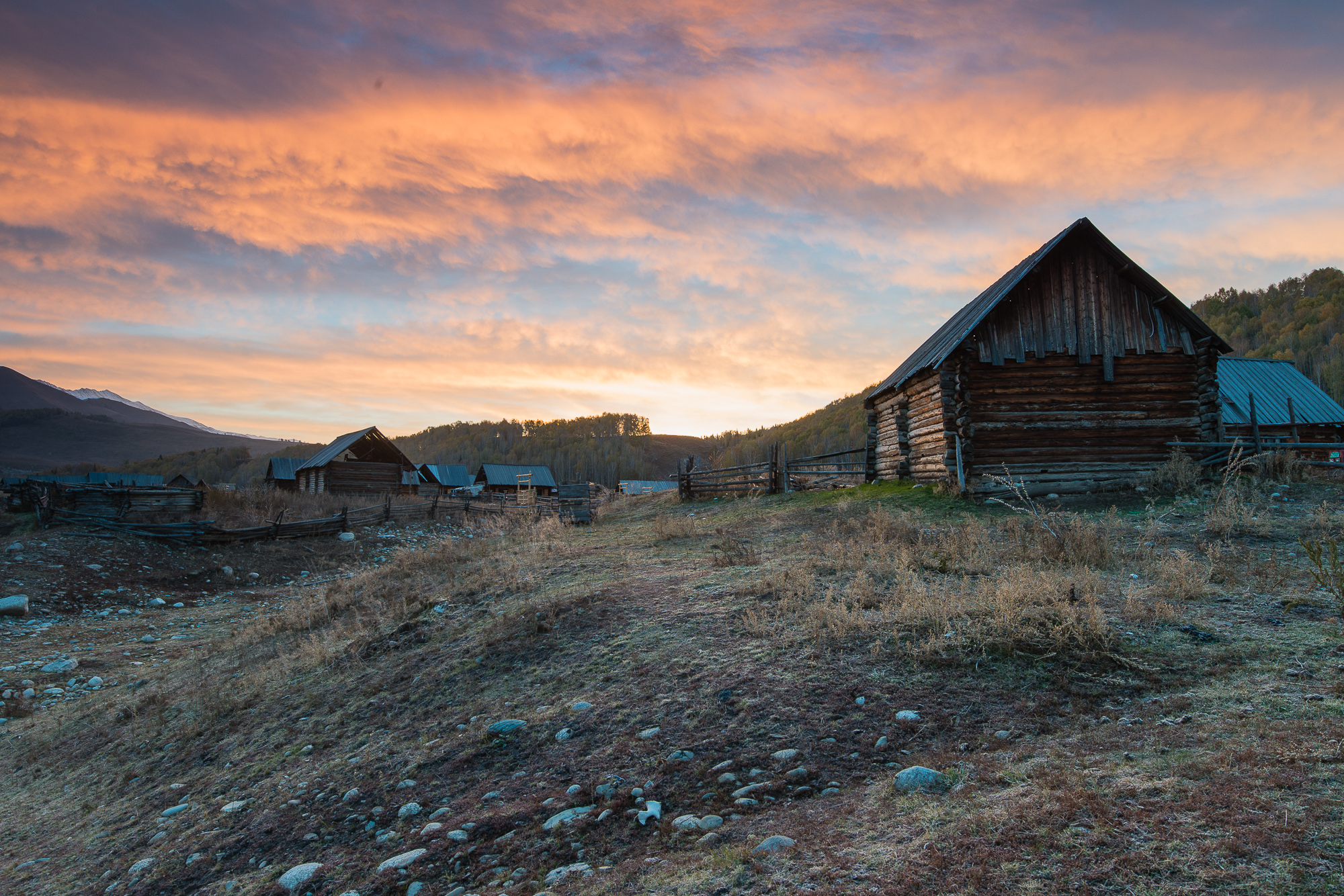
The Grasslands
The grasslands are the heart of Tianshan. Kalajun, a World Heritage site, is 2,800 square kilometers of rolling prairie at 2,000 meters elevation. The "human body grassland" — so called because the hills undulate like a reclining figure — is one of the great visual clichés of Chinese travel photography, and deservedly so. In June, the slopes are covered in purple wildflowers. Herds of horses run in the distance, their manes catching the wind.
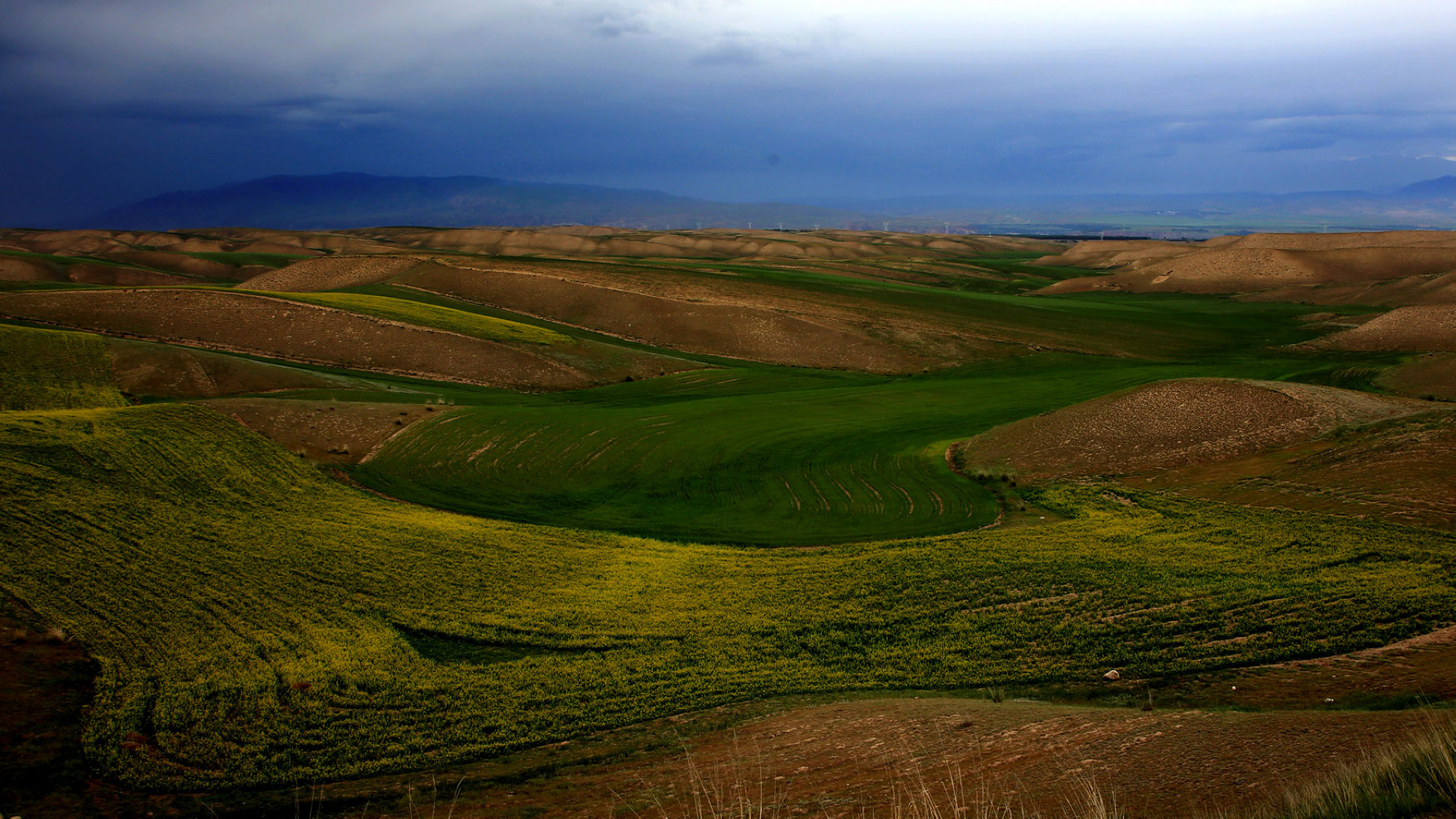
The Ghost City
For pure geological drama, the Ghost City (Devil's City) in Hami delivers. Wind erosion has sculpted the desert into a hallucinatory landscape of towers, arches, and hollow-eyed formations. At night, when the wind screams through the canyons, the sound genuinely terrifies. The 2013 Chinese thriller No Man's Land was filmed here, and no set dressing was required.
These mountains dictated where the Silk Road could pass, which empires could expand, which peoples could survive. They still do. And every June, when the wildflowers bloom and the snowmelt swells the rivers and the horses run free on the Kalajun steppe, you can see exactly why.