Dunhuang doesn't announce itself. You drive for hours through the Gobi — flat, beige, endless — and then there it is: an oasis of poplars and irrigation ditches, a green smudge on the edge of the Taklamakan. The first thing you notice is the light. It's different here. Harsher, cleaner, the kind of light that makes shadows sharp as knife cuts.
The name means something. Dun — grand, great. Huang — brilliant, flourishing. For a thousand years, this was the crossroads where everything met. Silk Road caravans from Chang'an, Buddhist monks from India, Persian merchants, Turkish horsemen, Tibetan envoys — they all passed through Dunhuang. They traded goods, yes, but they also traded stories, gods, recipes, alphabets, diseases, and melodies. Dunhuang was the internet before there was electricity.
The Caves
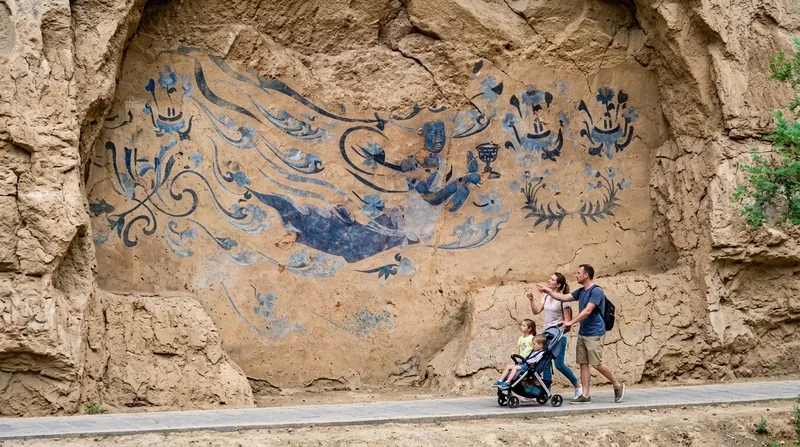
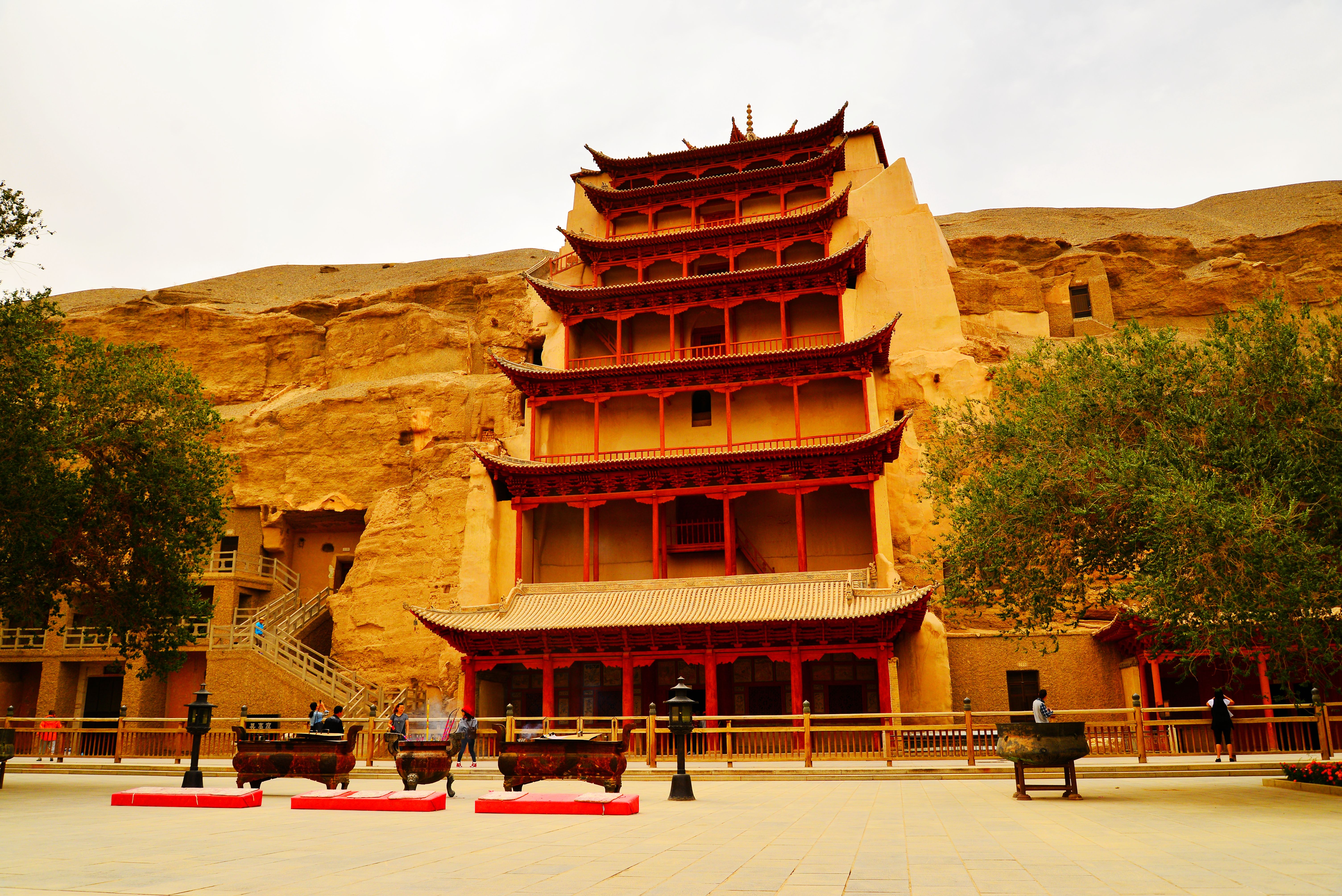
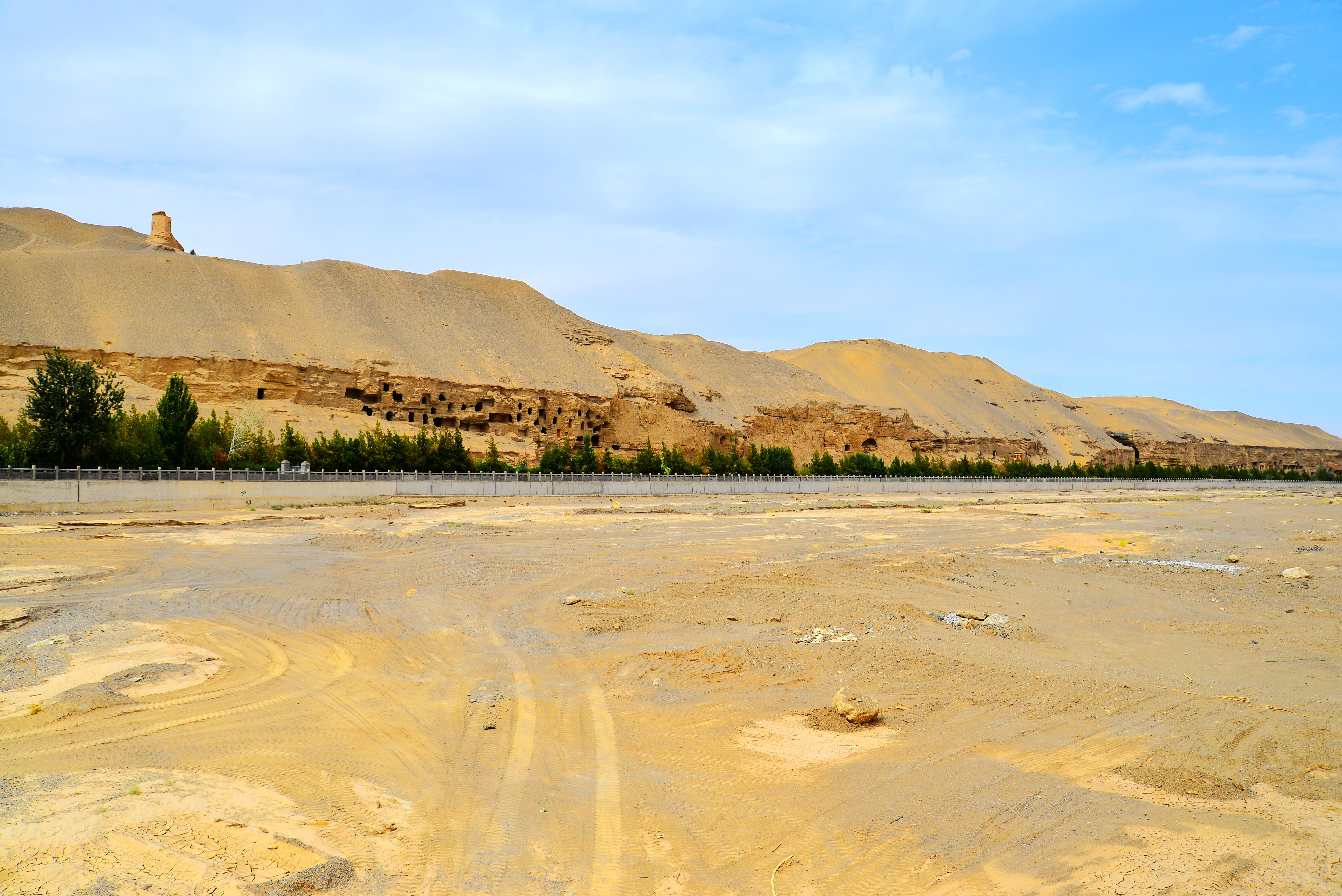
And at the center of it all were the caves. The Mogao Caves — 492 of them, carved into a cliff face 25 kilometers southeast of town — are the reason Dunhuang exists in the global imagination. Between the 4th and 14th centuries, monks, merchants, and local rulers commissioned these grottoes. Buddhist paradises with flying celestial musicians. Scenes of Silk Road commerce: camels, bazaars, tax collectors. Portraits of donors wearing Tang Dynasty robes, Uyghur hats, Tibetan coats. This was multiculturalism rendered in mineral pigment, and it's been fading for centuries.
The real miracle was discovered in 1900 by a Daoist monk named Wang Yuanlu. While sweeping sand from a corridor, he noticed a crack in the wall. Behind it: a sealed library chamber containing 50,000 manuscripts — Buddhist sutras, Nestorian Christian texts, Jewish prayers in Hebrew, Manichaean hymns, the world's oldest printed book (the Diamond Sutra, dated 868 AD). Documents in Chinese, Tibetan, Sanskrit, Sogdian, Khotanese, Uyghur, Tangut. Entire civilizations that no longer exist. The bulk of the manuscripts now reside in London, Paris, and St. Petersburg. The Library Cave itself is empty.
The Singing Dunes
But Dunhuang is more than its caves. Ten minutes from town, the Mingsha Sand Dunes rise like frozen waves, 1,700 meters of singing sand. (They actually sing — a low-frequency hum caused by the friction of grains sliding past each other. Locals say it's the sound of buried armies.)
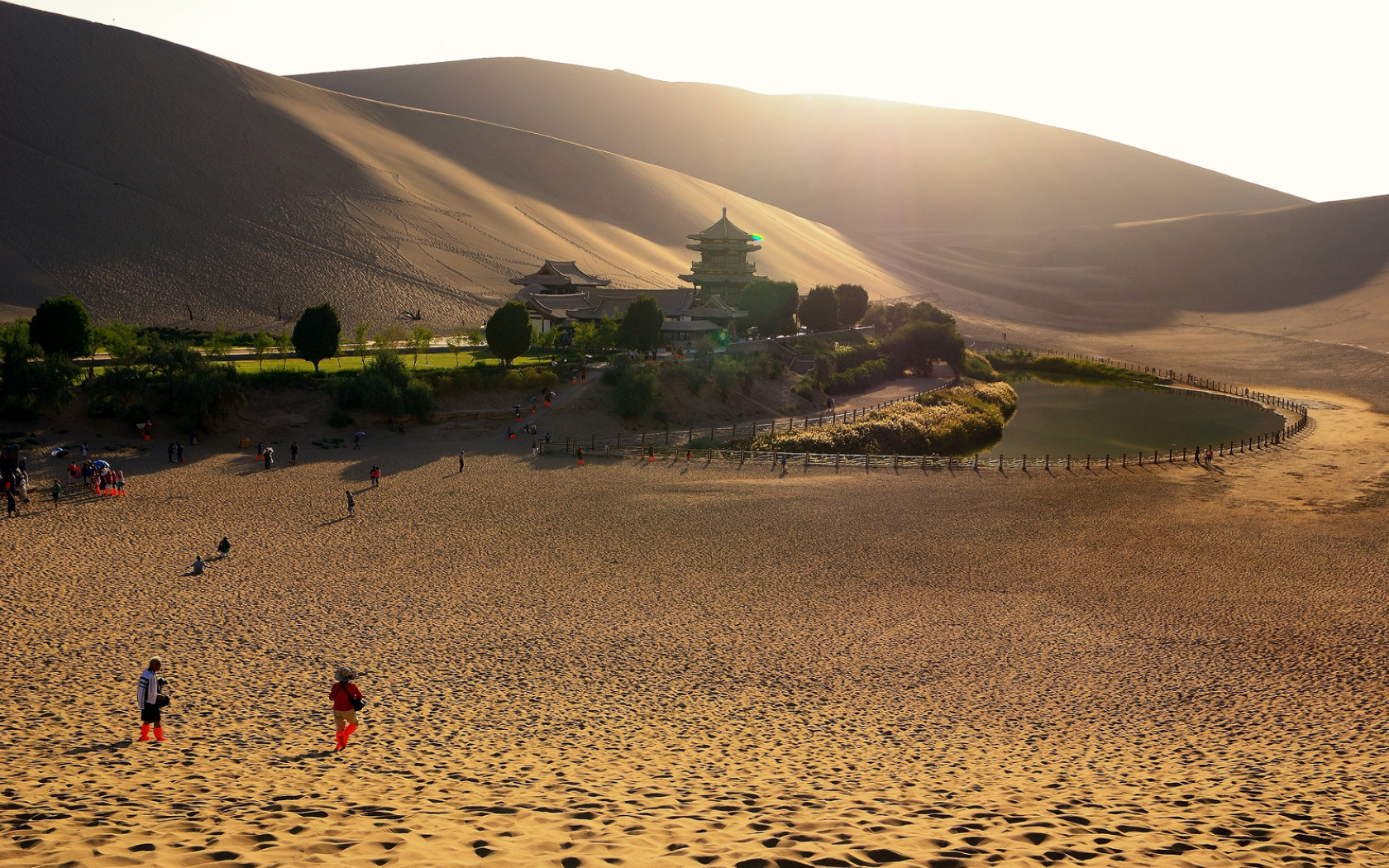
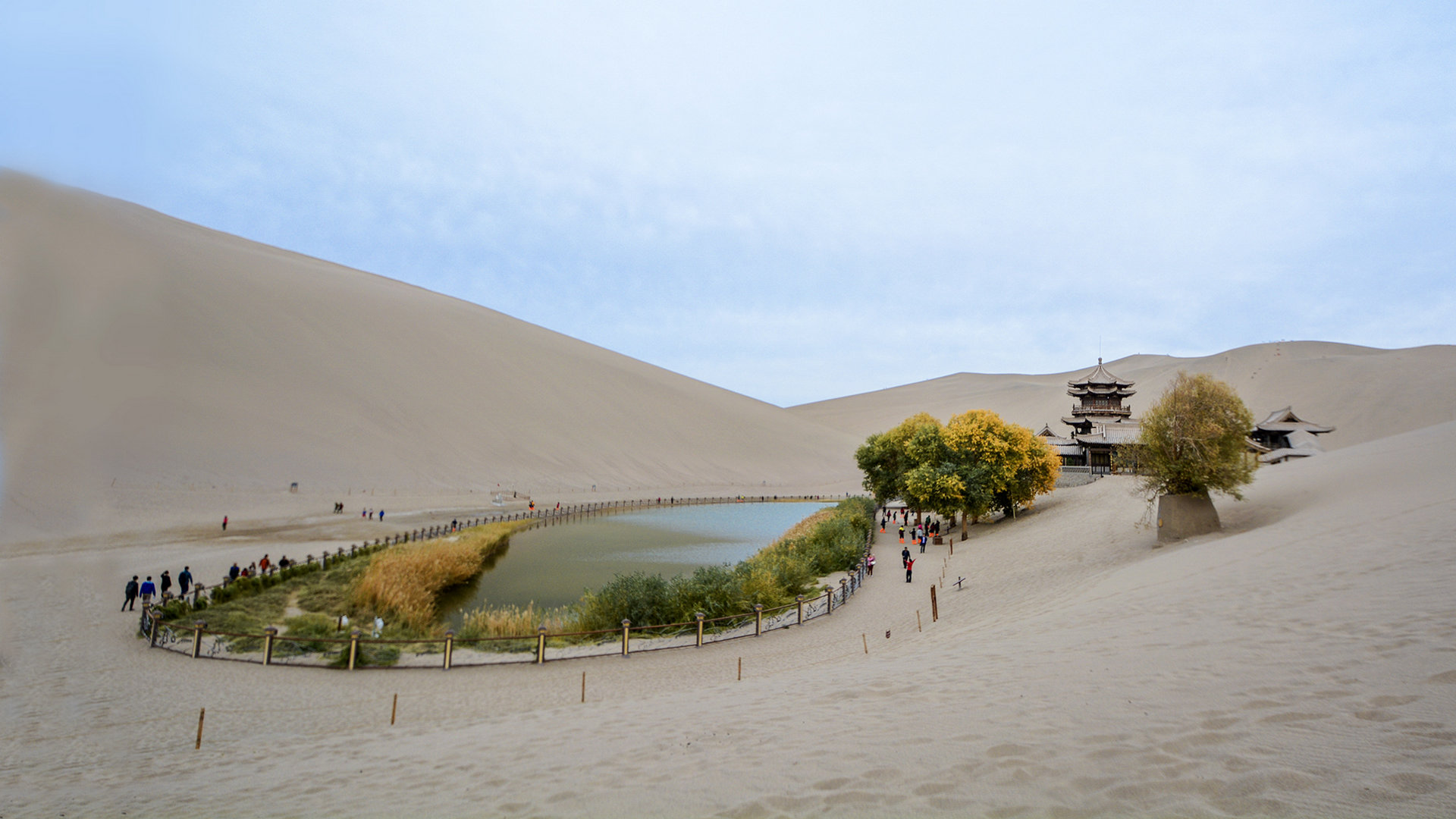
At the base of the dunes sits the Crescent Moon Spring, a small oasis lake shaped — yes — like a crescent moon. It has existed for over 2,000 years, somehow never swallowed by the dunes, which makes it either a hydrological miracle or a very stubborn puddle. Climb the dunes at sunset. Your legs will hate you. But from the top, watching the light turn the sand from gold to copper to purple — it's worth every calf cramp.
The Jade Gate
And then there's Yumen Pass, 90 kilometers northwest of town. In the Han Dynasty, Yumen was the Jade Gate, the last outpost of the Chinese empire before the road dissolved into the Taklamakan. Soldiers were stationed here. Taxes were collected. Merchants recalibrated their courage. Today, it's just a few crumbling earthen walls in the middle of absolutely nowhere.
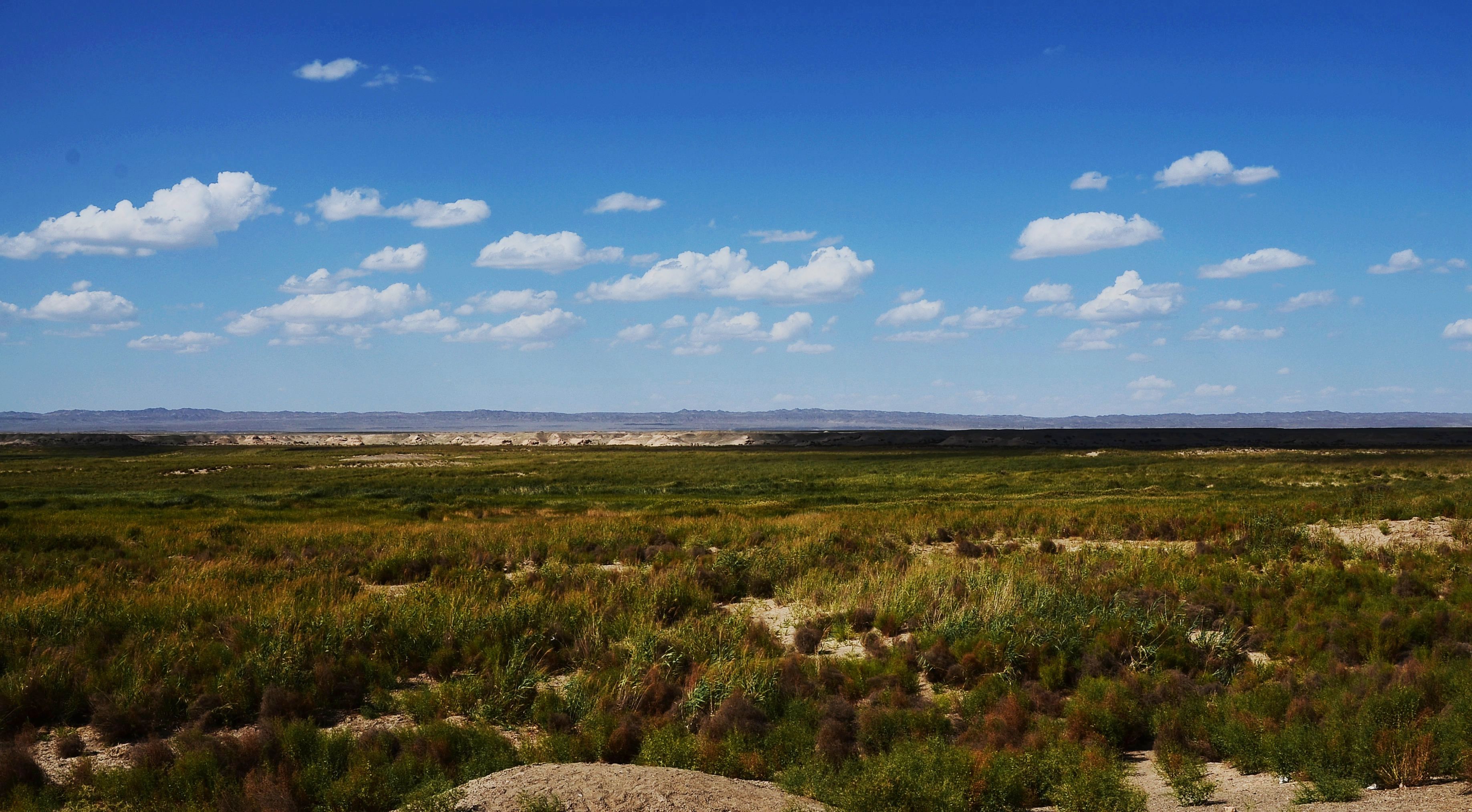
The wind howls through the gaps. A sign warns you not to climb on the ruins, as if anyone would want to. You stand there and try to imagine what it felt like — leaving through this gate, knowing you might never return. The Tang poet Wang Wei captured it: West of Yang Pass, no old friends.
But sometimes, in the late afternoon, when the shadows lengthen across the Mogao cliff face and the dunes turn gold, you get a glimpse of what "grand and brilliant" actually meant. It was never about the size of the empire. It was about the size of the curiosity.