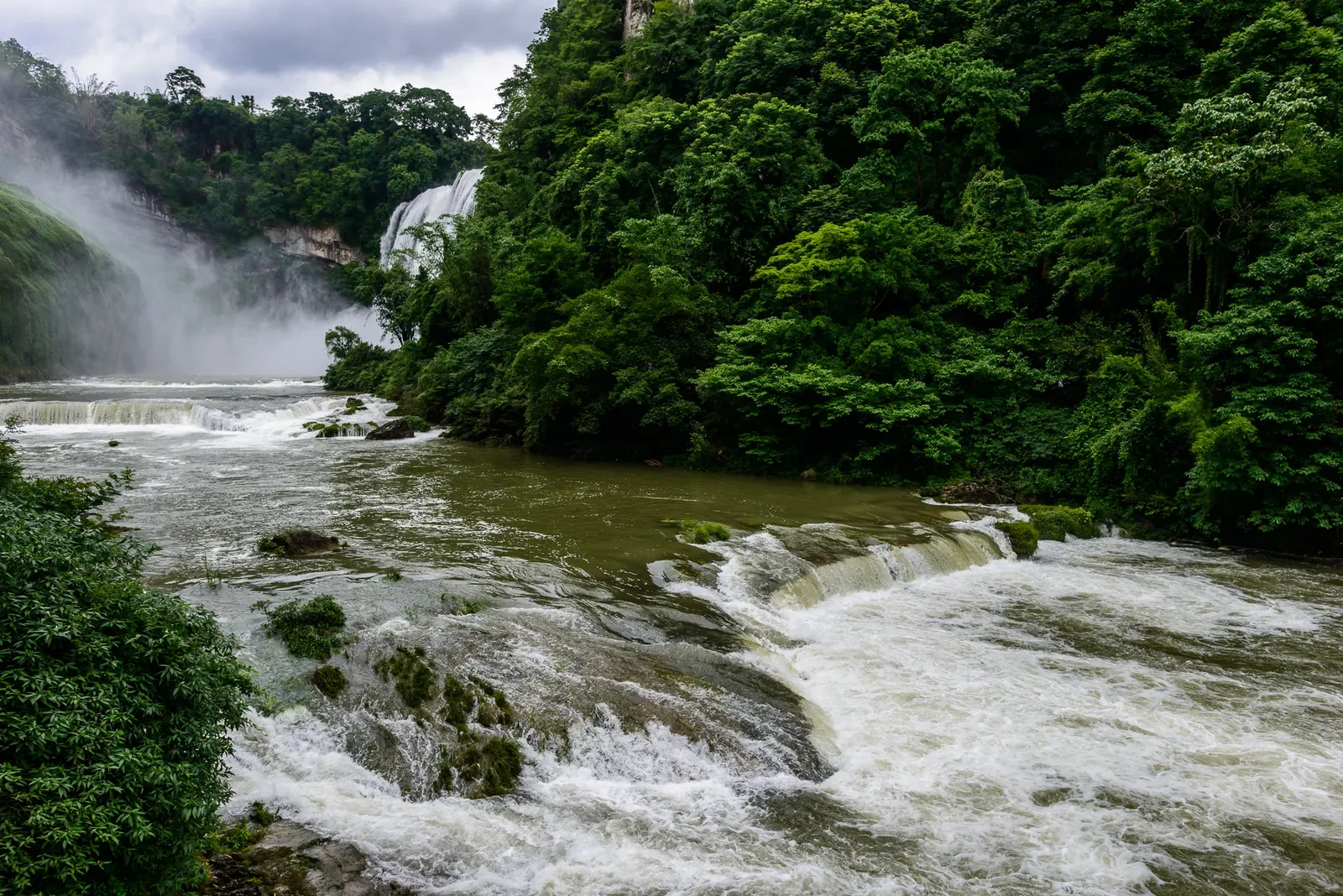
Huangguoshu
Discover Huangguoshu.
Huangguoshu at a Glance
Everything you need to know before you go.
Where to Stay
Choose the neighborhood that fits your style.
Falls Area
Stay steps from Huangguoshu Waterfall, with resorts like Bolian Resort & SPA offering hot springs and shuttle service. Waterfall Village Resort is 900m from Gate 1, ideal for families. Enjoy easy access to the scenic area and nearby dining on Shaba Food Street.
Best accessAnshun City
Base in Anshun for budget-friendly stays, from simple guesthouses near the bus station to five-star hotels. Mid-Level Hotel is 2km from the city center, offering great breakfasts and warm hospitality. Explore local culture and cuisine with easy transport links to Huangguoshu.
Budget-friendlyTunpu Village
Immerse in history at Tunpu Village, where traditional stone houses and ancient culture await. Stay at design-forward options like Jianglu Village Dawn Resort, featuring a clean pool and unique architecture. Perfect for travelers seeking authenticity and tranquility away from the crowds.
Cultural immersionScenic Area North
Located north of the main falls, this area offers convenient access to the scenic area's north gate. Hotels like Anshun Huangguoshu Manxin Hotel provide excellent breakfasts and parking. Ideal for those prioritizing proximity to the falls with a quieter atmosphere.
Quiet convenienceHuangguoshu Highlights
The city's essential experiences.
Asia's largest waterfall, 77.8m high and 101m wide, viewable from six directions. Don't miss the Water Curtain Cave behind the falls for a unique perspective.
A 7km downstream gem with 365 stepping stones, lush stone forests, and a narrow 'Side Body Rock' passage. Allow 2-3 hours to explore its caves and karst wonders.
The widest waterfall in the Huangguoshu group (105m wide, 21m high), known as 'Roaring Waterfall' during floods. A filming site for the TV drama 'Journey to the West', with free parrot shows.
A water and dry cave complex, once home to the Yelang King. Take a boat through water caves, then walk dry ones (2.5h). Enjoy free ethnic performances at 10:00 and 15:00, and try the bamboo-themed 'All Bamboo Feast'.
A UNESCO World Natural Heritage site with towering karst peaks, the world's second-largest cave hall, and the last cave-dwelling tribe. Explore the Miao's hanging coffins and the mysterious 'Yanwang Palace'.
A dramatic canyon along the Beipan River, offering stunning views of towering cliffs and the winding river below. Ideal for photography and nature lovers.
The most visited Tunpu village, with Ming-era stone houses, a tea house, and 'Dixi' opera performances every 30 minutes. Explore the ancient city walls and the Wulong Temple on Tiantai Mountain.
A cluster of 8 Tunpu villages preserving Ming Dynasty culture, including traditional dress and architecture. See the 'Tunpu people' in their distinctive costumes and step back in time.
A historic town with a layout based on Yin-Yang and Five Elements, surrounded by city walls. Visit the Chenghuang Temple, ancient residences, and enjoy the 'Little Jiangnan' scenery along the Xingjiang River.
A Ming-dynasty architectural complex with exquisite stone carvings, including the famous coiled dragon pillars. A must-see for art and history enthusiasts.
The birthplace of revolutionary Wang Ruofei, a Qing-style courtyard house with exhibits on his life and revolutionary activities. Free entry, closed on Mondays.
Anshun's last old street, full of local snacks like Luoji Meat Pie and Po Su Baozi. Experience the authentic daily life of Anshun residents in this bustling market street.
A Miao village where residents practice Christianity, with a hilltop church. The Xianma Farmers' Choir performs four-part harmonies, blending Miao and Western traditions.
Best Time to Visit
Each season offers something different.
Spring
Mild and wet, with blooming flowers. Pack rain gear and enjoy the waterfall at its fullest.
Summer
Hot and rainy, peak season for the waterfall's power. Expect crowds and high humidity; bring waterproof clothing.
Autumn
Cool and clear, ideal for hiking. The water flow is still strong, and the scenery is colorful.
Winter
Cold and dry, with lower water levels. Fewer tourists, but the landscape remains serene; dress warmly.
Suggested Itineraries
Plans for every schedule.
Classic 2-Day
Day 1: Huangguoshu Waterfall, Water Curtain Cave, Tianxing Bridge. Day 2: Doupotang Waterfall, Bonsai Garden, Luosishi Scenic Area.
Nature & Culture 3-Day
Day 1: Huangguoshu Waterfall, Water Curtain Cave. Day 2: Tianxing Bridge, Bonsai Garden. Day 3: Doupotang Waterfall, Luosishi Scenic Area, Buyi Village.
In-Depth 4-Day
Day 1: Huangguoshu Waterfall, Water Curtain Cave. Day 2: Tianxing Bridge, Bonsai Garden. Day 3: Doupotang Waterfall, Luosishi Scenic Area. Day 4: Buyi Village, Huangguoshu Night Tour.
Local Tips
Insider knowledge for a smoother trip.
ATMs are scarce in rural areas; carry enough cash for entrance fees and local purchases.
Avoid rainy season to prevent landslides and road closures; check forecasts before traveling.
Stay on marked paths to protect fragile vegetation; do not trample or pick plants.
Mobile signals are weak in mountains; download offline maps and inform others of your route.
Carry basic first aid and know how to treat snake bites; seek medical help immediately if bitten.
Daily costs average 300-500 yuan; book accommodation in advance to avoid price surges.
FAQs About Huangguoshu
Quick answers to common questions.
Ready to Explore Huangguoshu?
Let MagicTrip build the perfect Huangguoshu itinerary.