Dujiangyan
A 2,200-year-old irrigation marvel, the sacred peak of Taoism, and pandas — 45 minutes from Chengdu.
Dujiangyan at a Glance
Everything you need to know before you go.
Where to Stay
Choose the neighborhood that fits your style.
Old Town Guanxian
This historic area surrounds the Dujiangyan irrigation system and Erwang Temple, with the Erwang Temple Hotel as the only scenic-area hotel. It offers easy access to the ancient town's attractions, and is a 30-minute drive from Chengdu. The area features traditional architecture and cultural sites, ideal for history enthusiasts.
Cultural heartMount Qingcheng Foot
At the base of Mount Qingcheng, this area includes the Tianhe Shengshi commercial district with shopping, food streets, and bars. The Jian Yue Home Boutique Hotel is here, 10 km from the mountain and 4 km from the Chengdu-Qingcheng fast rail. It's a convenient base for exploring the mountain and enjoying local nightlife.
Best accessDujiangyan New City
The modern part of Dujiangyan, near the Min River and high-speed rail station. The Zhongyan Ruihua International Hotel offers British butler service, and the Jin'an Inn is 3 km from the scenic area. This area has convenient transport links and contemporary amenities, suitable for business travelers and those seeking comfort.
Modern conveniencePanda Valley Area
Close to the Panda Valley and Sunac Paradise, this area features the Zhonghe Tianyi Hotel with excellent breakfast and a peaceful environment. It's about 4-5 km from the city center, offering a quiet stay with easy access to panda viewing and the nearby entertainment complex. Ideal for families and nature lovers.
Family-friendlyDujiangyan Highlights
The city's essential experiences.
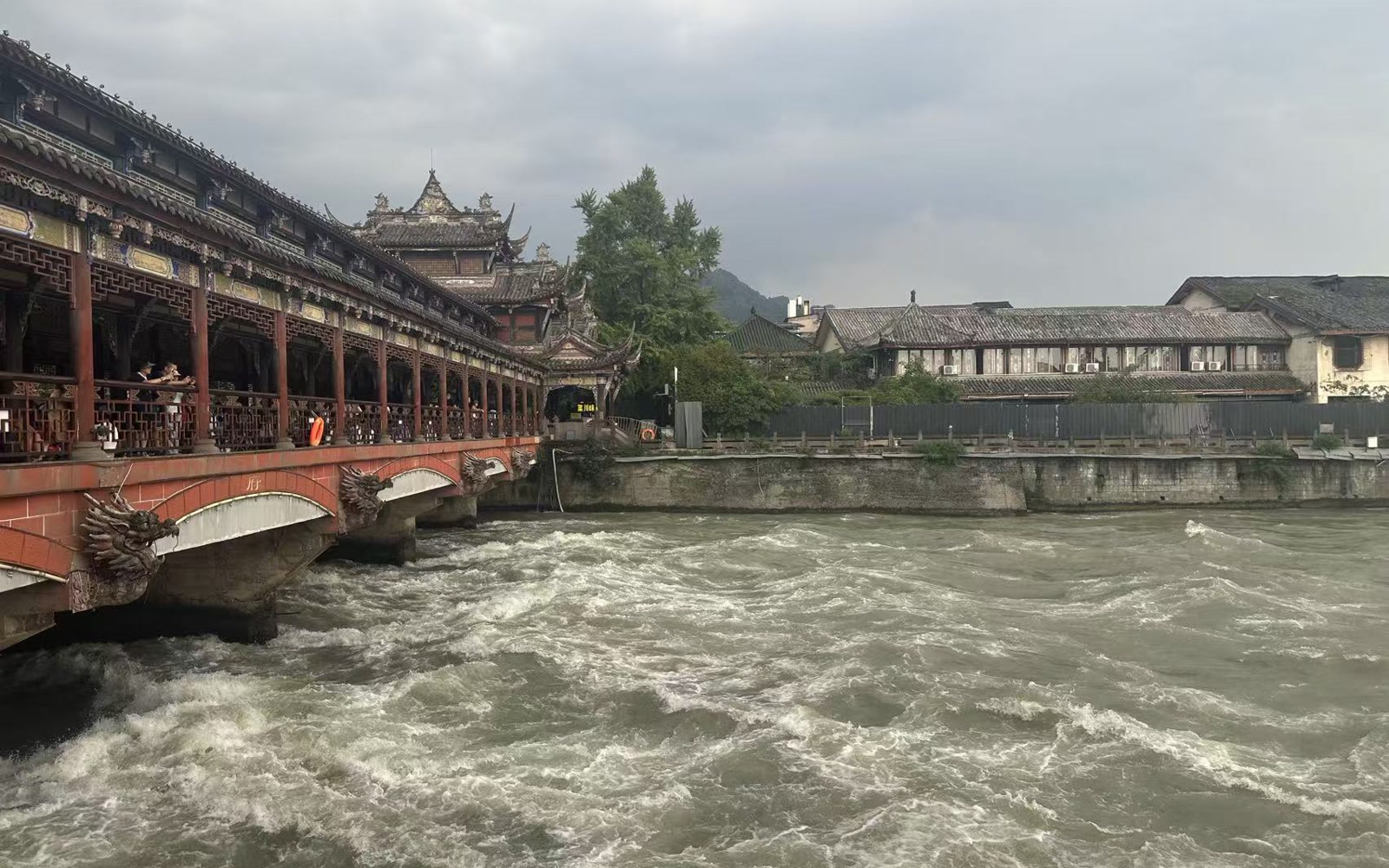
A 2,300-year-old water conservancy project still in use, featuring the Fish Mouth Levee, Flying Sand Weir, and Bottle Neck Channel. Explore the site and marvel at ancient engineering that shaped Sichuan's agriculture.
Dedicated to Li Bing and his son, builders of Dujiangyan, this temple features calligraphy by General Feng Yuxiang and steles by artists Zhang Daqian and Xu Beihong. Rebuilt after the 2008 earthquake, it's a serene spot with lush gardens.
Perched on Lidui Hill, this temple dates back to the Jin Dynasty and houses a stone statue of Li Bing unearthed in 1974. Enjoy panoramic views of the river and the surrounding cliffs.
A historic rope bridge inside the Dujiangyan Scenic Area, offering a thrilling walk over the Minjiang River. Cross it to appreciate the scale of the irrigation system and the scenic gorge.
Known as 'the most tranquil mountain under heaven,' this Taoist sacred site is split into Front and Back Mountains. Explore ancient temples, lush forests, and serene paths that have inspired poets for centuries.
The starting point for Mount Qingcheng tours, this Taoist temple houses a famous Qing Dynasty couplet praised as 'a unique masterpiece of Qingcheng.' Stroll through its courtyards and nearby scenic spots like Qingxi Stream and Shuixin Pavilion.
Ride a 2.1-km cable car for an 8-minute journey over lush forests, offering panoramic views of the mountain's peaks and Taoist temples. Each season paints a different picture, from cherry blossoms in spring to snow in winter.
A key Taoist site on Mount Qingcheng, this cave temple is steeped in legend and history. Discover ancient inscriptions and enjoy the tranquil atmosphere amidst towering trees and mountain mists.
Home to pandas undergoing wild training, this base offers a chance to see these gentle giants in a semi-wild environment. Visit the fortress-like enclosures and learn about conservation efforts.
A pristine ecological area with 364 sq km of forest, home to rare plants and animals. Hongkou is also a top rafting destination, with courses for both small and large rafts, plus annual international rafting festivals.
Crowned by Yulei Pavilion, this mountain offers sweeping views of Dujiangyan and the irrigation works. Take the 128-meter escalator (Buyunlang) to the top in just 5 minutes, passing through a unique covered corridor.
Cross the historic Nanqiao Bridge to enter Guankou Ancient Town, a hub of local cuisine and Ming-Qing architecture. Explore ancient streets, city walls, and the mosque, all free to visit.
A remnant of the ancient Tea-Horse Road, this trail once connected Chengdu to Songpan and Maoxian. Walk the remaining 2 km within Dujiangyan Scenic Area and imagine the caravans that once traveled here.
Located at the south gate of Dujiangyan, this garden is a masterpiece of Sichuan bonsai art. Set against the river, it's a peaceful spot to admire ancient tree stumps and lush greenery.
Best Time to Visit
Each season offers something different.
Spring
Mild and pleasant, with occasional rain. Good for sightseeing, especially during the Qingming Festival when the Water Releasing Festival is held.
Summer
Cool and comfortable, ideal for escaping the heat. Enjoy the night beer festival and outdoor activities like rafting.
Autumn
Crisp and clear, with colorful foliage. Perfect for hiking and exploring the ancient city.
Winter
Cold and dry, but less crowded. Visit the irrigation system and nearby temples for a peaceful experience.
Suggested Itineraries
Plans for every schedule.
Classic 2-Day
Day 1: Dujiangyan Irrigation System, Yulei Mountain, Old Town & Nanqiao Bridge. Day 2: Mount Qingcheng.
Panda & Nature 2-Day
Day 1: Dujiangyan Panda Base, Dujiangyan Irrigation System. Day 2: Longchi & Hongkou.
Heritage 3-Day
Day 1: Dujiangyan Irrigation System, Yulei Mountain. Day 2: Mount Qingcheng. Day 3: Old Town & Nanqiao Bridge, Dujiangyan Panda Base.
In-Depth 4-Day
Day 1: Dujiangyan Irrigation System, Yulei Mountain. Day 2: Mount Qingcheng. Day 3: Dujiangyan Panda Base, Old Town & Nanqiao Bridge. Day 4: Longchi & Hongkou.
Local Tips
Insider knowledge for a smoother trip.
Choose accommodation in the ancient city for easy access to the scenic area.
Spend one day at Dujiangyan and another at Mount Qingcheng for a complete experience.
Don't miss the local night beer at Nanqiao, a popular evening activity.
Summer offers the best weather and the chance to join the beer festival.
Use the Bùyún Láng escalator to reach Yulei Pavilion for panoramic views.
Go rafting at Hongkou, known as the 'No.1 Drift in the West'.
FAQs About Dujiangyan
Quick answers to common questions.
Ready to Explore Dujiangyan?
Let MagicTrip build the perfect Dujiangyan itinerary.