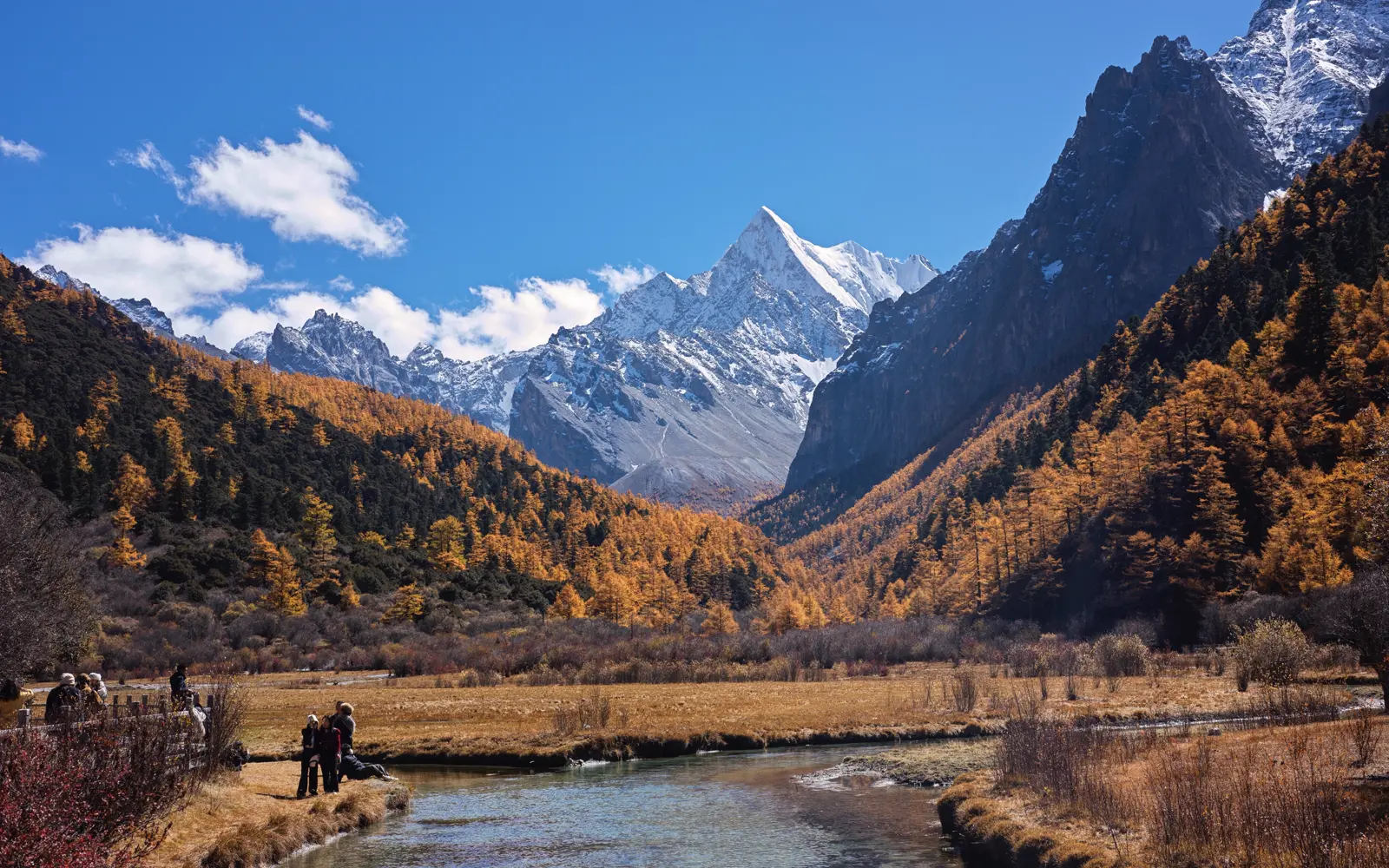
Daocheng
Gateway to the mystical Yading Nature Reserve — snow peaks, sacred lakes, and Tibetan highland grasslands.
Daocheng at a Glance
Everything you need to know before you go.
Where to Stay
Choose the neighborhood that fits your style.
Daocheng County Town
The county town offers the widest range of amenities, including two large supermarkets for supplies and shops selling local wild herbs and traditional ornaments. It's home to the first youth hostel, Yading People's Community, a hub for trekking routes, and the comfortable Zhongmei Hotel, ideal for self-driving seniors. The town is a convenient base with easy access to transport and services.
Best amenitiesShangri-La Town (Riwa)
Shangri-La Town, also known as Riwa, serves as a gateway to Yading Nature Reserve. It features the upscale Xiangyun Hotel, run by the airport company, offering great views, free hot springs, and excellent service. The town provides a comfortable stay with scenic surroundings, perfect for those seeking a higher-end experience before exploring the reserve.
Comfortable stayYading Village
Yading Village, located within the Yading Nature Reserve, offers budget-friendly Tibetan-style guesthouses like Yading Mountain Villa and Nature Camp, with basic amenities and meals. It's ideal for trekkers wanting to stay close to the trails, with prices ranging from 20 to 80 yuan per bed. Note that some places lack private bathrooms and shower facilities.
Budget-friendlyJinzhu Town
Jinzhu Town is home to the highly rated Holy Land Yading Hotel, a three-story Tibetan building near Rubchaka Hot Springs, offering clean rooms, free bicycles, and excellent service at a great value. The town provides a peaceful stay with easy access to hot springs, making it a relaxing choice for travelers.
Best valueDaocheng Highlights
The city's essential experiences.
The northern peak of Yading's Three Protector Gods, snow-capped year-round. Surrounded by alpine lakes, glaciers, and forests, it's a photographer's paradise. Visit the viewpoint for postcard-worthy shots.
One of the Three Protector Gods, representing Vajrapani. Its sheer cliffs and sharp ridges are awe-inspiring. Best viewed from Luorong Grassland, especially at sunrise when the peak glows golden.
The southern peak of the Three Protector Gods, symbolizing Manjushri. Its graceful, snow-covered slopes are a sight to behold. The hike to its base offers stunning views of alpine meadows and glacial lakes.
A high-altitude lake famed for its ever-changing hues, from deep blue to turquoise. Located above Milk Lake, it requires a steep climb but rewards with breathtaking views. Best visited in clear weather.
A milky-blue glacial lake nestled beneath Chenresig Peak. The surrounding moraines and prayer flags create a serene, otherworldly atmosphere. A challenging hike from Luorong Grassland, but worth every step.
A small, emerald-green lake near Chonggu Temple, reflecting the majestic Chenresig Peak. An easy 30-minute walk from the temple, it's a perfect spot for a peaceful picnic with stunning views.
A vast, high-altitude meadow surrounded by the Three Protector Gods. Wildflowers bloom in summer, and yaks graze peacefully. It's the starting point for hikes to Milk Lake and Five Color Lake.
A historic temple at the foot of Chenresig Peak, dating back to the 8th century. It offers panoramic views of the Three Protector Gods and is a key stop on the Yading circuit. Explorer Joseph Rock once stayed here.
Also known as Gongga Langji Ling Temple, it's the largest monastery in the Daocheng area. Locals believe you must 'get the key' here before circumambulating the sacred peaks. Located 51 km from Daocheng.
A stunning reserve featuring the Three Protector Gods, alpine lakes, and grasslands. Accessible by shuttle bus and short hikes, it's a must-visit for nature lovers. The reserve is open year-round, with best views from April to November.
A typical Tibetan town at 3,750 meters, surrounded by grasslands and forests. Visit the white stupa at the north entrance, join locals in kora, and watch traditional Guozhuang dancing at Snow Mountain Square in the evening.
A vast plateau with glacial remnants and over 1,100 alpine lakes, known as 'Daocheng's Ancient Ice Cap'. The scattered boulders and crystal-clear lakes create a lunar-like landscape. Located between Litang and Daocheng.
Best Time to Visit
Each season offers something different.
Spring
May to June offers clear views of snow mountains, moderate temperatures, and lower costs. It's a good time to visit before the rainy season.
Summer
From late June to mid-August is the rainy season with frequent rain and cloudy skies, often hiding the snow peaks. Roads may be affected by landslides, but wildflowers and rapeseed flowers bloom.
Autumn
September to October is the peak season with the most beautiful scenery: snow mountains, red grass, and golden poplar forests. Temperatures are pleasant, but crowds are large, especially during National Day.
Winter
Winter offers spectacular snow mountain views, though it can be desolate. With the airport, access is easier, but be prepared for cold mornings and evenings around 0°C.
Suggested Itineraries
Plans for every schedule.
Classic 2-Day
Day 1: Start from Shangri-La Town, take the scenic bus to Chonggu Temple, then hike to Pearl Lake (about 2 hours) for the reflection of Chenresig Peak. Continue to Luorong Grassland (about 2 hours) for panoramic views of the three sacred peaks. Return to Shangri-La Town for overnight stay. Day 2: From Shangri-La Town, go to Luorong Grassland and embark on the long hike to Milk Lake and Five Color Lake (round trip 6-8 hours), the essence of Yading. Return to Shangri-La Town.
Yading Deep Dive 3-Day
Day 1: Depart from Chengdu, passing through Dujiangyan, Wenchuan, and Li County, arrive at Shangri-La Town for overnight stay. Day 2: Visit Chonggu Temple, hike to Pearl Lake for the reflection of Chenresig Peak, then go to Luorong Grassland to view the three sacred peaks. Overnight in Shangri-La Town. Day 3: Take the long hike to Milk Lake and Five Color Lake, then return to Shangri-La Town in the afternoon to conclude the trip.
Western Sichuan Self-Drive 4-Day
Day 1: Drive from Chengdu via Dujiangyan, Wenchuan, and Li County to Shangri-La Town. Day 2: Explore Yading Nature Reserve's short route: Chonggu Temple, Pearl Lake, and Luorong Grassland. Day 3: Take the long route to Milk Lake and Five Color Lake. Day 4: Drive from Shangri-La Town to Litang (visit Litang Grassland), then continue via Xinduqiao and Kangding back to Chengdu.
Local Tips
Insider knowledge for a smoother trip.
Most locals speak Sichuan-accented Mandarin, so communication is not a problem.
Avoid discussing religion with Tibetans unless they initiate; it's deeply personal.
Never step over prayer flags or sit on carved stones; these are sacred.
Tibetans avoid horse, donkey, dog, and often fish; don't offer these foods.
Walk clockwise around temples, speak softly, and don't touch religious items.
Don't litter or disturb wildlife; the plateau ecosystem is fragile.
FAQs About Daocheng
Quick answers to common questions.
Ready to Explore Daocheng?
Let MagicTrip build the perfect Daocheng itinerary.