Before You Go
Quick context so your visit feels comfortable and respectful.
- Dress modestly. Cover shoulders and knees; remove hats when entering main halls.
- Shoes: at mosques, remove shoes before stepping onto the carpeted prayer area. In Buddhist/Taoist halls you usually keep shoes on.
- Photography: generally fine outdoors, but avoid flashing inside main halls and never photograph people at prayer without asking.
- Incense & offerings: lighting 3 sticks of incense is the common gesture; follow the locals. Small cash donations are appreciated, never required.
- Behavior: keep your voice low, walk clockwise around stupas/pagodas, and don't point feet at statues or sit with soles facing them.
- Opening hours: most sites open ~8:00 and close ~17:00; many are busiest on the 1st and 15th lunar days and during festivals.
Do ✅
- Bow slightly when entering a hall
- Ask before taking a monk's/imam's photo
- Carry small cash for incense & entry
- Visit early morning for calm atmosphere
Don't ❌
- Touch statues, relics or scriptures
- Walk in front of someone at prayer
- Proselytize or debate doctrine
- Climb on pagodas or sacred rocks
City Guides
Pick a city — each card lists the faith, what's special, and where to find it.
Beijing北京 · capital, layered with imperial & living faith
Yonghe Temple (Lama Temple)
The most famous Tibetan-Buddhist temple in Beijing, still an active place of worship. Famous for a towering 18 m sandalwood Maitreya statue and the scent of incense along the central avenue.
Baiyun Temple (White Clouds Temple)
The principal Taoist temple of northern China and seat of the Taoist Association. Tranquil courtyards, a famous "lucky coin" wall, and seasonal festivals.
Niujie Mosque
Beijing's oldest and largest mosque (founded ~996), blending Chinese courtyard architecture with Islamic function. The surrounding Niujie area is the city's historic Muslim quarter.
St. Michael's Cathedral (South Church)
Beijing's oldest Catholic church, with a graceful Baroque facade. Still holds Mass; visitors can admire the interior outside service times.
Shanghai上海 · east-meets-west, temples & cathedrals side by side
Jade Buddha Temple
Beloved urban temple housing two rare white-jade Buddha statues (a seated and a reclining Buddha), both carved from Burmese jade.
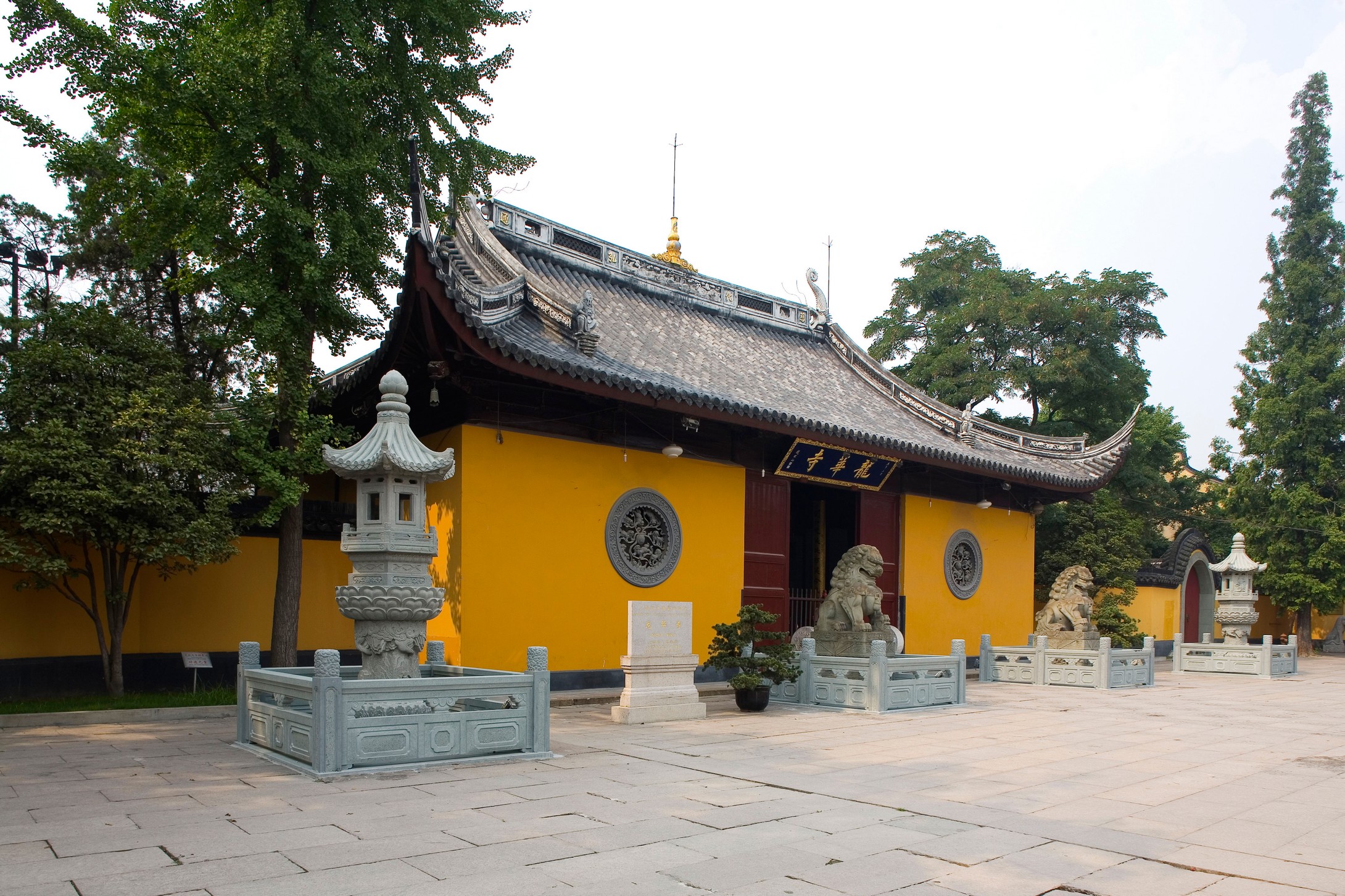
Longhua Temple
Shanghai's largest and oldest temple complex, famed for its tall Longhua Pagoda and the city's biggest bell-ringing ceremony on New Year's Eve.
City God Temple (Chenghuang Miao)
A lively Taoist temple wrapped in the famous Yu Garden bazaar — incense, street food and old-Shanghai atmosphere all in one place.
St. Ignatius Cathedral (Xujiahui)
One of China's largest Gothic-style Catholic cathedrals, with twin spires and stunning stained glass. A landmark of the Xujiahui district.
Xiaotaoyuan Mosque
Shanghai's most important mosque, with a distinctive blend of Chinese and Middle-Eastern domes. The heart of the city's Muslim community.
Guangzhou广州 · southern gateway, ancient sea-trade faith
Temple of the Six Banyan Trees
A 1,400-year-old temple best known for its Flower Pagoda (花塔), a slender, brightly colored octagonal tower visible across the old city.
Huaisheng Mosque (Lighthouse Mosque)
One of the oldest mosques in China (Tang dynasty), built by early Arab merchants. Its round "光塔" minaret is a unique city landmark.
Sacred Heart Cathedral (Stone House)
A rare all-granite Gothic cathedral, built in the 19th century and often called the "Notre-Dame of the East." Twin spires dominate the skyline.
Temple of the Five Immortals
A modest but historic Taoist temple tied to Guangzhou's founding legend of five celestial beings riding goats — the city's symbolic "Goat City" origin.
Shenzhen深圳 · young metropolis, modern yet devotion-filled
Hongfa Temple
Shenzhen's largest and most important Buddhist temple, set inside the leafy Xianhu (Fairy Lake) Botanical Garden. Grand halls, a towering Guanyin statue and mountain views.
Dahua Xing Temple
Perched on Yanhan Mountain above Dameisha beach, featuring a giant bronze seated Guanyin and sweeping coastal scenery. A scenic, photogenic pilgrimage spot.
Dongshan Temple
A restored ancient-style temple in the historic Dapeng Fortress (a Ming-era garrison town), blending heritage architecture with active worship.
Shenzhen Christian Church (Meilin)
The city's main Protestant church, a modern building with regular Sunday services and a welcoming congregation. English-friendly at some services.
Fenghuang Mountain Ancient Temple
A hugely popular local folk-worship site on Fenghuang (Phoenix) Mountain, especially busy for prayers of peace and fortune. Hiking + temple in one trip.
Xi'an & Hangzhou西安 · 杭州 · two historic faith capitals worth the trip
Great Mosque of Xi'an
A stunning example of Chinese-style Islamic architecture in the heart of the Muslim Quarter — courtyards, pavilions and gardens rather than domes.
Giant Wild Goose Pagoda
Xi'an's iconic Tang-dynasty pagoda, built to house Buddhist scriptures brought from India by the monk Xuanzang. A serene temple complex with night fountains nearby.
Lingyin Temple
One of China's most renowned and wealthy Buddhist temples, nestled in wooded hills near Hangzhou's West Lake, famous for carved rock grottoes (Feilai Feng).
Phoenix Mosque (Hangzhou)
One of China's oldest mosques, with a distinctive non-domed prayer hall built in traditional Chinese style — a quiet gem near the old city.
Urumqi乌鲁木齐 · gateway to China's Islamic heartland, Xinjiang
Shaanxi Mosque
One of Urumqi's largest and most elegant mosques, blending Chinese pavilion roofs with Islamic form. A calm, beautifully proportioned place of worship in the old city.
Hantengri Mosque
A large, eye-catching mosque near the International Grand Bazaar, crowned by a tall minaret. The spiritual landmark of the Erdaoqiao (二道桥) Muslim quarter.
Tatar Mosque
A historic, intimate mosque of Urumqi's Tatar community — a lesser-known spot that shows the city's multi-ethnic Muslim fabric beyond the big landmarks.
International Grand Bazaar
Not a mosque, but the cultural heart of Urumqi's Islamic world — halal food, crafts, music and the daily soundscape of the call to prayer. The best place to feel the living faith and culture.
Understanding the Sites & Finding a Place to Pray
Not every sacred space is a famous monument — here's how to read them, and where to pause, reflect or pray.
| Type of site | What it looks like | Visitors can… | Key etiquette |
|---|---|---|---|
| Buddhist temple 寺院 |
Hall-and-courtyard layout, pagodas, incense burners, golden Buddha statues. | Observe, light 3 sticks of incense, sit quietly, walk clockwise. | Keep shoes on; no flash; don't touch statues; low voice. |
| Taoist temple 道观 |
Similar courtyards, deity halls, often with fortune-telling corners. | Observe, light incense, enjoy the gardens. | Modest dress; ask before joining any ritual. |
| Mosque 清真寺 |
Dome & minaret, or Chinese-style courtyard; shoe racks at the door. | View from the courtyard; Muslims may join prayers. | Remove shoes; women cover head & shoulders; Friday is busy. |
| Church 教堂 |
Cross, steeple, stained glass; Catholic (天主教) or Protestant (基督教会). | Attend a service, sit quietly, admire the interior. | Cover shoulders; silence during Mass; dress modestly. |
- Finding a mosque: search "清真寺" or "Mosque" on Amap/Baidu Maps — every major city and most Muslim quarters have one.
- Friday prayers (Jumu'ah): around 13:00–14:00; arrive early, the halls fill fast. Non-Muslims should visit outside this window.
- Ablution (wudu): mosques provide washing areas; bring a small towel. Remove shoes before the carpet.
- Halal food: Muslim-quarter areas (Niujie in Beijing, Erdaoqiao in Urumqi, the Xi'an Muslim Quarter) are full of halal restaurants — look for the 清真 / "Halal" sign.
- Sunday services: most churches hold worship on Sunday morning; visitors are welcome to sit in quietly.
- English-speaking congregations: Beijing, Shanghai and Shenzhen have churches with English or bilingual services — ask your hotel or search expat community boards.
- Catholic vs Protestant: both are open to respectful visitors; just follow the local congregation's lead during the service.
- Temple gardens & courtyards: even non-worshippers can sit on a bench, listen to the bell, and slow down — no ticket needed for the outer grounds of many sites.
- Parks & lakes: Hangzhou's West Lake, Beijing's Beihai Park, or a Shenzhen seaside path offer peaceful reflection away from crowds.
- Mountains: the wooded hills around Lingyin (Hangzhou) or Fenghuang Mountain (Shenzhen) combine a short hike with calm.
- Major airports — Beijing (PEK/PKX), Shanghai (PVG), Shenzhen (SZX) and Urumqi (URC) — often have quiet / multi-faith prayer rooms. Ask airport staff or look for "祈祷室 / Prayer Room" signs near the gates.
- Long-distance train stations and some large shopping malls may also offer quiet rooms on request at the information desk.
- Hotels: if you need a private space to pray, simply ask the front desk — many are happy to point you to a quiet lounge or spare meeting room.
Practical Notes
- Getting there: use Metro + a maps app (Amap / Baidu Maps). Search the Chinese name — taxi drivers will know it better than the English one.
- Entry fees: many temples charge a small ticket (¥10–30); mosques are usually free; cathedrals free.
- Opening hours: the times listed are typical. Many sites open earlier and close later in summer, and shorten in winter — confirm on your maps app on the day of visit.
- Best season: spring (Apr–May) and autumn (Sep–Oct) are comfortable and less smoky than winter incense peaks.
- Etiquette summary: modest dress, low voice, no touching of sacred objects, ask before photos, follow the local flow.
- If unsure: pause, watch what worshippers do, and mirror it. A small smile goes a long way.