Overview & History
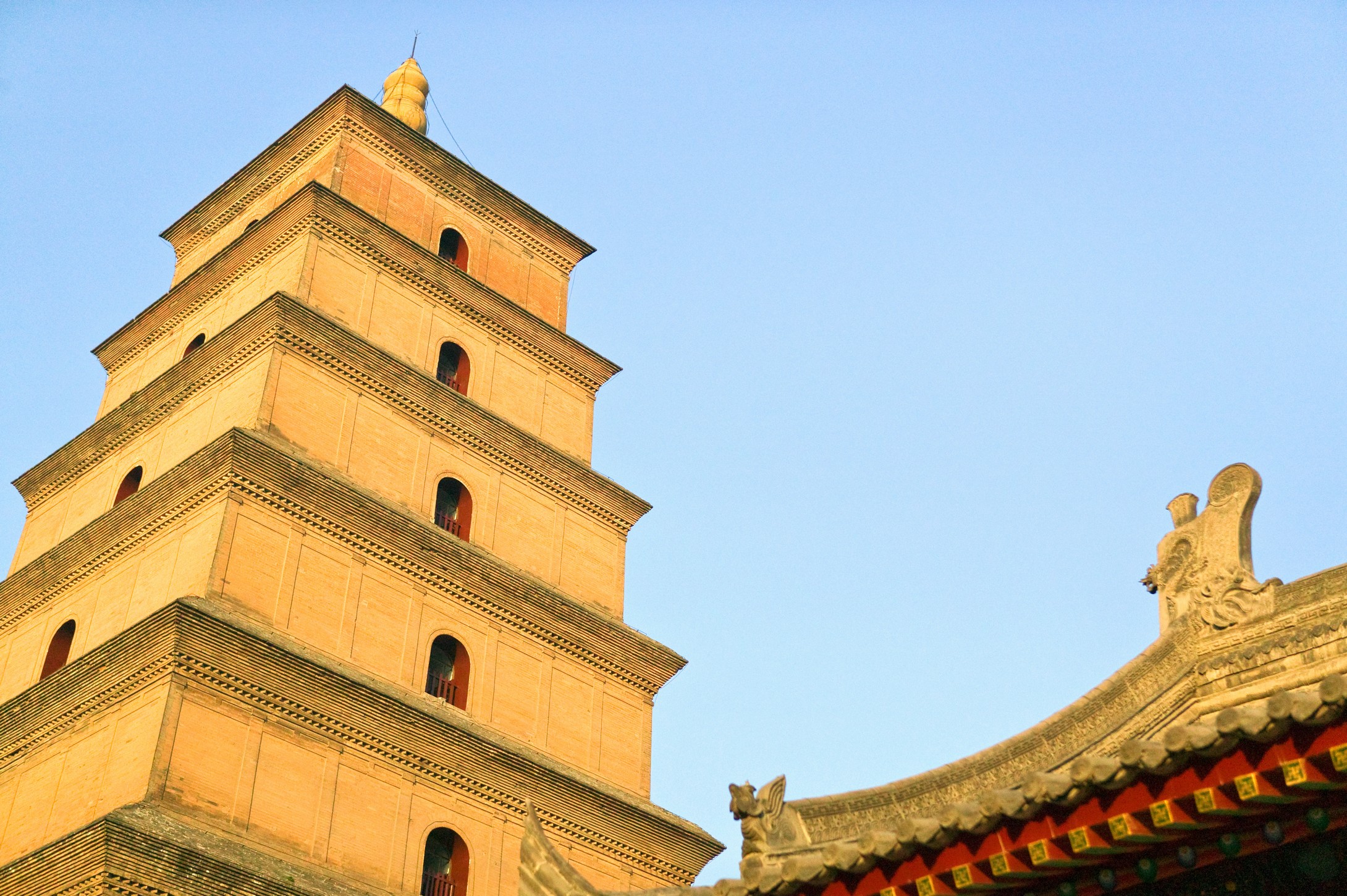
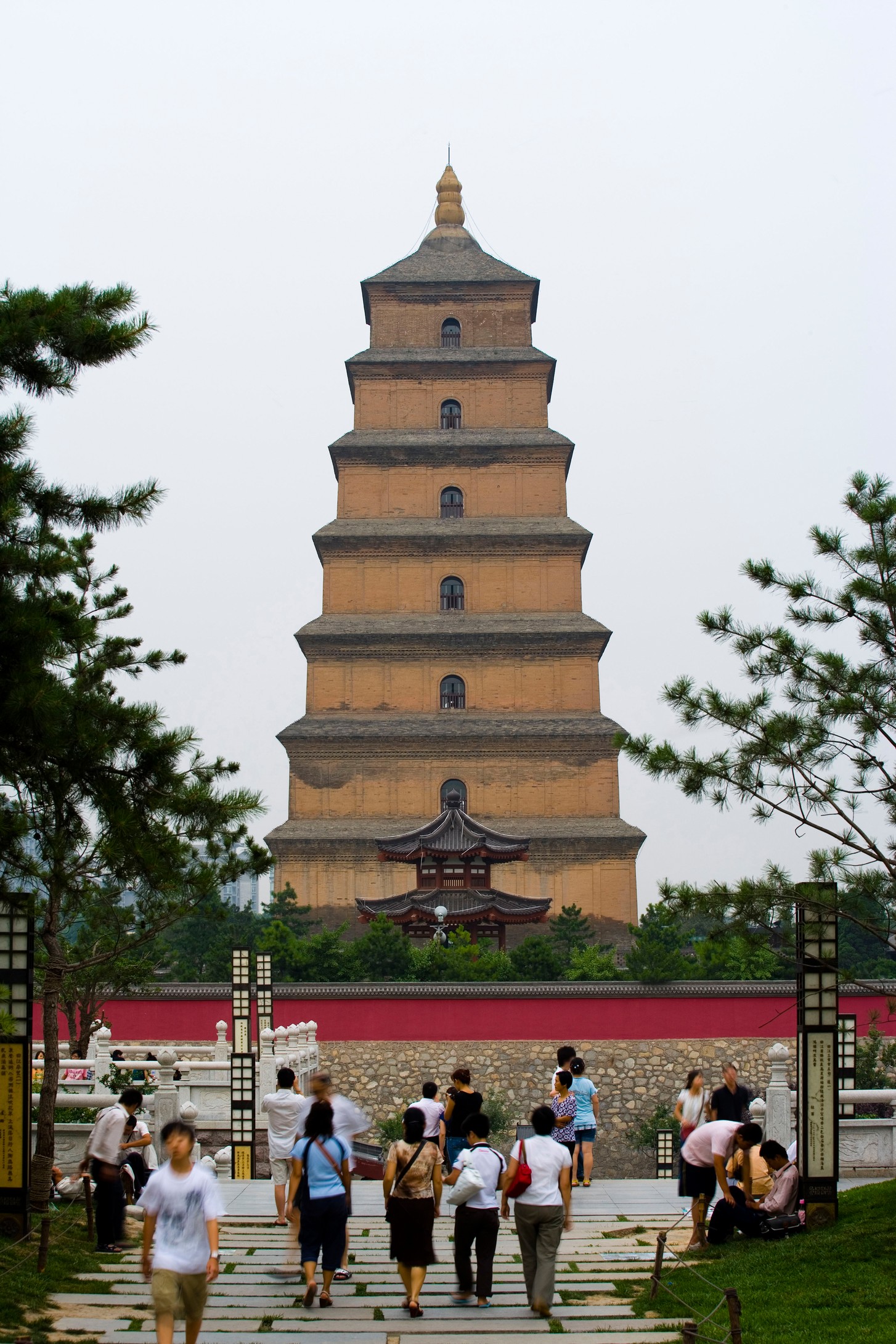
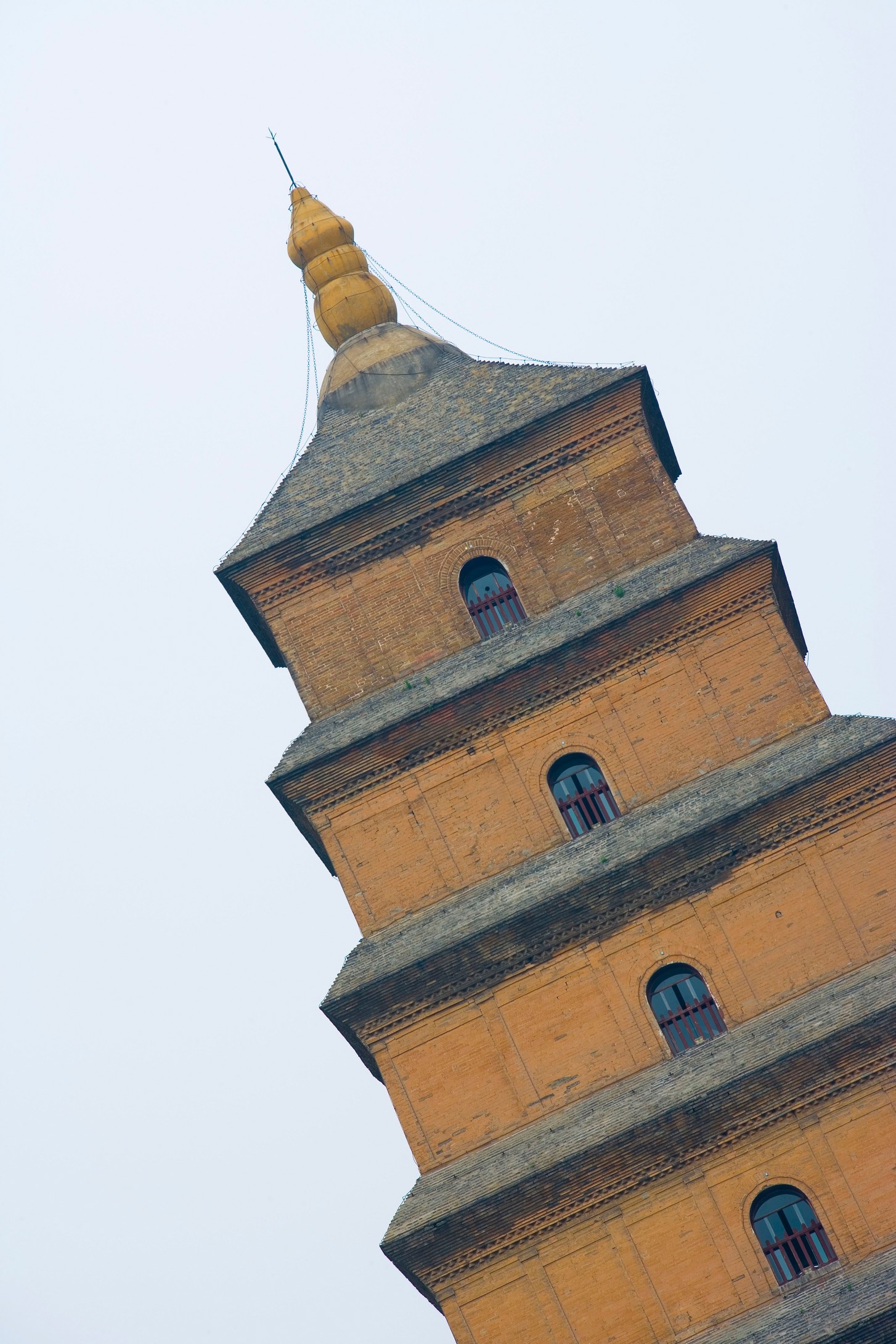
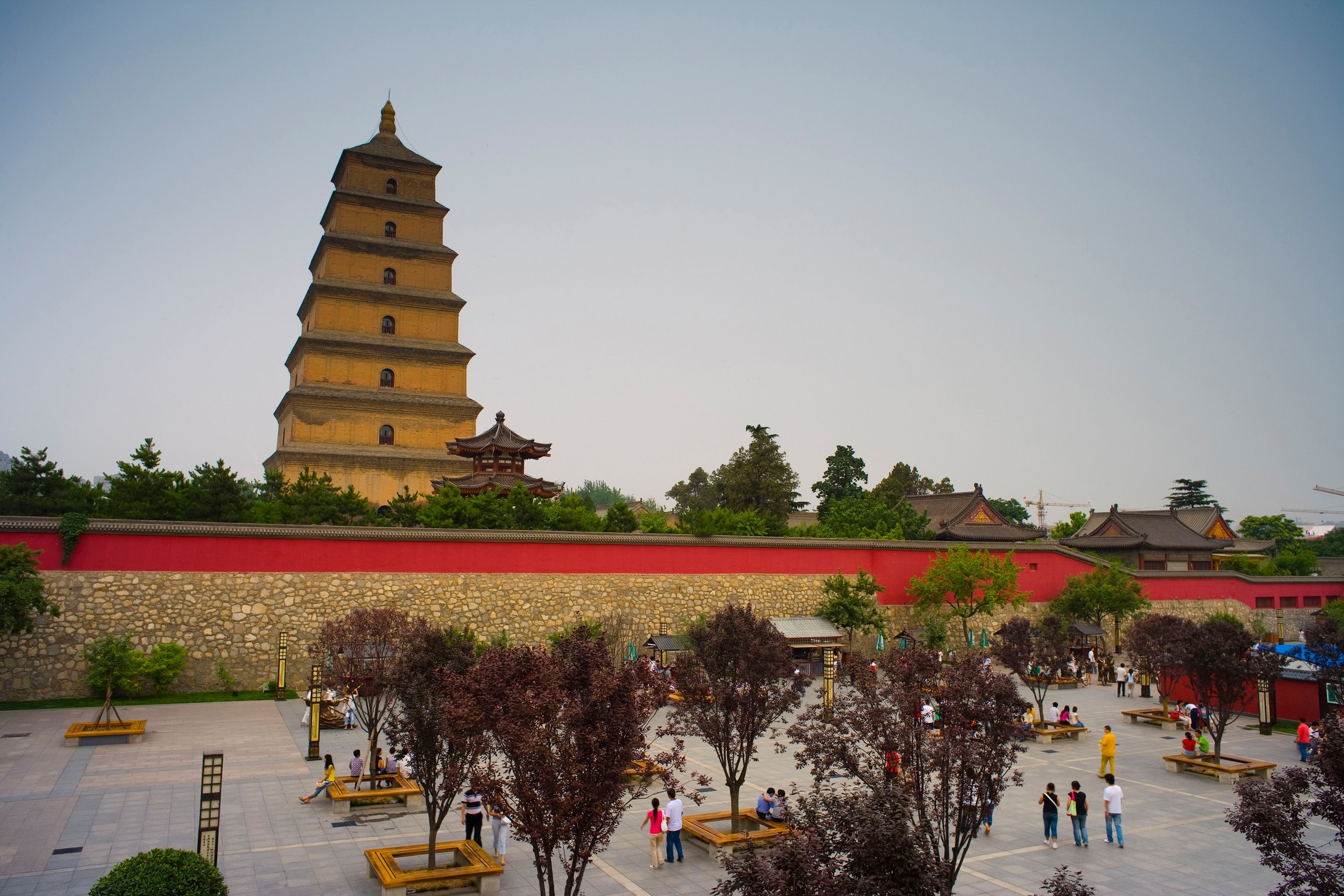
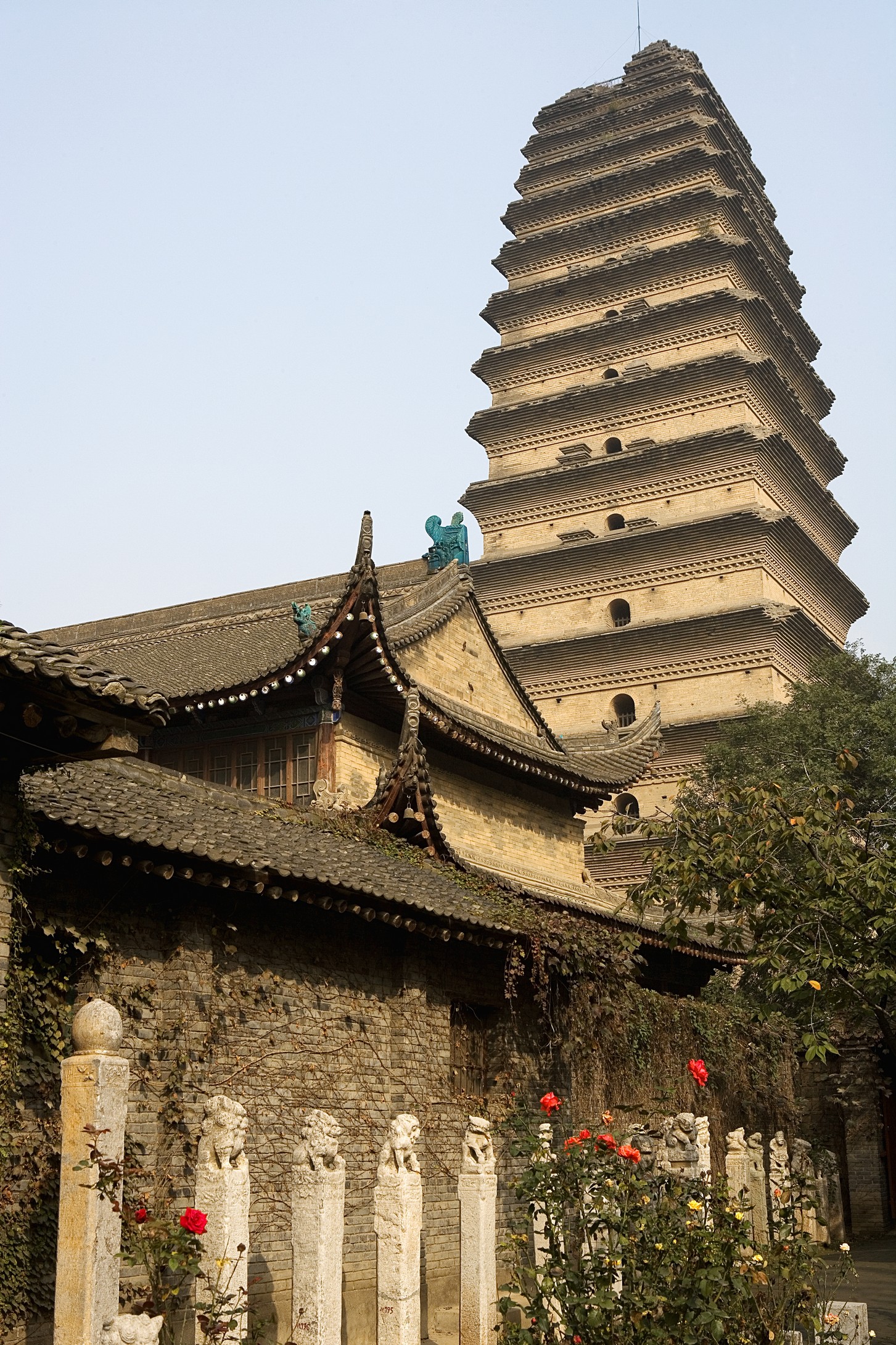
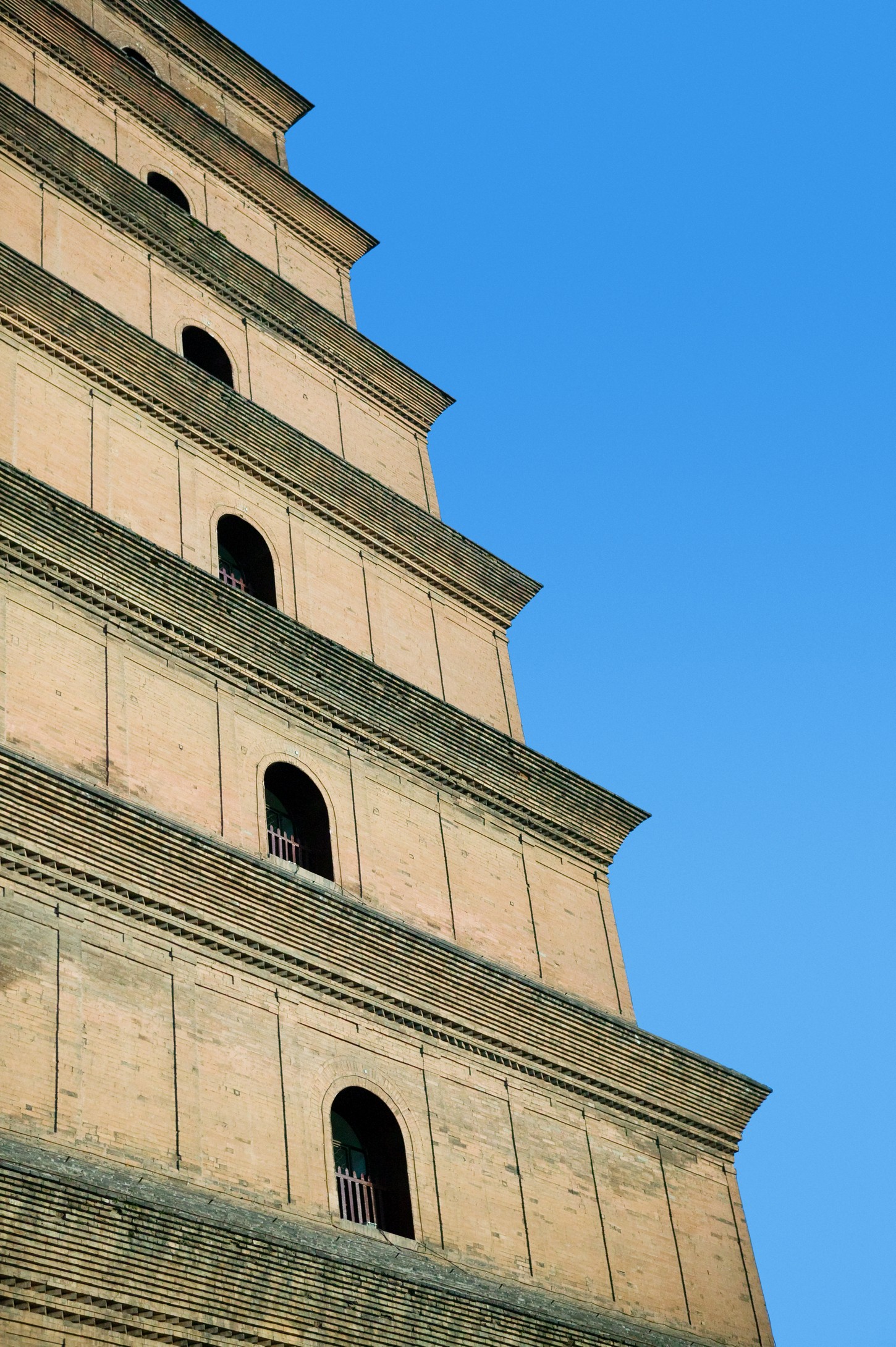
Standing majestically in the heart of Xi’an, the Giant Wild Goose Pagoda (Dayan Ta) is far more than a mere architectural wonder—it is a living testament to the golden age of the Tang Dynasty and the enduring legacy of one of China’s most revered Buddhist monks, Xuanzang. Originally built in 652 AD within the Great Ci’en Temple, the pagoda was commissioned by Xuanzang himself to house the sacred scriptures and relics he brought back from his epic journey to India. The monk’s original design, inspired by Indian stupas, envisioned a towering 30-zhang structure, but the emperor scaled it down to a five-story brick-and-earth tower. Over centuries, the pagoda weathered war, earthquakes, and decay, undergoing major reconstructions during the reign of Empress Wu Zetian (who doubled its height to ten stories) and later in the Ming Dynasty, when it was reinforced with thick brick cladding to form the seven-story, square-pyramidal silhouette we see today. The name “Giant Wild Goose Pagoda” is steeped in legend—one tale tells of a self-sacrificing goose that fell before monks to teach them compassion, inspiring the pagoda’s name. Whether myth or fact, this iconic structure has become the soul of Xi’an, its ancient bells chiming with the echoes of a thousand years of history.
Highlights & Activities
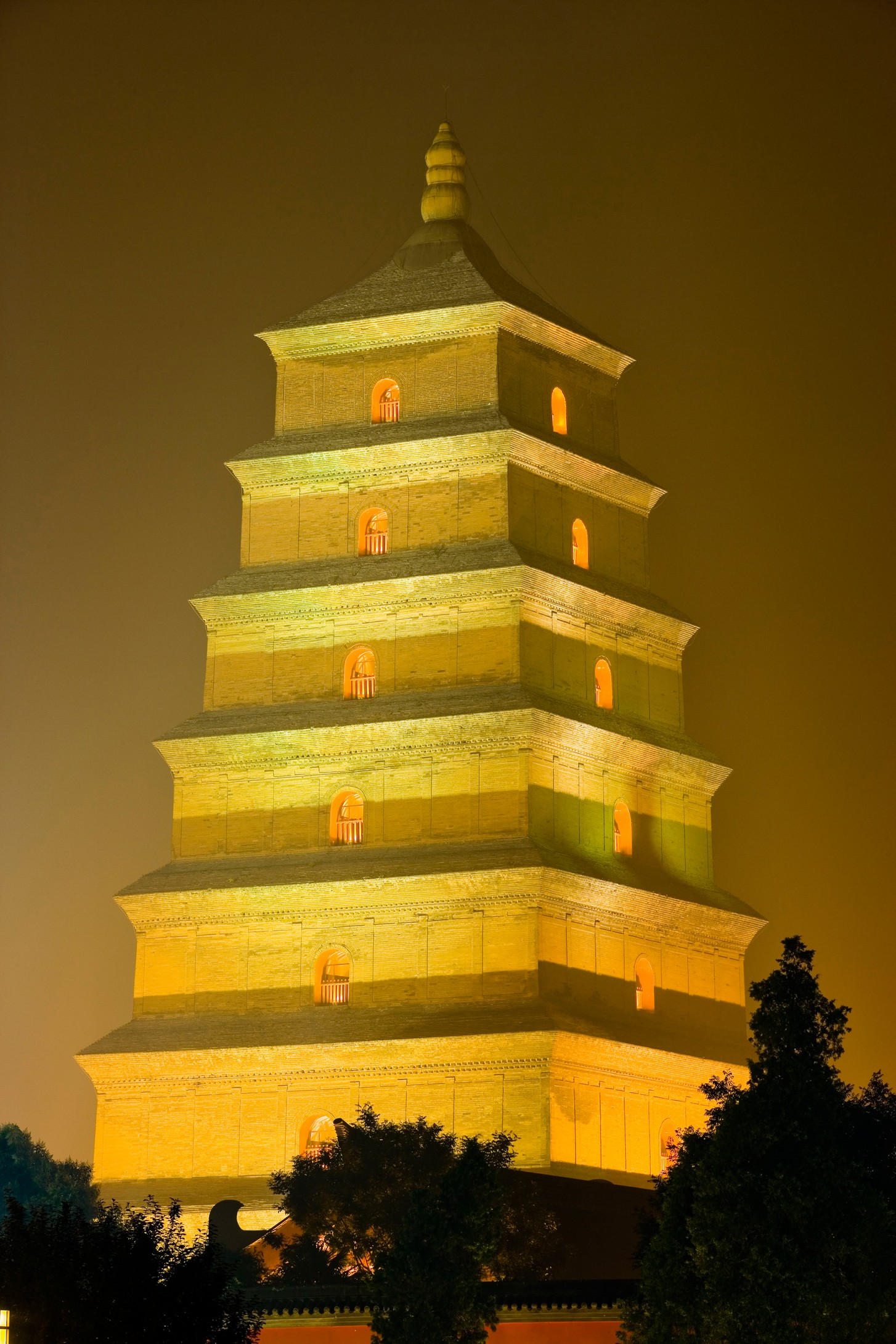
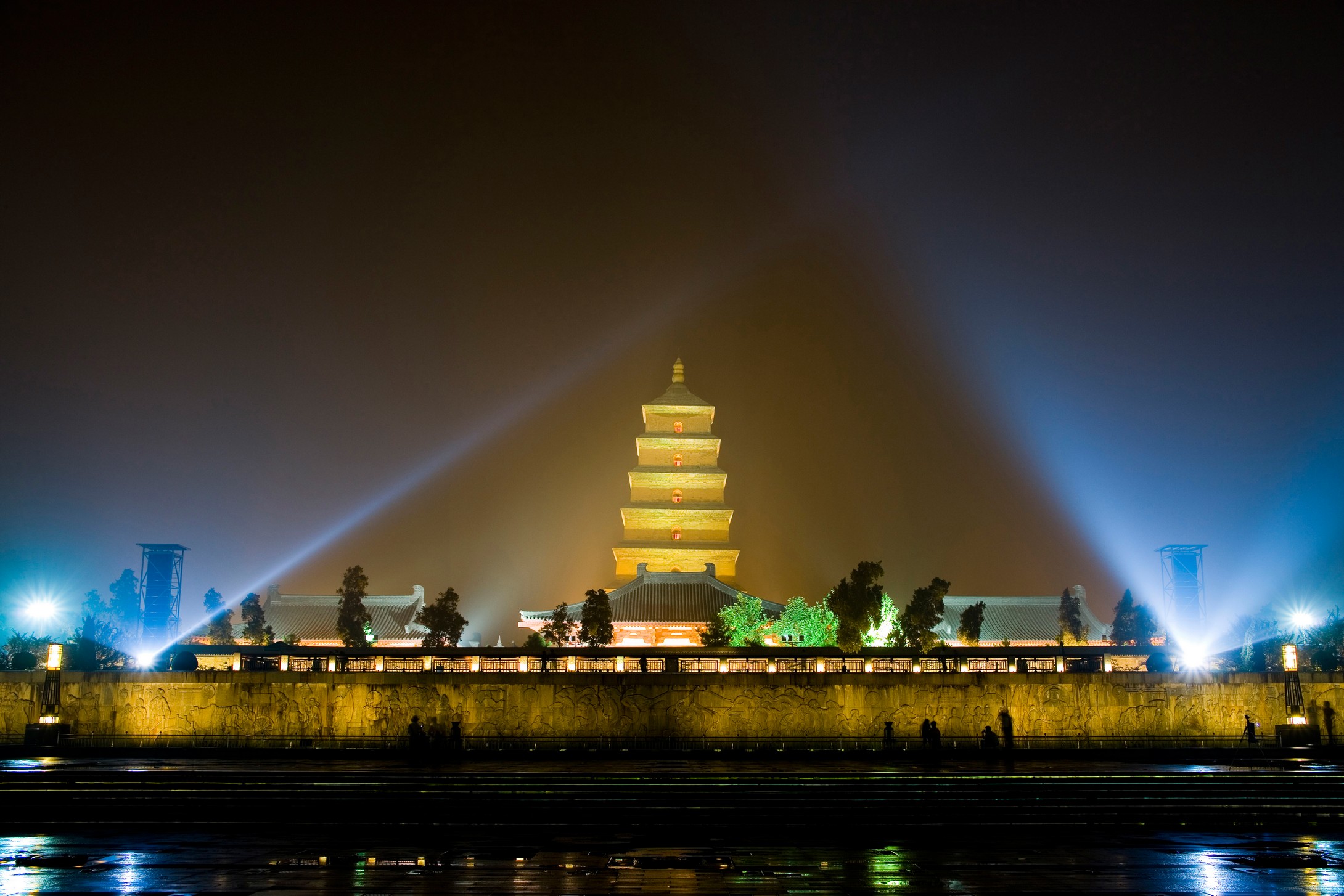
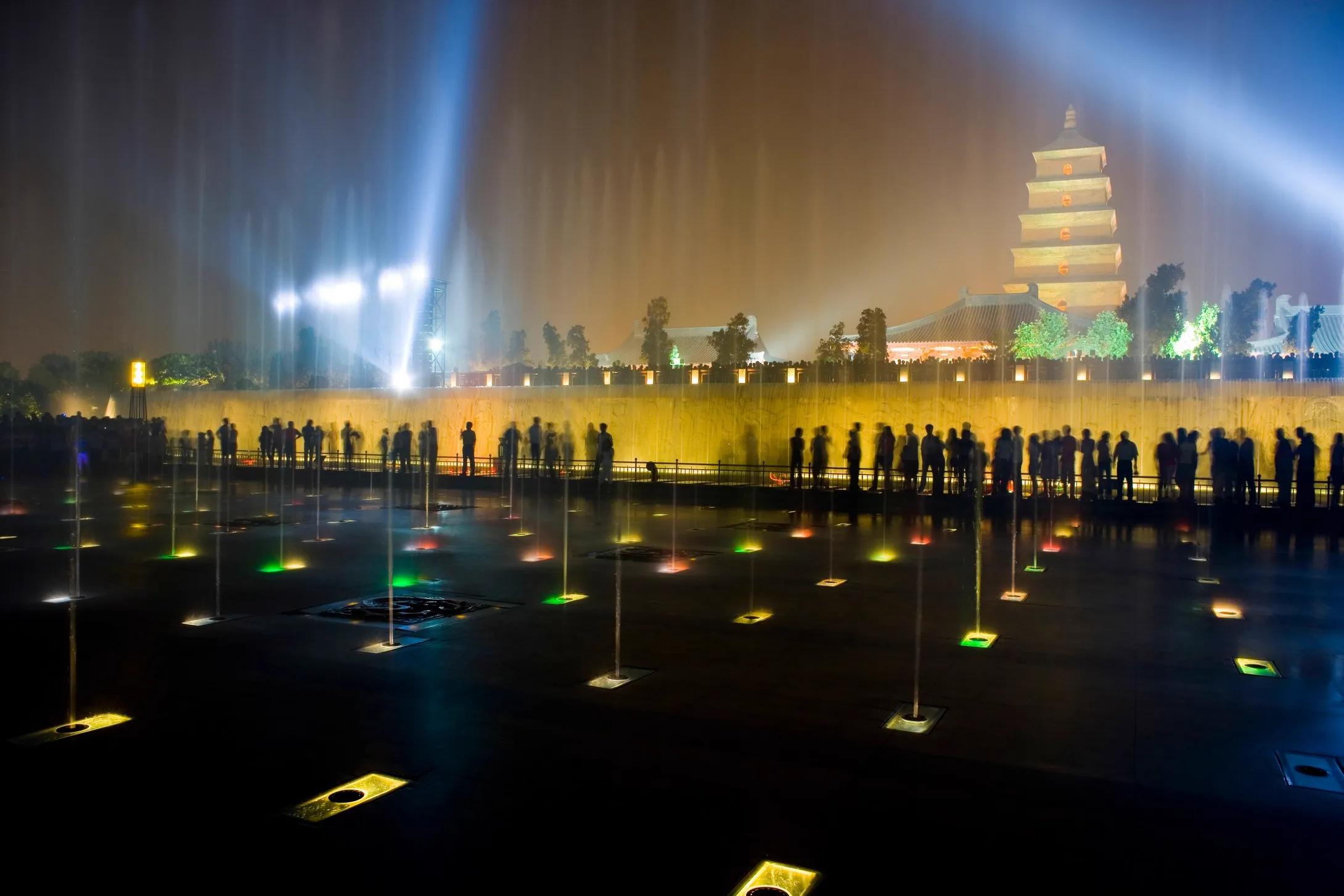
Climbing the pagoda is a must-do: its seven stories offer sweeping views of the modern city and the ancient layout of Chang’an (the Tang capital). Inside, you can explore the Xuanzang Sanzang Courtyard behind the pagoda, where intricate copper plate carvings and teak sculptures in the Dabianjue Hall vividly depict the monk’s arduous journey westward. The Great Ci’en Temple itself is a treasure trove—wander its halls to admire Buddha reliefs and feel the serene atmosphere that has drawn pilgrims for centuries. In front of the temple, a statue of Xuanzang stands with a staff, his transcendent gaze fixed southward as if reciting sutras. Outside the temple, the North Square boasts one of Asia’s finest music fountains. At night, illuminated jets of water dance in sync with classical and modern tunes, creating a spectacular show against the backdrop of the ancient pagoda. The square itself is adorned with 100-meter-long group sculptures, eight large figure sculptures, and 40 ground reliefs that narrate Tang Dynasty culture. For a quieter experience, stroll through the “Tang Poetry Garden” or “Meditation Forest” on either side of the central waterway.
Key Attractions Nearby
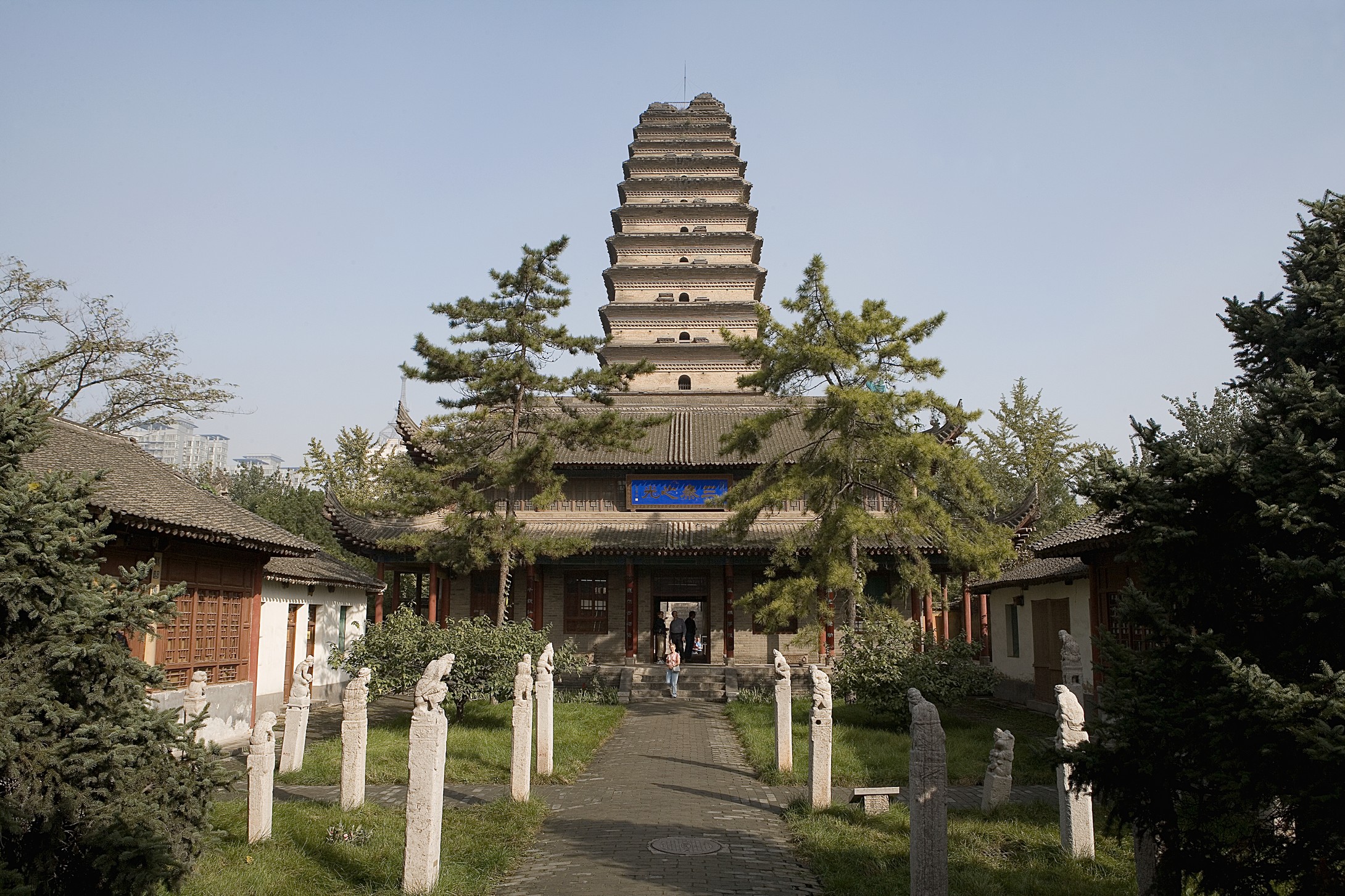
The area around the Giant Wild Goose Pagoda is a cultural hub. Just south of the pagoda lies Tang Paradise, a sprawling theme park that recreates the splendor of the Tang Dynasty with nightly performances and gardens. The South Square features a statue of Xuanzang and leads to the Datang Tongyi Fang, a pedestrian street lined with cafes, bars, and restaurants. Art lovers can visit the Xi’an Concert Hall and Xi’an Art Museum, both within walking distance. For a deeper dive into Buddhist history, the nearby Small Wild Goose Pagoda and the Shaanxi History Museum are just a short taxi ride away.
Where to Dine
The Datang Tongyi Fang area is a food lover’s paradise, offering everything from traditional Xi’an noodles and lamb skewers to modern fusion cuisine. Try the iconic “Biang Biang” noodles or a bowl of steaming “Yangrou Paomo” (crumbled flatbread in lamb stew) at local favorites like “Tongyi Fang Restaurant.” For a quick bite, the street vendors near the North Square sell candied hawthorn skewers and “Roujiamo” (Chinese hamburgers). The area west of the square is packed with cafes and bars where you can sip tea or coffee while watching the fountain show.
Weather & Best Time to Visit
Xi’an has a temperate continental climate with four distinct seasons. Spring (March to May) and autumn (September to November) are ideal, with mild temperatures averaging 15–25°C (59–77°F) and clear skies—perfect for climbing the pagoda and exploring the temple grounds. Summer (June to August) can be hot and humid, with temperatures often exceeding 35°C (95°F), but the evening fountain show offers a cool respite. Winter (December to February) is cold and dry, with occasional snow that transforms the pagoda into a serene winter wonderland. Crowds peak during national holidays (especially Chinese New Year and Golden Week in October), so visit on weekdays or early mornings for a quieter experience.
Travel Tips
- Getting There: Take Metro Line 3 to Giant Wild Goose Pagoda Station (exits B or C). Buses 5, 19, 21, 22, 23, 24, 27, and Tour 9 (320) also stop at “Giant Wild Goose Pagoda” Station. A taxi from the train station costs about 15 yuan.
- Fees: Entry to the Great Ci’en Temple is 50 yuan; climbing the pagoda costs an additional 30 yuan (some sources list 50 yuan for the pagoda—confirm at the gate). The North and South squares are free.
- Hours: Temple and pagoda: summer 8:00–19:30, winter 8:00–18:00 (peak season 8:00–18:30, off-season 8:00–18:00). Music fountain shows: Monday to Friday at 12:00 and 21:00; weekends and holidays at 12:00, 14:00, 16:00, 18:00, and 21:00.
- What to Bring: Comfortable walking shoes for the pagoda climb (no elevator), a water bottle, and a camera for stunning views. In summer, bring sunscreen and a hat; in winter, dress warmly. Arrive early to avoid long queues, especially during peak season.
- Contact: Great Ci’en Temple: 029-85521890; North Square: 029-85551600. Official website: www.xaqujiangchi.com.