Overview & History
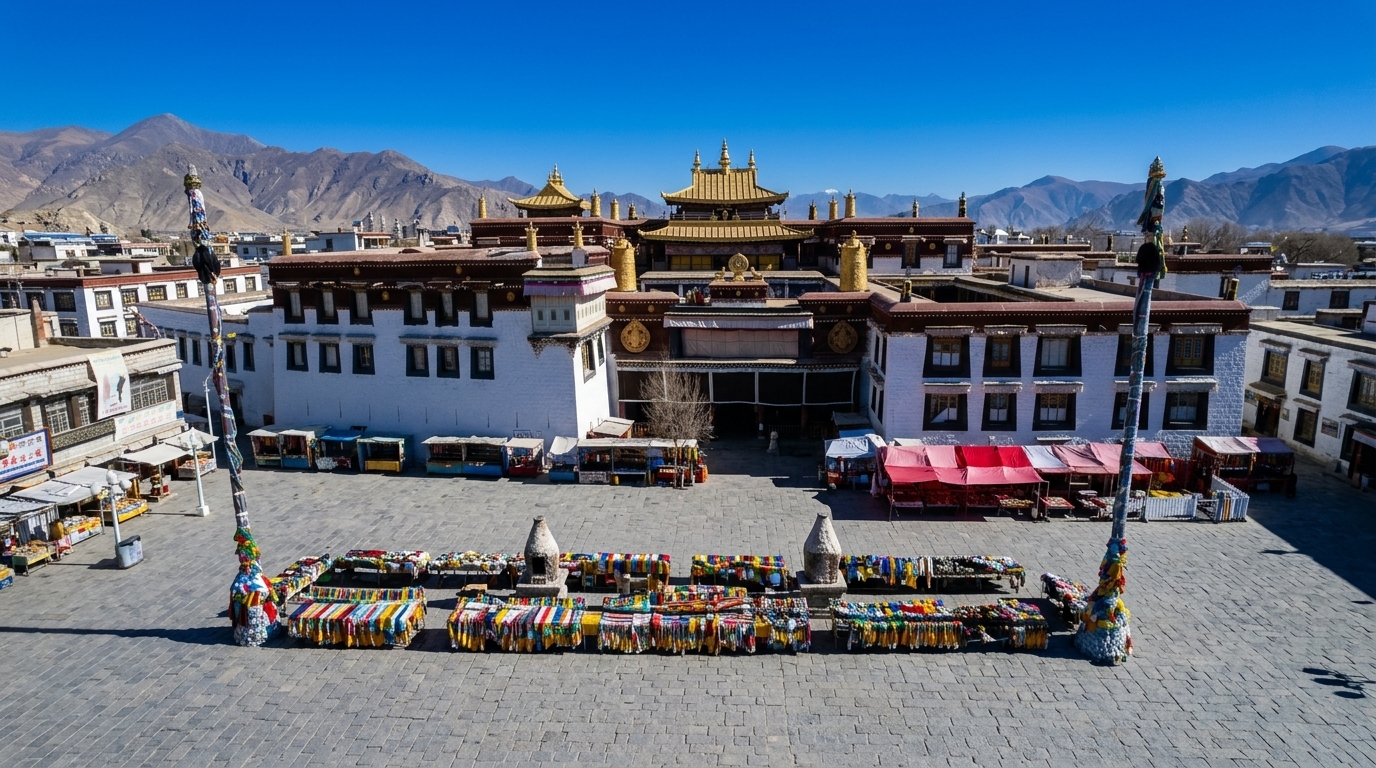
Jokhang Temple, known as "Jokhang" in Tibetan and also called "Tsuglagkhang," is the ultimate pilgrimage destination for Tibetan Buddhist believers. Its sanctity rivals that of the Potala Palace, and both geographically and spiritually, it stands as the true center of Tibetan Buddhism. First built in the mid-7th century by King Songtsen Gampo, the temple was originally constructed to house a statue of the eight-year-old Shakyamuni Buddha brought by his Nepalese wife, Princess Bhrikuti. Legend tells that Lhasa was once a wild marshland, and Princess Bhrikuti’s attempts to build a temple failed repeatedly—walls collapsed overnight. Seeking help from the Chinese Princess Wencheng, who was skilled in geomancy, it was discovered that the land lay over the heart of a demoness. To subdue her, the lake had to be filled and temples built on her joints. With the labor of 1,000 goats carrying earth, the temple rose, and Lhasa’s name—meaning "land of goats"—honors their sacrifice. In the 8th century, Princess Wencheng’s statue of the twelve-year-old Shakyamuni Buddha arrived from Chang’an and became the temple’s most treasured relic. In 1409, Je Tsongkhapa, founder of the Gelug school, held the Great Prayer Festival here, cementing Jokhang’s pivotal role. Over centuries, it has hosted the ordination of Dalai Lamas and Panchen Lamas, as well as the Golden Urn ceremony, making it both a political and religious heart.
Highlights & Activities
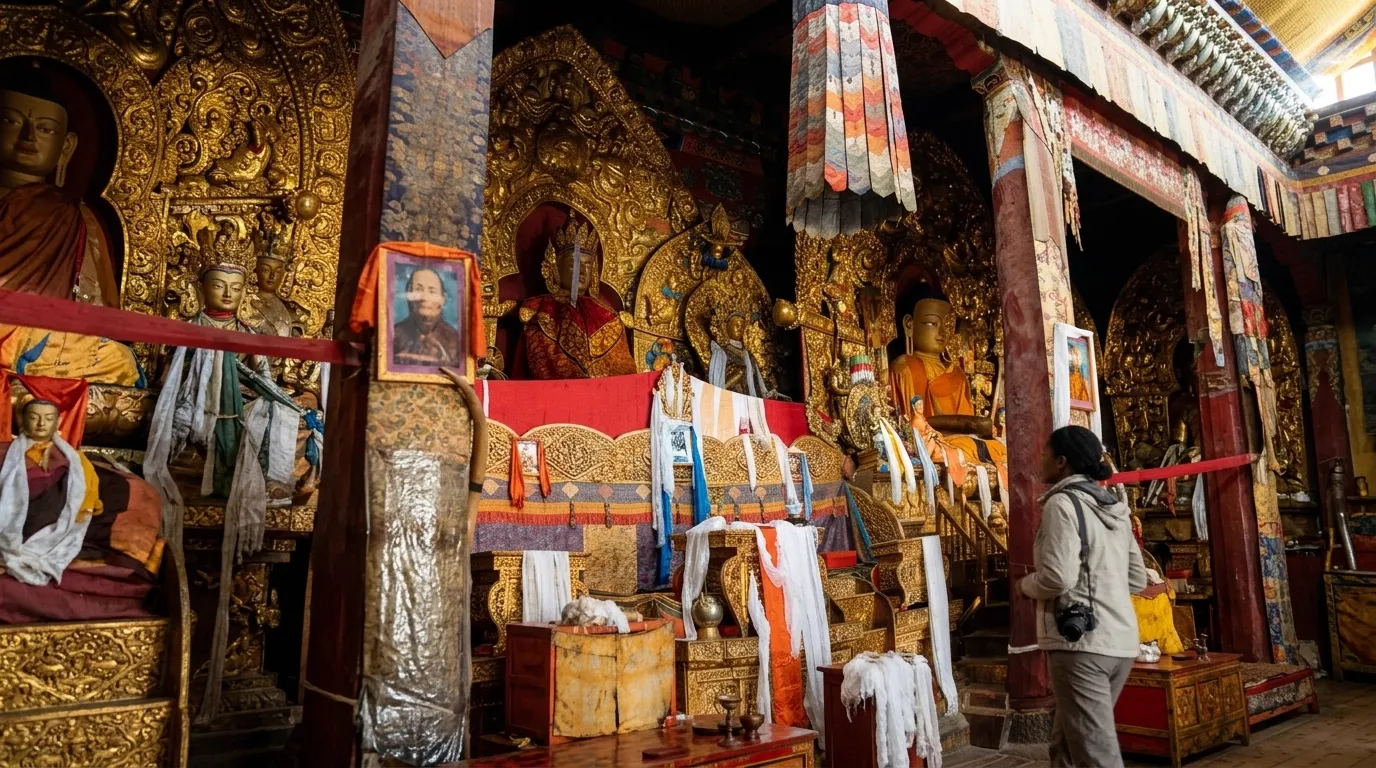
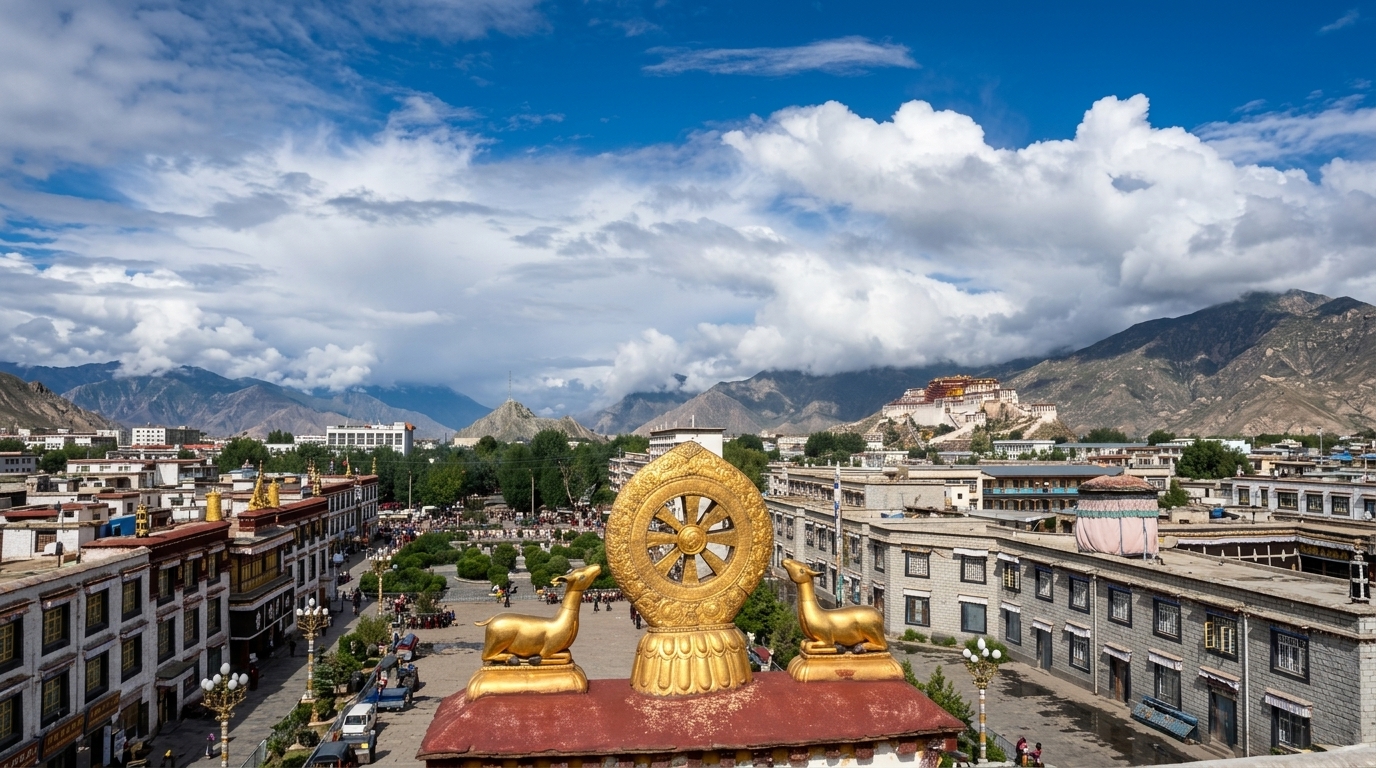
The temple’s main hall houses the revered twelve-year-old Shakyamuni Buddha statue, adorned with a crown said to be forged by Songtsen Gampo himself, set with Tibet’s most precious dzi beads. Pilgrims queue from dawn—around 6:00 AM—to offer butter and prostrate before it. Inside, explore the Hall of Tsongkhapa and His Eight Disciples, the Thousand-Armed Avalokiteshvara Hall, and the Maitreya Buddha Hall. A nearly kilometer-long mural depicts Princess Wencheng’s journey and the temple’s construction, alongside two Ming Dynasty embroidered thangkas. Climb to the rooftop for stunning views of the Barkhor Square below—best captured in early morning or late afternoon light. Listen at the corner spring, where some claim to hear underground waters and duck wings. On the second floor, 108 snow lion statues, each with unique expressions, are said to represent King Songtsen Gampo’s 108 generals. The third floor enshrines Palden Lhamo, the city’s protective goddess, whose spirit is believed to dwell in the mystical Lake Lhamo La-tso. Walk the inner kora (Nangkhor) along the Thousand Buddha Corridor, or join pilgrims on the middle kora (Barkhor) around the temple—a vibrant, ancient commercial street. The outer kora (Lingkhor) circles the Potala Palace, Medicine King Hill, Ramoche Temple, and Jokhang itself. Remember: no photography is allowed inside the main hall, and always walk clockwise.
Key Attractions Nearby
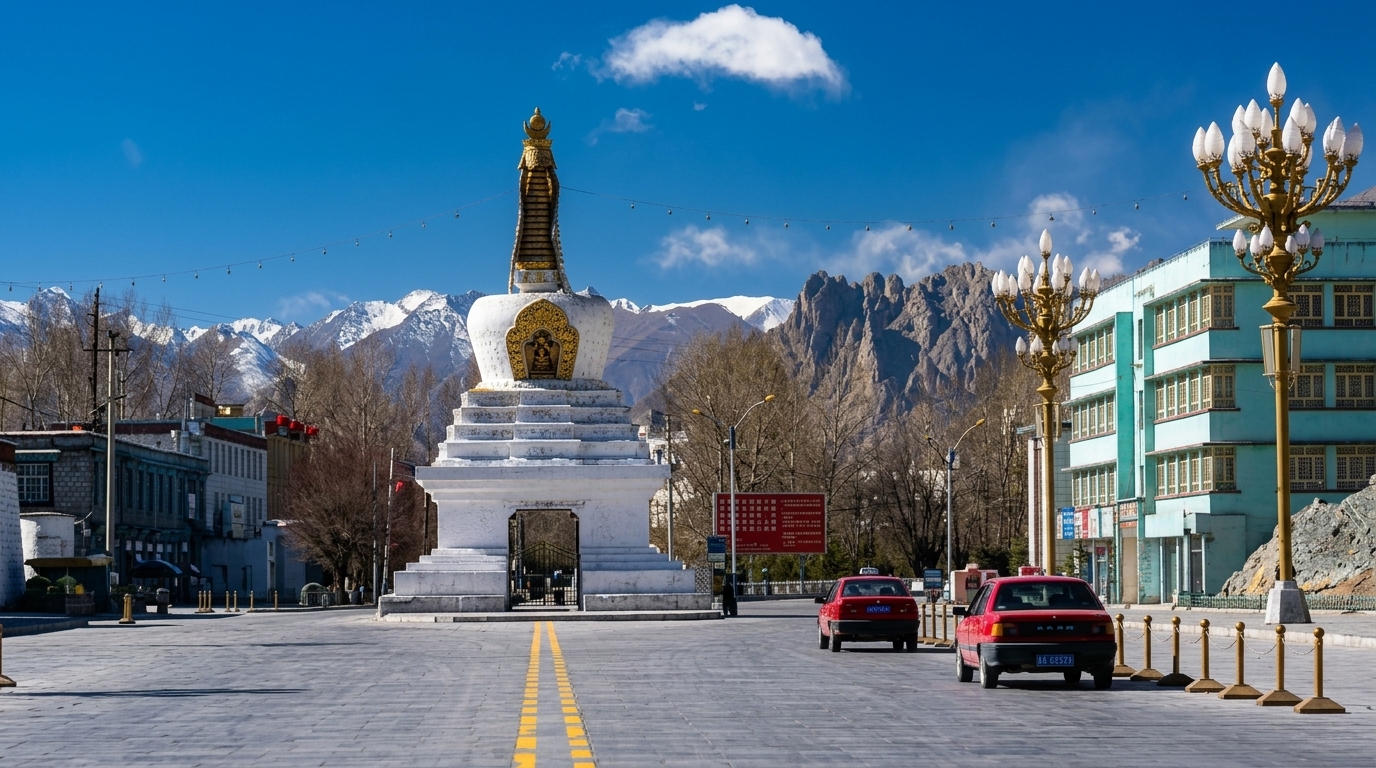
Jokhang Temple sits at the heart of Lhasa’s old town. The Barkhor Street encircles it, bustling with pilgrims, shops selling prayer flags, incense, and Tibetan crafts. Ramoche Temple, a short walk away, once housed the eight-year-old Buddha statue (now lost to war). The Potala Palace, a UNESCO World Heritage site, is a 15-minute walk and offers breathtaking views of the city. Medicine King Hill, with its rock-carved murals, provides a panoramic perspective. For a deeper spiritual experience, join the Lingkhor circuit, which links these sites in a sacred loop.
Where to Dine
Nearby, the legendary Makye Ame Restaurant (on Barkhor Street) offers Tibetan and Nepali dishes from its second-floor balcony, perfect for people-watching and temple views. Try momo (dumplings) and thukpa (noodle soup). For a quick bite, sample tsampa (barley flour) and butter tea at local tea houses. The area also has Chinese and Muslim eateries, especially near the mosque entrance. For a refined experience, visit the Snowland Restaurant for yak steak and Tibetan curry.
Weather & Best Time to Visit
Lhasa has a high-altitude climate with cool summers and cold winters. The best time to visit is from April to October, when temperatures range from 10°C to 22°C (50°F–72°F) and skies are clear. July and August are peak tourist months, with more crowds and occasional rain. Winter (November–March) is dry and cold (often below freezing at night), but offers fewer tourists and a more intimate experience. Major festivals like the Great Prayer Festival (usually in February/March) see huge pilgrim crowds. Early mornings and late afternoons provide the best light for photography, especially for the golden roofs.
Travel Tips
Getting There: Jokhang Temple is in Lhasa’s Chengguan District, surrounded by pedestrian streets. Main entrances include Danjielin Road, Yutuo Road, Chongsaikang, and the mosque area. Taxis can drop you at Barkhor Street’s edge; from there, walk.
Hours: Open 9:00 AM–6:00 PM. Ticket sales stop around 4:30 PM. During low season, monks rest from 1:00 PM–2:30 PM; no tickets sold then.
Fees: 85 RMB for tourists; free for Tibetan locals.
What to Bring: Dress modestly—cover shoulders and knees. Bring sunscreen, a hat, and water for the high altitude (3,650 m). Avoid heavy perfume; the temple is filled with juniper incense and butter lamps. Carry small bills for offerings. Be respectful: do not touch or stand in front of pilgrims prostrating, and never point your feet at statues or altars. Ask permission before photographing people. Note that a fire in February 2018 damaged some golden roofs, but the temple remains open; check for any closures.
Etiquette: Walk clockwise, speak softly, and avoid loud behavior. The stone slabs before the temple, polished smooth by countless prostrations, are a sacred space—observe quietly. If you wish to make an offering, butter is preferred; you can buy it from vendors outside.