Overview & History
Nestled beside the serene Huanhuaxi Park, just outside Chengdu's west gate, the Du Fu Thatched Cottage is far more than a simple historical residence—it is the spiritual heart of Chinese poetry. This sacred site commemorates the life of Du Fu (712–770 AD), widely revered as the "Sage of Poetry" of the Tang Dynasty. During his four-year sojourn in Chengdu, Du Fu composed over 240 poems here, many of which are masterpieces that capture both the beauty of nature and the sorrows of war. The cottage complex has been lovingly restored and expanded through the Song, Yuan, Ming, and Qing dynasties, transforming it into a lush, tranquil garden of pavilions, towers, and ancient, towering trees. What makes this place truly special is its dual identity: it is both a museum of literary history and a living testament to the enduring power of Du Fu's words, attracting poets, scholars, and travelers from around the globe.
Highlights & Activities
Exploring Du Fu Thatched Cottage is a journey through poetry, architecture, and art. The site is laid out along a central axis from south to north, with three main halls: the Grand Hall, the Ten Thousand Buddha Tower-Poetry History Hall, and the Ministry of Works Shrine. Key highlights include:
- Thatched Cottage Residence: The iconic landmark—a humble, reconstructed cottage inspired by traditional western Sichuan folk houses. It vividly evokes the simplicity in which Du Fu lived and wrote.
- Daya Hall: Originally the main hall of Caotang Temple, this grand space was renamed after the Northern Song writer Huang Tingjian's "Daya Hall Record." The plaque's calligraphy is borrowed from the famous Tang calligrapher Yan Zhenqing. Inside, you'll find China's largest indoor glazed inlaid lacquer mural and 12 sculptures of famous poets from various dynasties, offering a visual narrative of Du Fu's life and the evolution of classical Chinese poetry.
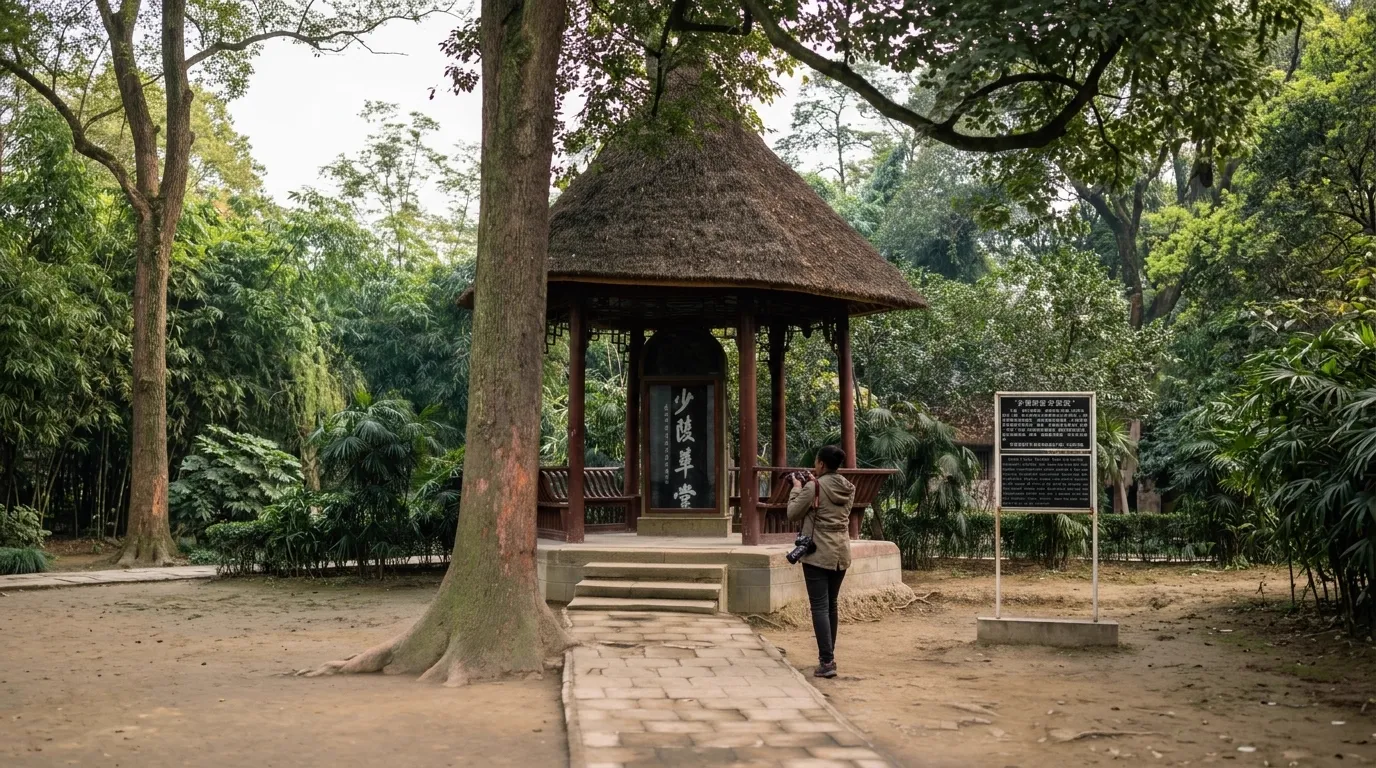
- Shaoling Stele Pavilion & Bonsai Garden: Northeast of the Ministry of Works Shrine, the stele pavilion honors Du Fu's legacy, while the nearby Bonsai Garden features exquisite miniature landscapes, blending horticulture with art.
- Huanhua Shrine & Ten Thousand Buddha Tower: These structures, along with the Flower Path, provide peaceful spots for reflection amid the gardens.
Activities include guided audio tours that bring Du Fu's poems to life, calligraphy workshops (seasonal), and quiet contemplation in the bamboo-shaded courtyards.
Key Attractions Nearby
Your visit to the Thatched Cottage can easily be combined with other Chengdu highlights:
- Huanhuaxi Park: Adjacent to the cottage, this sprawling park features winding streams, bamboo groves, and traditional bridges—perfect for a stroll after your cultural immersion.
- Wuhou Shrine: A 15-minute drive away, this memorial to the Three Kingdoms era offers insight into another facet of Chinese history and is one of Chengdu's most revered sites.
- Jinli Ancient Street: Located near Wuhou Shrine, this bustling pedestrian street is lined with shops selling Sichuan handicrafts, snacks, and souvenirs, offering a vibrant taste of local life.
- Kuanzhai Alley: A historic quarter with narrow lanes, teahouses, and courtyard homes, ideal for experiencing Chengdu's slow-paced, tea-culture lifestyle.
Where to Dine
Chengdu is a UNESCO City of Gastronomy, and dining near the Thatched Cottage is a treat. For authentic local flavors, consider:
- Chen Mapo Tofu: A legendary restaurant (multiple locations) known for its fiery, numbing mapo tofu—a must-try for spice lovers.
- Huanhuaxi Teahouse: Right next to the park, this spot offers simple Sichuan snacks (like dan dan noodles and dumplings) alongside traditional tea ceremonies.
- Jinli Street Food Stalls: Sample street eats such as chuan chuan (skewers), jie er (cold noodles), and sweet san da pao (rice balls).
- Local Hot Pot: For a full experience, try a hot pot restaurant like Huangcheng Laoma (Old Town) in the city center, where you can cook meats and vegetables in a bubbling, spicy broth.
Weather & Best Time to Visit
Chengdu enjoys a mild, humid subtropical climate. The best times to visit are spring (March to May) and autumn (September to November), when temperatures are pleasant (15–25°C / 59–77°F) and the gardens are at their most vibrant—spring brings blooming flowers, while autumn offers clear skies and golden leaves. Summers (June to August) are hot and rainy, with temperatures often exceeding 30°C (86°F), and heavy downpours can disrupt outdoor exploration. Winters (December to February) are cool and overcast, with occasional fog, but crowds are thinner. To avoid peak tourist crowds, visit on a weekday or early in the morning. The cottage is especially atmospheric during the Du Fu Poetry Festival (usually in April), which features readings and cultural performances.
Travel Tips
- Getting There: Take Chengdu Metro Line 4 to Caotang North Road Station (Exit B), then walk 10 minutes. Buses 19, 35, 58, and 82 also stop nearby. Taxis from the city center cost about 20–30 RMB.
- Fees & Hours: Admission is 60 RMB (adults), with discounts for students and seniors. The cottage is open daily from 8:00 AM to 6:00 PM (last entry at 5:30 PM). Check for holiday closures.
- What to Bring: Comfortable walking shoes (the grounds are extensive), an umbrella or raincoat (especially in summer), and a camera. A notebook for jotting down your favorite Du Fu verses is a nice touch!
- Language: English signage is limited, so download a translation app or rent an audio guide (available at the entrance) for deeper context.
- Etiquette: Maintain a quiet, respectful demeanor—this is a place of literary pilgrimage. Photography is allowed, but avoid flash in indoor halls.