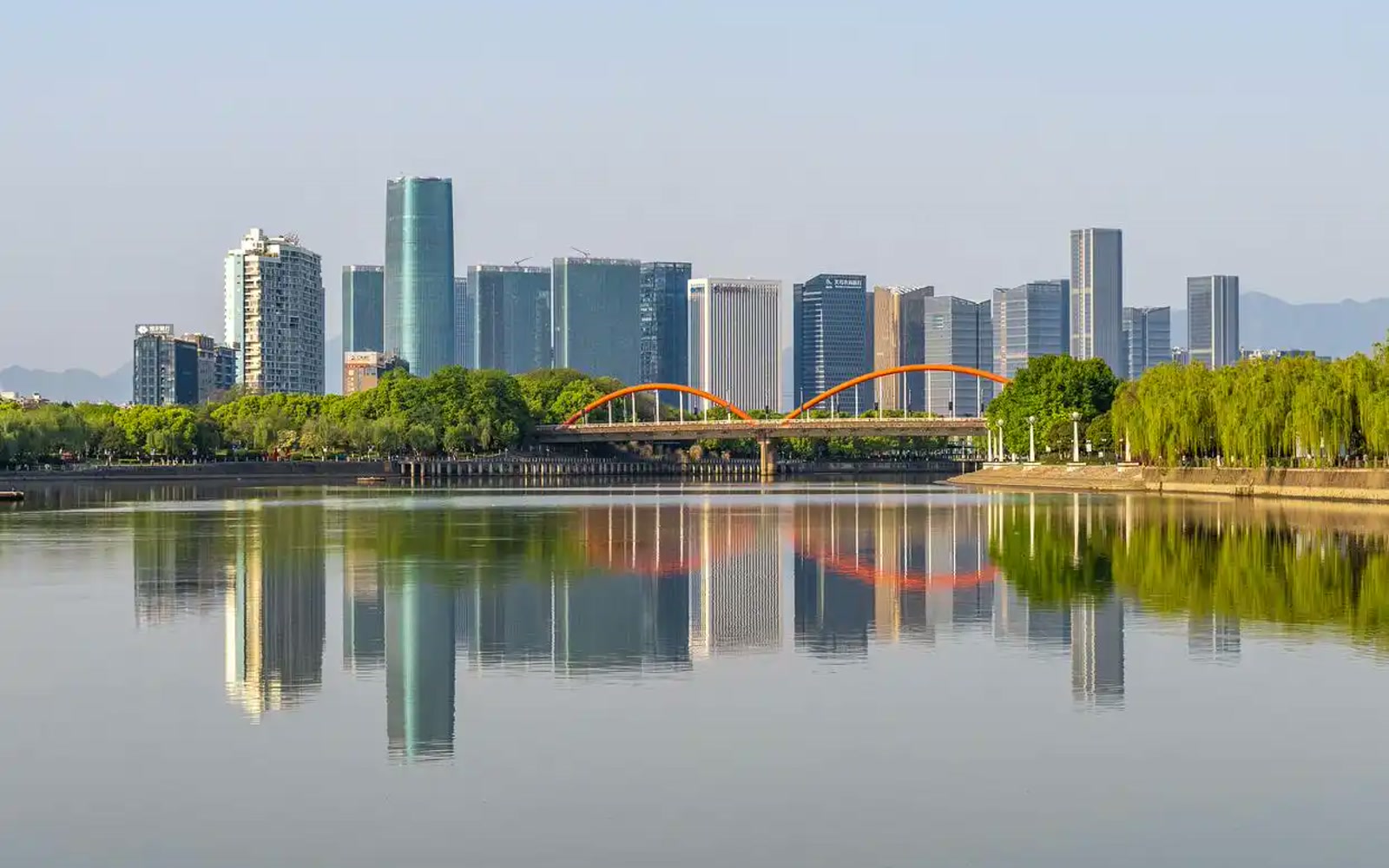
Yiwu
Browse the world's largest small-commodity market, then wander ancient towns and riverside parks in Zhejiang's trading heartland.
Yiwu at a Glance
Everything you need to know before you go.
Yiwu, a county-level city in central Zhejiang, is the world's largest wholesale market for small commodities. Its Yiwu International Trade City — also known as the Futian Market — spans five districts and tens of thousands of booths, drawing merchants from more than 200 countries and regions. Beyond the market floors, the city offers a canal-side ancient town, a Tang-dynasty poet's park, museums, and a food scene that runs from local pancakes to Middle Eastern grills.
Where to Stay
Choose the neighborhood that fits your style.
Near Yiwu International Trade City
Stay close to the Futian Market to start shopping right at opening time. Districts 1–5 are walkable or a short taxi ride away, and the area is packed with budget and business hotels plus Middle Eastern restaurants catering to international merchants.
Best for first-time visitors and serious shoppersCity Center (Chouzhou / Binwang Road)
Closer to Yiwu Museum, Jiming Mountain, and the restaurants and shops of the old town, with easy access to Yiwu Railway Station and the airport bus. Mid-range chains cluster along Binwang Road and Chouzhou Road.
Best for culture, food, and easy rail accessYiwu Highlights
The city's essential experiences, grouped by what you love most.
The world's largest wholesale market for small commodities: Districts 1–2 for daily goods and accessories, District 3 for stationery and sporting goods, District 4 for socks and knitwear, and District 5 for imported goods.
China's premier small-commodity trade fair, held each October at the Yiwu International Expo Center, draws buyers from around the world.
A canal-side town with Ming-Qing arcaded streets, old guild halls, and a floating bridge — about 30 minutes from the city center.
Exhibits on Yiwu's trading history, local bronzes and ceramics, and the city's transformation from market town to global trade hub.
A classical garden honoring Luo Binwang, the Tang-dynasty poet of "Song of the Goose," who was born in Yiwu.
A wooded hill in the city with walking paths, pavilions, and views over the Yiwu River and the market district.
The river winds through the city; its banks offer pleasant evening strolls between the old town and the market area.
An ancient Buddhist temple on the city's outskirts, associated with Fu Dashi, the celebrated Liang-dynasty lay Buddhist master from Yiwu.
Thin, crispy pan-fried pancakes stuffed with pork and scallions, from nearby Donghe village.
Yiwu is one of Zhejiang's great brown sugar producers; try the granulated sugar, sugar cakes, and sugared sesame snacks.
A hearty noodle soup with sheets of dried bean curd, best enjoyed in Fo Tang Ancient Town.
The market district brims with Iranian, Turkish, and Arab restaurants serving kebabs, hummus, and flatbreads to Yiwu's large foreign trader community.
Best Time to Visit
Each season offers a different side of the city.
Spring · Mar–May
Mild weather ideal for market browsing and trips to Fo Tang Ancient Town.
Summer · Jun–Aug
Hot and humid; mornings at the market and evenings along the river are the best times to be out.
Autumn · Sep–Nov
The best season — crisp air and clear skies, and October brings the Yiwu International Commodities Fair.
Winter · Dec–Feb
Cool but quiet; good hotel deals and uncrowded market halls, though outdoor sightseeing is brisk. The market closes for about a month around the Spring Festival.
Suggested Itineraries
Two carefully-paced plans for your trip.
1-Day Express
Morning: tour the Yiwu International Trade City — start in Districts 1–2 for daily goods and accessories, then District 5 for imported goods. Afternoon: taxi to Fo Tang Ancient Town and wander the old arcaded streets, then finish with Fo Tang qianzhang noodles or a Middle Eastern dinner back near the market.
2-Day Classic
Day 1: full day at the International Trade City (Districts 1–5) with dinner in the market area. Day 2: climb Jiming Mountain for city views, visit Yiwu Museum and Luo Binwang Park in the morning, then return to Fo Tang Ancient Town for lunch and a slow afternoon before catching an evening train.
Local Tips
Insider knowledge for a smoother trip.
Prices at the trade city are wholesale; haggling is expected at smaller stalls, and buying in quantity gets better rates.
Some merchants ask for ID on larger orders. Keep your passport handy, and most vendors accept Alipay and WeChat Pay.
Market halls generally open 9:00–17:00, and mornings are liveliest. Many halls close for about a month around the Spring Festival.
The area around Chouzhou North Road has authentic Middle Eastern and African restaurants, a legacy of Yiwu's global merchant community.
The trade city is huge — free shuttle buses link the districts, and taxis and ride-hailing apps are cheap for getting around town.
If you're visiting in October, the Yiwu International Commodities Fair adds energy — and crowds — to the city.
FAQs About Yiwu
Quick answers to common questions.
Ready to Explore Yiwu?
Let MagicTrip build the perfect Yiwu itinerary — tailored to your interests, pace, and budget.