Folk Music · Maritime Culture
Maritime Folk Music
Sea Songs of China's Coastlines
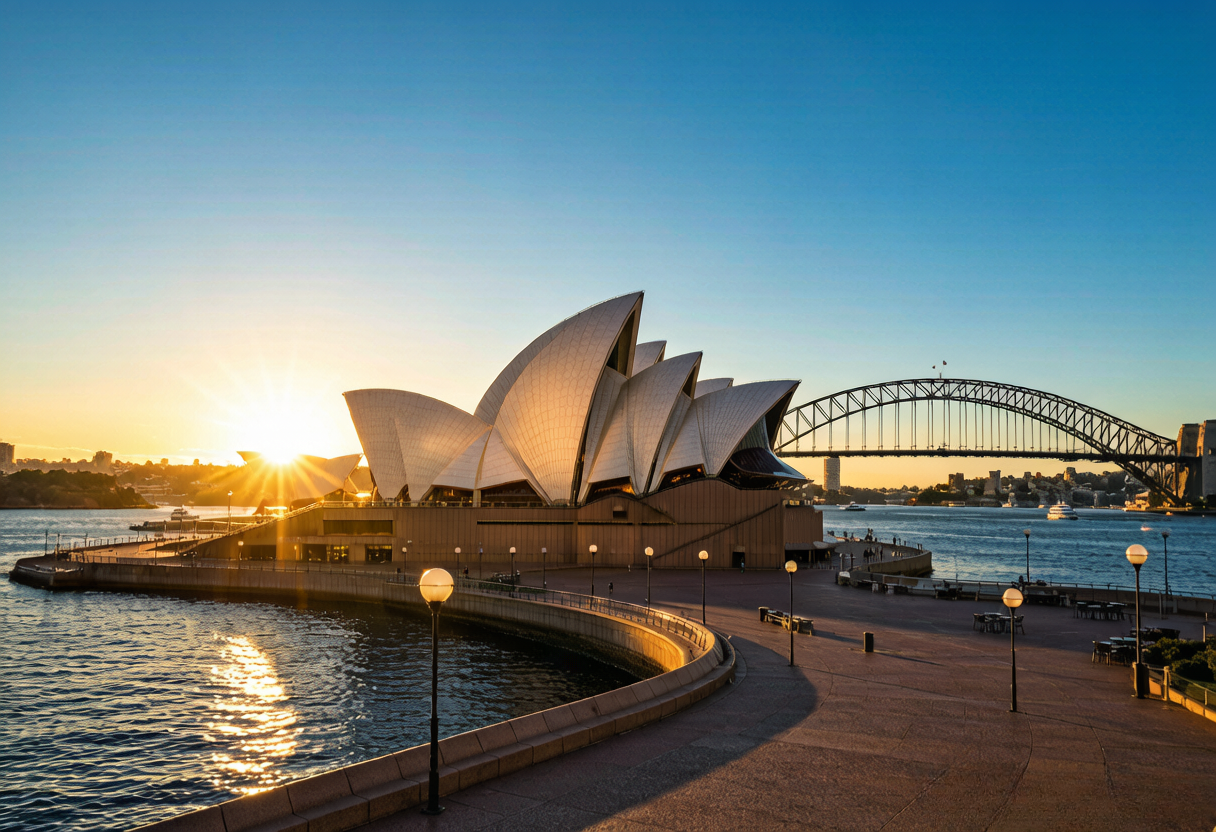
In September 2025, "Music of the People from the Sea" made its Southern Hemisphere debut at the Sydney Opera House, Melbourne Recital Centre, and Adelaide Town Hall. This was the first large-scale performance of Chinese folk music at Australia's top concert halls—within that world-renowned shell-shaped building, traditional Chinese instruments engaged in a cross-cultural dialogue with Western audiences.
The performance featured over 70 musicians, conducted by internationally renowned Chinese conductor Tang Muhai. When the joyful rhythm of "Csárdás" sounded, audiences couldn't help but stand up and "dance"; when "Bee Flight" (an adaptation of "The Flight of the Bumblebee") showcased five Chinese instruments playing at high speed, the entire venue erupted in cheers. It was like what you expected to be a quiet classical concert suddenly turned into a giant party scene.
Australian authoritative arts review magazine Limelight gave a five-star review: "The whole performance is ingeniously conceived, striking a perfect balance between tradition and contemporaneity. What moves the audience most is the sincere emotional resonance in the music." This is a remarkable evaluation—after all, Limelight is the most authoritative classical music review magazine in Australia, and getting a five-star recommendation means "Music of the People from the Sea" has reached world-class standards.
Dr. Liu Lu, Director of the Contemporary Music Department at the Sydney Conservatorium of Music, commented: "Every solo artist is extremely outstanding, the music is filled with abundant energy, profound emotion, and magnificent momentum. It has been a long time since I last heard a performance of such high caliber." A Chinese student studying in Melbourne named Fu Yug exclaimed after watching the performance: "Being able to see a high-standard concert from our homeland not only comforts our nostalgia but also gives us overseas Chinese a great sense of national pride."
"The whole performance is ingeniously conceived, striking a perfect balance between tradition and contemporaneity. What moves the audience most is the sincere emotional resonance in the music."
— Limelight Magazine (5 Stars)
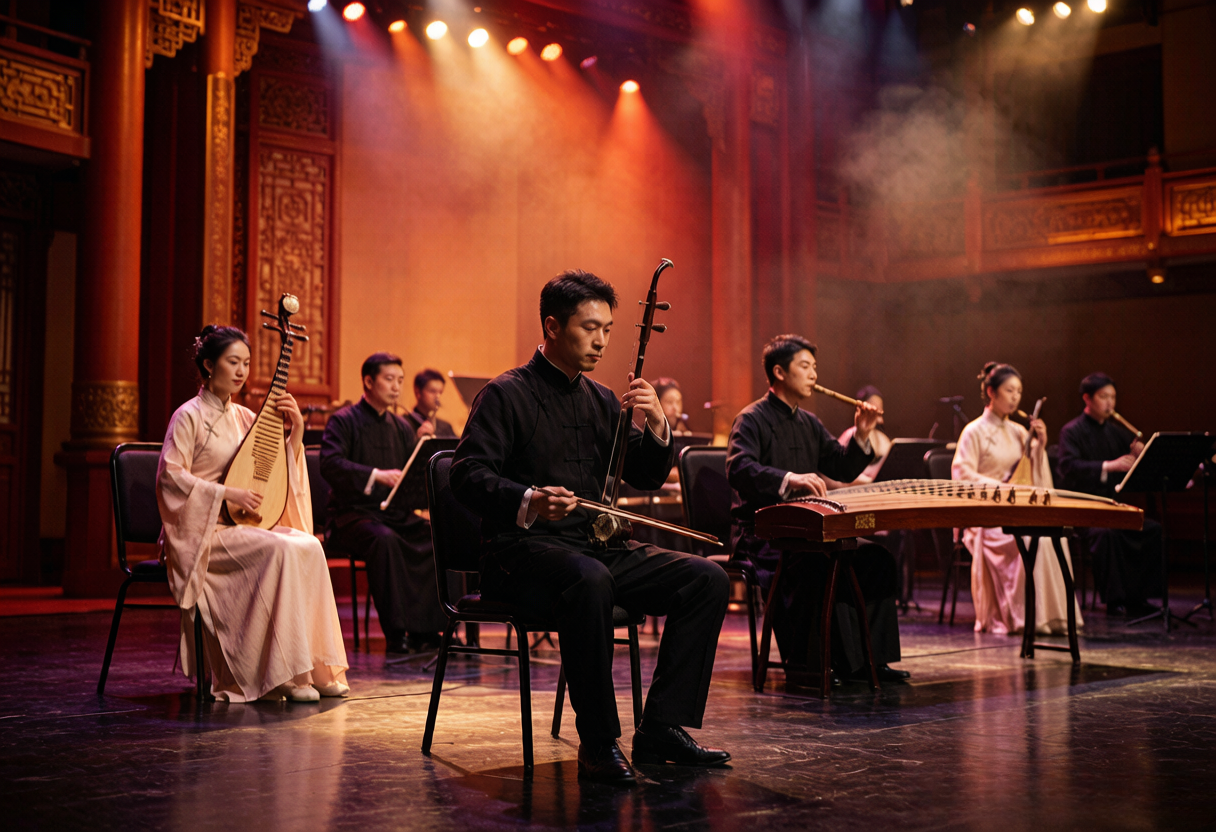
Foreigners might think "Chinese folk music" is just guqin music played in teahouses—quiet, slow, hypnotic. But "Music of the People from the Sea" completely shatters this impression. This is not the kind of music that will make you drowsy—it's an audiovisual feast that keeps you energized throughout.
Nine pieces, each "crossover." Opening piece "Drawing from the Ancient" begins with China's oldest wind instrument—the bone flute, its desolate and ancient tone guiding the audience through a thousand years, as if returning to the earliest stages of human civilization; "Water Journey" fuses ancient shakuhachi with modern handpan, Eastern and Western percussion engaging in a dialogue across time and space.
"Crossing Over" has the suona face electric rock head-on—perhaps a scene you never imagined, the most traditional Chinese instrument suddenly bursting with unprecedented energy,激烈碰撞让全场观众都屏住了呼吸; "Ink Play" uses guzheng and dance to recreate the imagery of calligraphy, the performer's fingers flying over the strings, notes like ink spreading on rice paper, the dancer's movements merging with the music into a flowing ink painting.
In "Phoenix Dance," performer Hu Chenyun not only produces unbelievably long tones—that breath length makes you question life itself—but also creates vivid "conversations" between birds with the dizhu, drawing laughter from the audience. A Melbourne audience member exclaimed after watching: "I didn't know Chinese music could be this exciting!" He studied classical music originally, but was deeply attracted by the variety of Chinese folk instruments.
This is not the "folk music" you remember—it's China's "contemporary music." It uses modern expressions to tell ancient Eastern stories, making it accessible to both young people and foreigners. Tradition and contemporaneity are not opposed—they can perfectly merge. "Music of the People from the Sea" proves this.
"I didn't know Chinese music could be this exciting!"
— Melbourne Audience Member
Starting from 2021, "Music of the People from the Sea" completed six rounds of 140 performances at the Shanghai Concert Hall in residency form. In July 2026, the seventh round of residency began, running continuously until August 1, bringing the total to 162 shows—once again setting a new record for Chinese folk music residency performances. This is the world's first folk music residency—unprecedented in China and even worldwide.
Why is "residency" itself a miracle? Because it means: every performance is repeated in the same venue, which means audiences will come for a second, third time—only good enough programs dare to do this. Think about it—if you go to a show and discover it's still running next week, next month, and every show is sold out, how attractive must this production be?
In fact, "Music of the People from the Sea" achieves this. Every residency is an accumulation of reputation; every show is a conversion of audience. Many come the first time to "check in," the second time to "reminisce," the third time for "pilgrimage." This is the power of residency—it's not just a performance, but a continuous output of culture.
Benefiting from the 240-hour transit visa-free policy, many foreign tourists specifically come to "check in." A Hungarian audience member commented: "It felt like watching a Chinese martial arts novel." A Nepali audience member said: "The music let us feel China's cultural power." Behind these evaluations lies a decade of accumulated reputation and influence globally.
From 2016 to 2026, over ten years, "Music of the People from the Sea" grew from a Shanghai local performance project to a benchmark case for Chinese culture "going global." Its success proves: Chinese traditional music is not just a "heritage" that can only exist in museums—it is "living culture" that can be reborn on contemporary stages.
"It felt like watching a Chinese martial arts novel"
— Hungarian Audience Member
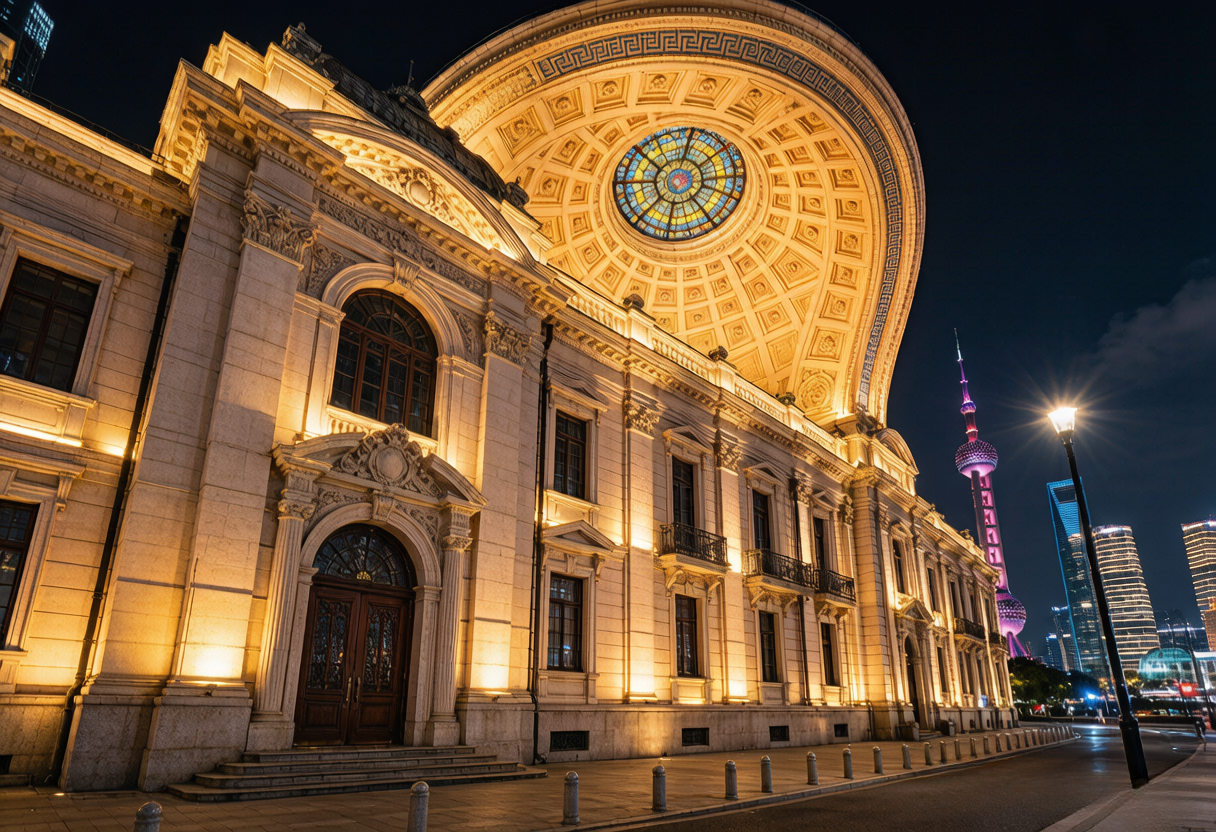
The venue is Cadillac·Shanghai Concert Hall—a nearly century-old European-style building located at People's Square in downtown Shanghai. This building was originally built in 1930, originally named "Nanjing Grand Theatre," renamed in 1950 to its current name. It is one of Shanghai's most prestigious music performance venues. Eastern music under a Western dome—"Western dome × Eastern music" itself makes for an excellent poster.
The 2026 seventh round of residency runs from July 21 to August 1, performing continuously. The organizers have teamed up with platforms like Trip.com to offer ticket discounts, attracting tourists from home and abroad. The concert hall's fourth floor "Resonance Space" simultaneously offers immersive XR experience projects, allowing audiences to experience the charm of technology combined with music beyond the performance.
Limited cultural products themed around the residency have also been launched, such as "Listening to Strings While Boating" and "Zodiac Quartet" gift packs, letting you take the concert memory home. The organizers even launched a "Sleepover at the Concert Hall" activity—allowing you to spend the entire night in this hundred-year-old building after the show, experiencing what the concert hall is like at night.
Recommended itinerary: Afternoon at People's Square—Shanghai Museum and Urban Planning Exhibition Hall are both nearby, you can experience Shanghai's history and future in one go → Evening at Shanghai Concert Hall for "Music of the People from the Sea" → After the show, head to Nanjing Road Walk or the Bund to experience Shanghai's night view. Such a day has both cultural depth and modern urban prosperity—it's the most typical "day in Shanghai."
Address: No.523 East Yan'an Road, Huangpu District, Shanghai (People's Square)
Transport: Metro Line 1, 2, 8 to People's Square Station
Show Dates: July 21 - August 1, 2026
Tickets: Trip.com, Damai.cn, etc.
Ten years ago, "Music of the People from the Sea" set off from Shanghai, heading to the world. Ten years later, it returned to Shanghai—in the form of residency, meeting audiences every week. During these ten years, it went to London's Barbican Centre, where audiences rose to applaud; it went to Paris Philharmonic Hall, where French audiences listened in fascination; it went to Berlin Philharmonic, where German audiences gave the evaluation of "perfect balance between tradition and contemporaneity"; it went to Sydney Opera House, where Australian audiences experienced the charm of Chinese folk music for the first time.
At the Sydney Opera House, audiences rose to applaud; at the Shanghai Concert Hall, foreign tourists recorded every thrilling moment with their phones; in various corners of the world, this melody has been adapted, sung, and remembered. Music needs no translation. Melody, rhythm, emotion—these are the universal languages of humanity.
When you sit in the Shanghai Concert Hall, when the first note of the suona sounds, you will understand: Chinese music can be this exciting. It's not just "tradition"—it's also "contemporaneity"; it's not just "ancient"—it's also "fashionable." It is the Chinese voice belonging to this era.
Next time, come to Shanghai. Come listen to "Music of the People from the Sea." Let your ears tell you what Chinese music really sounds like.
"Being able to see a high-standard concert from our homeland not only comforts our nostalgia but also gives us overseas Chinese a great sense of national pride."
— Australian Student Fu Yug
"Music needs no translation"
— Shanghai Chinese Orchestra · Cadillac Shanghai Concert Hall —