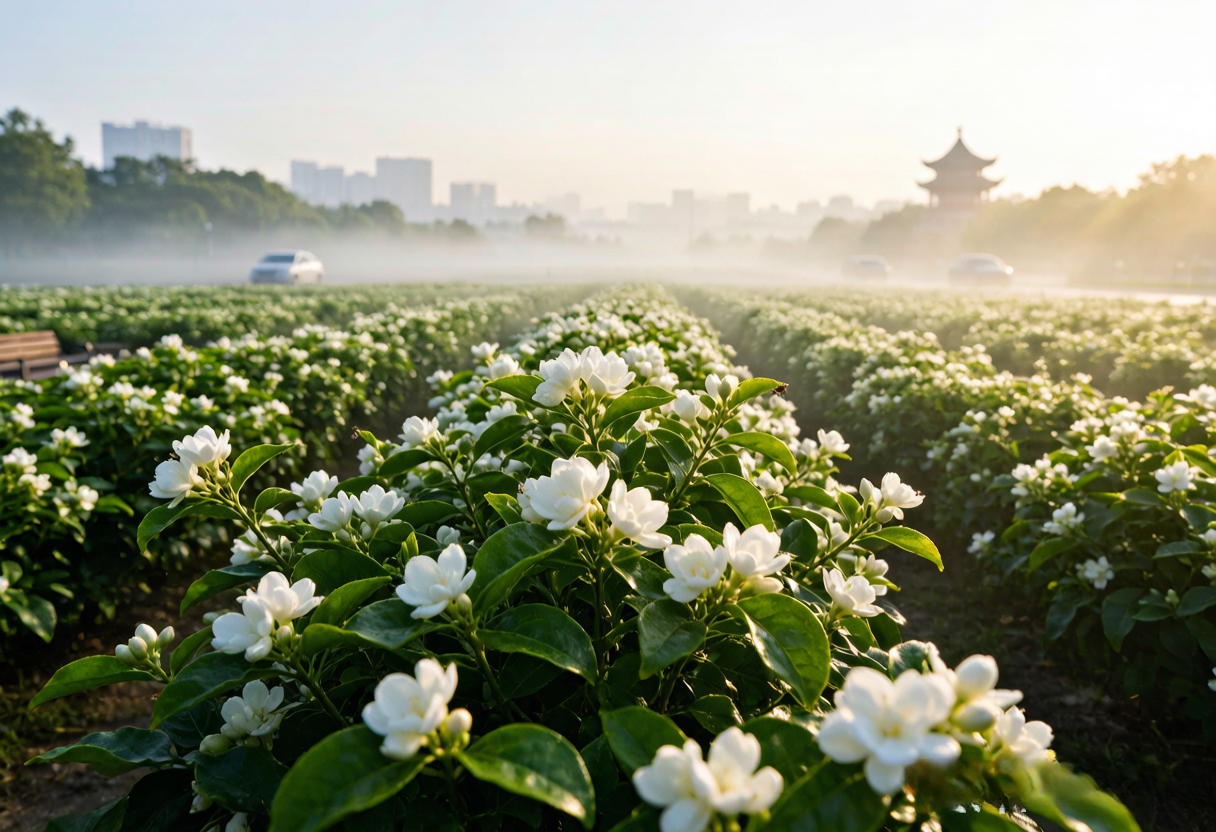
The Global Journey of a Jasmine Flower
From Yangzhou's Alleyways to the World Stage — How a Folk Song Became China's "Musical Ambassador"
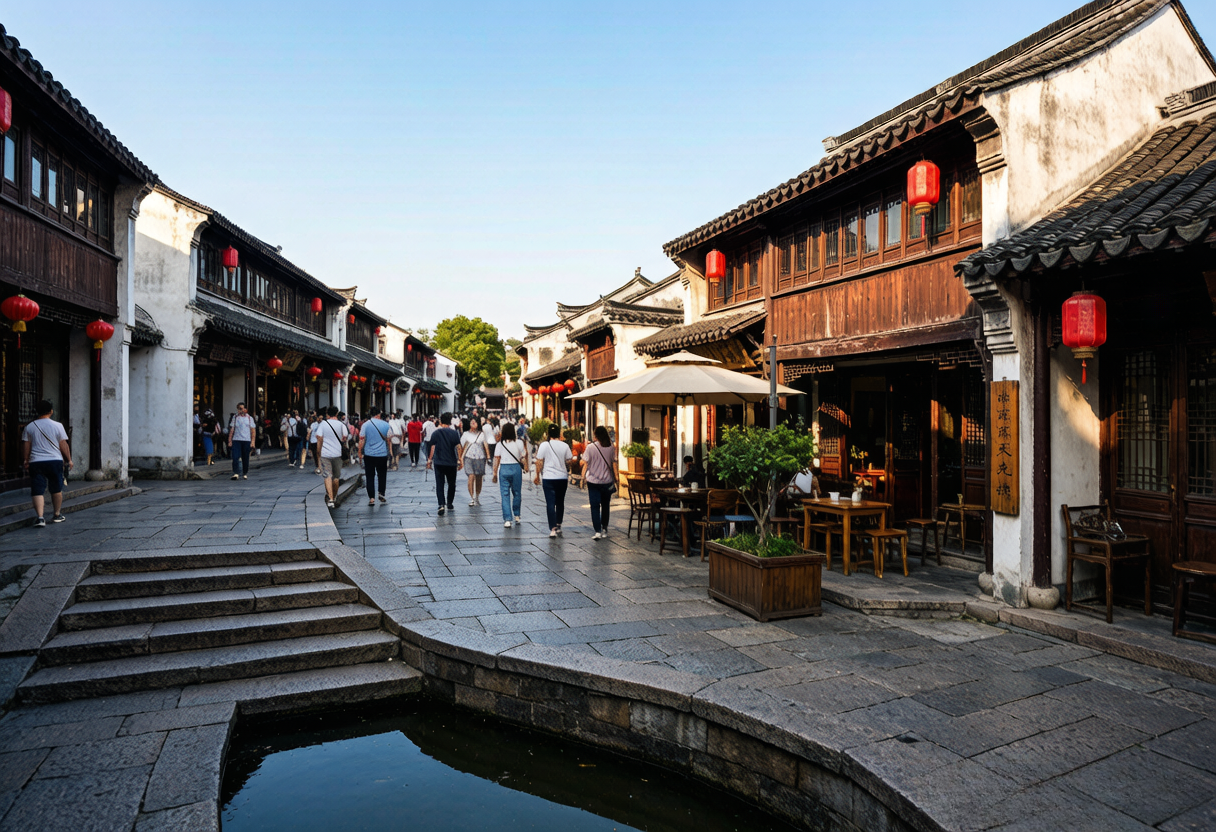
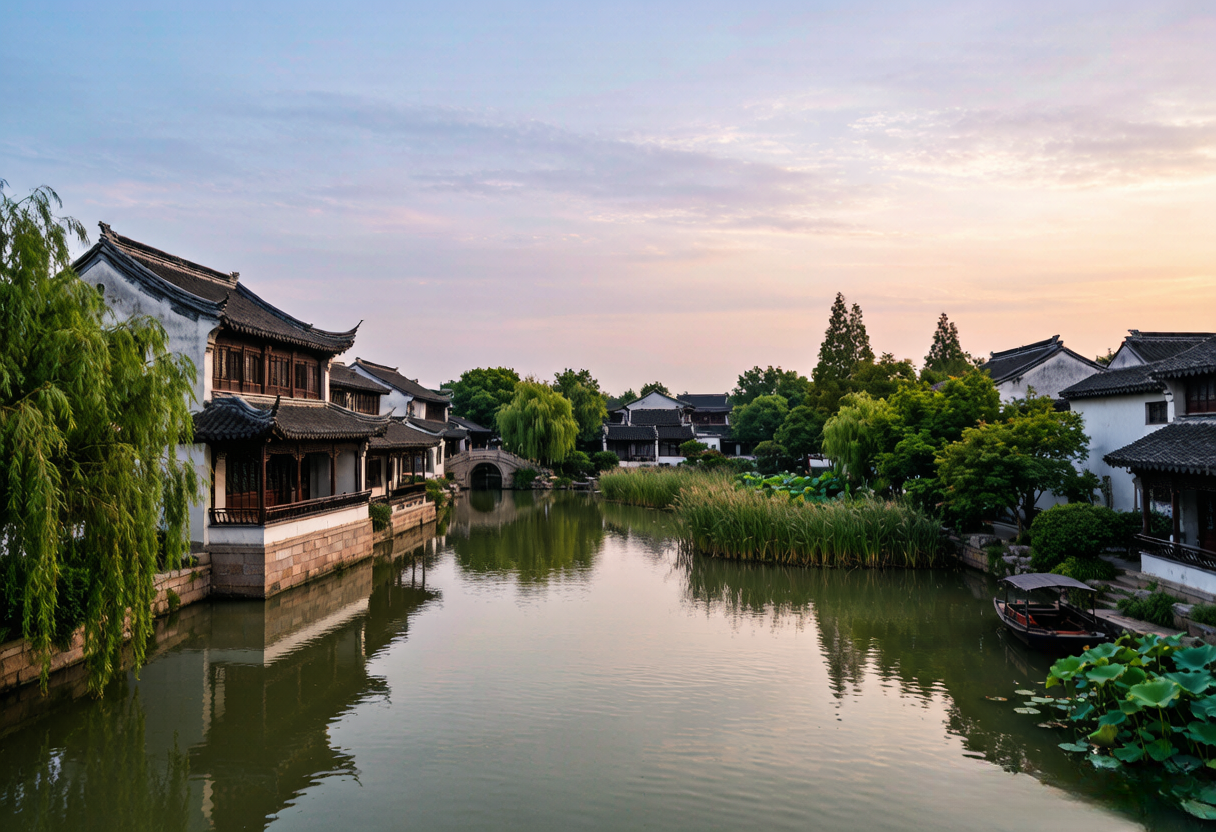
June in Yangzhou. The air carries a faint, sweet fragrance. You walk along the stone-paved road of Dongguan Street, flanked by Ming and Qing dynasty houses—white walls, dark tiles, wind chimes hanging from eaves gently swaying in the breeze.
Then, you hear the singing.
Not from a phone. Not from a speaker. It drifts from an old teahouse deep in the alleyway—an elderly voice, warm with the unique cadence of the Jiangnan dialect: "What a beautiful jasmine flower..."
You stop. Sunlight filters through the parasol tree leaves, casting dappled shadows on the stone pavement. The voice continues—melodious, unhurried, like a slowly flowing river. And suddenly you realize: you've heard this song everywhere in the world—at Vienna's Golden Hall, at the Athens Olympics closing ceremony, at the Beijing Olympics medal ceremonies.
But you've never asked yourself one question: Where did this song come from?
The answer: Jiangsu. Yangzhou. Nanjing. Those small cities you may have never visited—are exactly where this song was born.
From Field to World — The Journey of a Folk Song
The story begins over two hundred years ago.
During the Qing Dynasty's Qianlong period (approximately 1764-1774), farmers in the fields around Yangzhou and Nanjing in Jiangsu Province hummed a simple tune while working. The song was originally called "Fresh Flower Tune" (鲜花调), with straightforward lyrics and a simple melody: "What a lovely flower, what a lovely flower, everyone praises when the flower blooms..."
In the 17th year of the Daoguang Emperor's reign (1837), a man named Chu Xiang Zhuren from Yizheng, Jiangsu, compiled a book called "Collection of Little Wisdom" (小慧集). He included the musical notation of "Fresh Flower Tune"—the earliest existing musical score record of "Jasmine Flower." That means nearly two hundred years ago, the melody was already preserved in full.
But the person who truly brought this song to the world was an Englishman.
In 1804, British diplomat John Barrow, after years of traveling in China, returned to Britain and published a book called "Travels in China." In this book, he first introduced "Jasmine Flower" to the Western world through English translation. He wrote: "This is the most popular song in China, almost every Chinese child can sing it. It has the status of a national anthem."
Barrow translated "茉莉花" as "Moo-Lee-Hwa," but the melody was preserved intact. The book caused a sensation in Europe—for the first time, people heard a song from the East, and the melody flowed like a clear spring through European concert halls.
"This is the most popular song in China, almost every Chinese child can sing it. It has the status of a national anthem."
— John Barrow, "Travels in China" (1804)
Forty years later, an Italian read about this song.
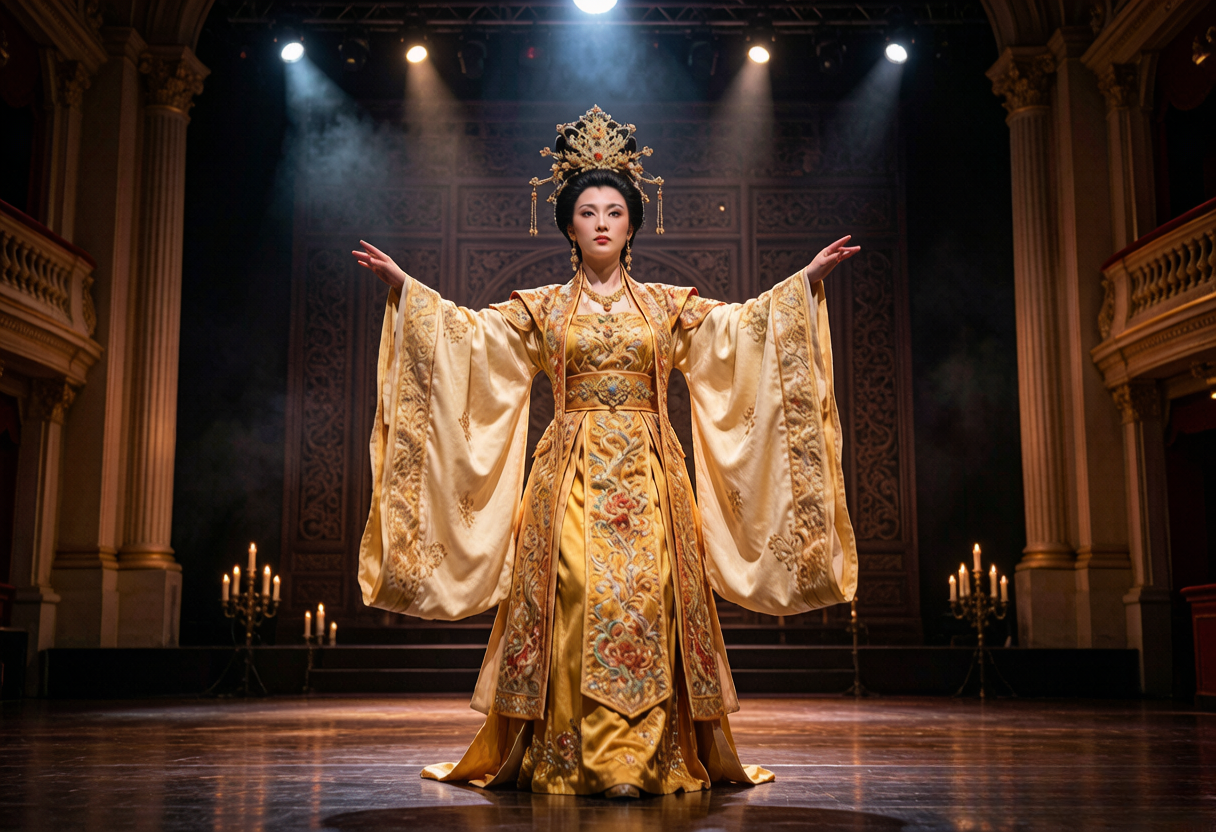
His name was Giacomo Puccini, one of the greatest opera composers in history. He never visited China in his life, but he was captivated by the melody of "Jasmine Flower." He incorporated the song into his final opera, "Turandot"—a work about a Chinese princess.
In 1926, "Turandot" premiered in Italy. When the audience heard the orchestra play the melody of "Jasmine Flower," the entire theater fell silent. In that moment, the simple tune from the fields of Yangzhou over two centuries ago perfectly merged with Italian operatic art.
An Italian composer who never visited China used a Chinese folk song to write an opera about China. This itself is the most moving story of East-West cultural exchange.
"I first heard this song in Puccini's Turandot. Later I visited China and heard it sung by a boat lady on the Grand Canal in Yangzhou. I cried. It's like hearing an old friend in a foreign land."
— YouTube Tourist Review
From then on, "Jasmine Flower" became China's "musical ambassador."
In 1997, it rang out at the Hong Kong handover ceremony. In 1999, it played again at the Macau handover. In 2002, it celebrated Shanghai's World Expo success. In 2004, it echoed during the "Beijing 8 Minutes" at the Athens Olympics closing ceremony. In 2008, it performed at the Beijing Olympics medal ceremonies. In 2014, it opened the Nanjing Youth Olympics—every time, it represented China, greeting the world in the gentlest way possible.
In 2011, "Jasmine Flower" was listed as a National Intangible Cultural Heritage of China. It's no longer just a song—it's part of Chinese culture, living history.
Why Jasmine Flower?
Many people think "Jasmine Flower" is just a "Chinese folk song." But the most surprising fact is: this song was the "first window" through which the West came to know China.
It was introduced to the West earlier than any other Chinese music. In 1804, when most Westerners didn't even know where China was, the melody of "Jasmine Flower" was already being sung in London bookshops.
Even more interestingly, the lyrics have been translated into over thirty languages during their spread. During the Soviet era, it was even adapted into a waltz called "MOCKBA," with new lyrics set to the same melody—a Chinese folk song that actually played a role on the Cold War political stage.
But if you randomly ask a foreigner on the street: "Do you know 'Jasmine Flower'?" Eight out of ten will nod. But if you ask: "Do you know which Chinese city this song comes from?" Almost no one can answer.
This is the most magical thing about this song: the whole world has heard its melody, but its homeland has always been a secret.
Why jasmine flower?
Because hidden in the lyrics is the Chinese understanding of "beauty." The fragrance of jasmine symbolizes the beautiful; the act of picking it to give to others symbolizes sharing and gifting. This isn't triumphant singing—it's gentle, understated, reserved expression—which is exactly the Chinese aesthetic for millennia: subtle, yet profound.
"The melody of 'Jasmine Flower' possesses a unique 'Chineseness'—it's Oriental, yet somehow familiar to Westerners. That's why Puccini chose it, why the whole world fell in love with it."
— British Sinologist
Jasmine in Yangzhou — The Breath of This City
Yangzhou is a city that breathes with jasmine.
In 2003, the Yangzhou Municipal People's Congress standing committee passed a resolution designating "Jasmine Flower" as the city song. This is unique in China—a city defining itself through a song.
In Yangzhou, you can hear this song in so many places.
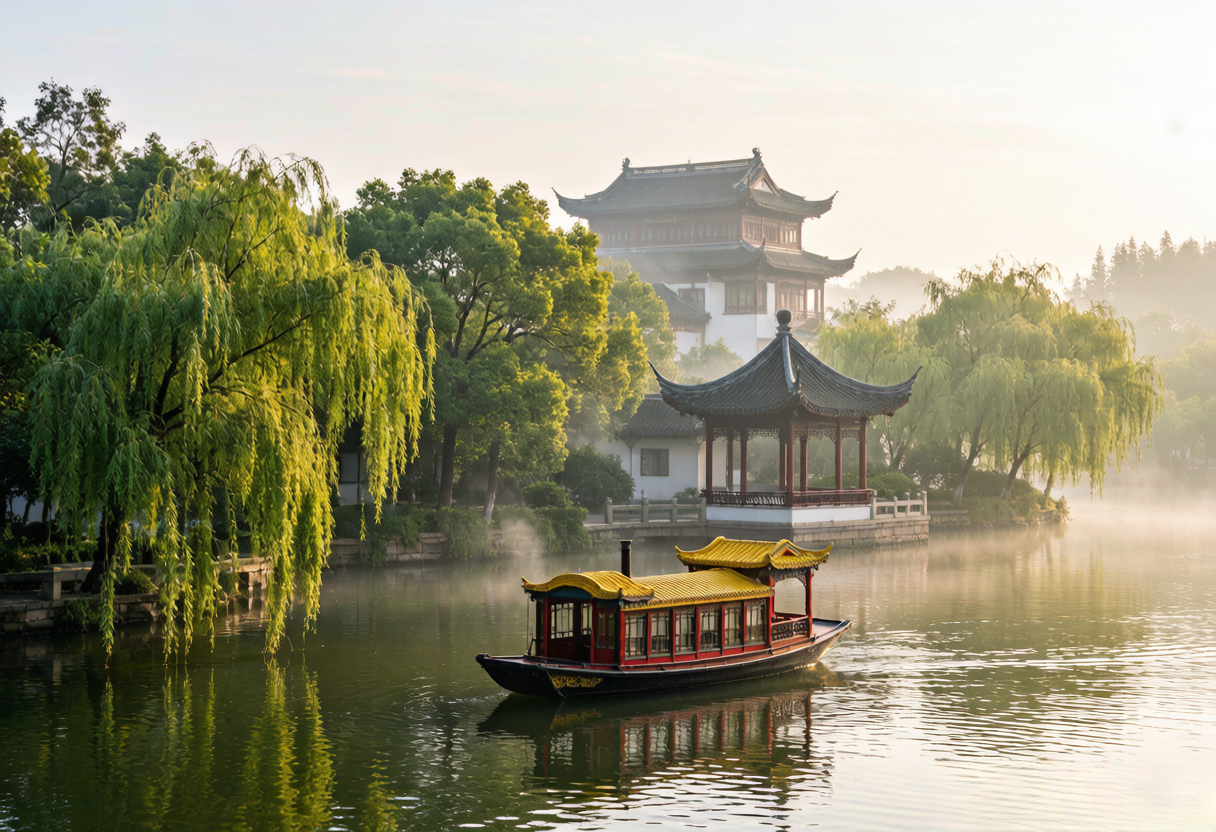
At Slender West Lake. You rent a painted boat and glide slowly along the lake. The boat lady sits at the bow, rowing while singing: "What a beautiful jasmine flower..." Her voice isn't loud, but it cuts clearly across the water, across the air, landing directly in your heart. Mist floats on the lake surface, willows on both banks sway in the breeze. In that moment, you understand why this song was born here.
At Dongguan Street. This Ming-Qing historical district is now Yangzhou's busiest old street. There are many old teahouses along the street. When you're tired, go in and order a cup of Lvyangchun tea. If you're lucky, you'll meet a folk artist playing and singing "Jasmine Flower" with a pipa. That voice carries the patina of ages, like a vintage wine.
At Winter Glory Garden. Every week there are regular cultural performances, where performers will sing "Jasmine Flower" a cappella. The garden isn't large, but it's full of Jiangnan garden charm—rockeries, water pools, perforated windows, bamboo shadows. You sit in the corridor, listening to the song, watching koi fish swim in the pond—time seems to slow down.
At Mingyue Lake Park. In the evening, Yangzhou residents spontaneously gather here to form a chorus. No microphone, no stage—just a circle of people around the lake, singing "Jasmine Flower" together in their most original voices. The lakeside lights come on, illuminating people's faces. That relaxed, warm atmosphere will make you stop involuntarily.
At Shaoyaoyuan Storytelling Hall. Located inside Changle Inn on Dongguan Street, you can listen to the Yangzhou Qingqu version of "Jasmine Flower" while enjoying traditional Yangzhou tea and snacks. Outside the window is the ancient town's street scene; inside, the melodious singing. This experience can't be found in any other city.
In 2026, Yangzhou partnered with DeepSeek to launch an AI Folk Song Experience Museum. Tourists can "sing in harmony" with AI, which performs the song in different styles—opera version, modern version, exotic version. This two-thousand-year-old city is telling the oldest stories in the most cutting-edge way.
Yangzhou also launched the "Follow Jasmine Flower to Tour Yangzhou" themed route, connecting every cultural tourism spot related to the Grand Canal and "Jasmine Flower." Starting from the high-speed rail station, you can ride a shared electric bike to cover most of the city. Yangzhou isn't large, but every corner exudes Jiangnan's gentleness.
"Yangzhou is indeed a very comfortable city. Walking on Dongguan Street, I heard the melody of jasmine flower drifting from an old house—at that moment, I felt like I'd traveled through time."
— Xiaohongshu User Review
Not Just Yangzhou — All of Jiangsu Sings It
If you think "Jasmine Flower" only exists in Yangzhou, you're wrong.
In Nanjing, the Liuhe district is an important area where "Jasmine Flower" has been passed down. The Jasmine Flower Festival here has been held for many years—during the flower season, folk song performances, flower field concerts, and food markets all happen simultaneously. In 2024, Nanjing Liuhe launched the first "Liuhe Jasmine Flower Village Night," combining jasmine elements with New Year customs in Daxiquan Village, Zhenzhen Town—one of the believed birthplaces of "Jasmine Flower."
On April 18, 2025, the Jasmine Flower Cultural Tourism Festival opened at Nanjing's Xiucheng Park, lasting nearly one month. Ticket price: 29.9 yuan. You can watch song-and-dance "Jasmine Flower," drone performances forming a "jasmine flower sea," and intangible heritage iron-flower shows. At night, the park's lights and flower fragrance intertwine, like a dream.
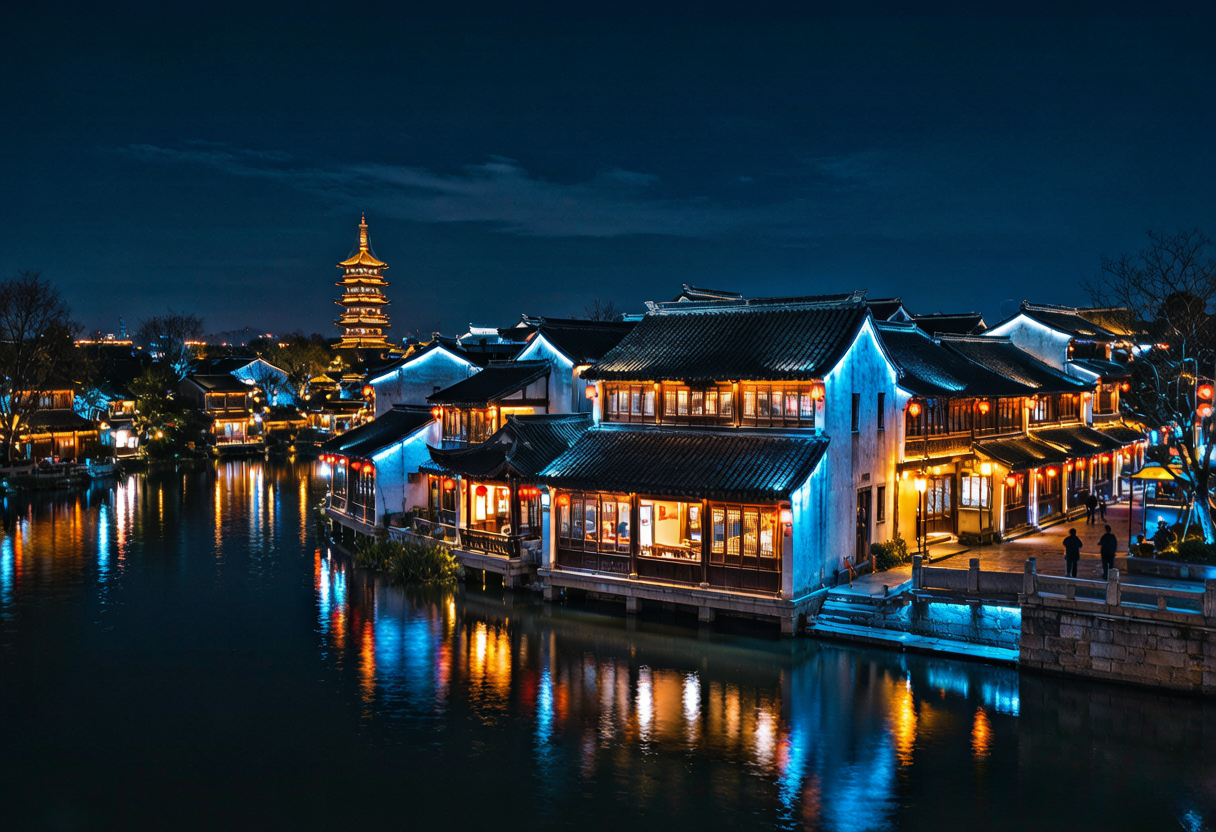
The nighttime Qinhuai River is another scene entirely. Painted boats glide slowly forward; at the bow, a folk musician plucks the strings, and the melody of "Jasmine Flower" flows from their fingertips. The lights along the illuminated river reflect the Ming-Qing buildings on both banks. This is the most classic Nanjing memory for foreign tourists.
In Wuxi, Nianhua Bay is a cultural tourism town themed around Zen. In spring 2026, it held the "Flower Festival·Jasmine Flower Season." The most famous is the "Jasmine Flower Boat" night cruise performance—boatmen in ancient costumes gently hum "Jasmine Flower" on the lake, combined with lighting and mist effects, called by many tourists "China's most beautiful night cruise."
In Suzhou, "Jasmine Flower" is a must-perform piece at classical garden concerts. At the "Suzhou Museum Night," the pingtan version of "Jasmine Flower" often serves as the warm-up act. At Tongli town's "Tuisi Garden Night Garden," there are also folk music performances of "Jasmine Flower"—the water town's charm combined with the melody of jasmine is simply perfect.
A perfect "Jasmine Flower Journey" could be: start from Yangzhou—hear the boat lady sing on Slender West Lake, drink tea and listen to songs on Dongguan Street; then go to Nanjing—visit the Jasmine Flower Festival, see the Qinhuai River at night; finally to Nianhua Bay in Wuxi or Suzhou's classical gardens, experiencing another kind of Jiangnan charm. Three cities, three flavors, but all singing the same song.
Practical Information
Transportation: High-speed rail from Shanghai to Yangzhou takes about 1.5-2 hours, to Nanjing about 50 minutes. Yangzhou East Station provides convenient access.
Best Season: April-June (jasmine season), September-November (pleasant autumn).
Recommended Experiences: Painted boat on Slender West Lake (60-100 yuan), listening to songs at old teahouses on Dongguan Street, Yangzhou AI Folk Song Experience Museum, Nianhua Bay night cruise.
The Melody Continues
Three hundred years ago, this song set off from the alleyways and fields of Jiangsu and went out to the world.
It was translated into over thirty languages, adapted into a waltz, written into an Italian opera, performed at Olympic opening ceremonies, and witnessed history at Hong Kong and Macau handover ceremonies.
But it never forgot its roots.
Today, you can still hear it on Yangzhou's Grand Canal, on Nanjing's Qinhuai River banks, in Wuxi's Zen town, in Suzhou's classical gardens. At each place, the same melody arrives, but the feeling at each place is different.
Some melodies can only be truly understood when you stand on the land where they were born.
Next stop: come to Jiangsu. Come find the most beautiful jasmine flower.
"From Chinese folk song to Puccini's opera, from the fields to the world—Jasmine Flower is one of the most beautiful melodies China has given to the world."
— National Intangible Cultural Heritage
"What a beautiful jasmine flower"
— Yangzhou · Nanjing · Wuxi · Suzhou —