Yu the Great — Passing By His Door Three Times Without Entering
The founder of China's first dynasty, who spent thirteen years controlling floods
More than four thousand years ago, a man passed by his home for the third time. The first time, he heard his wife groaning in childbirth from inside the house—he paused, gritted his teeth, and kept walking. The second time, he heard the wailing of a newborn baby—he paused again, clenched his fists, then loosened them, and kept walking. The third time, his son was old enough to run, standing at the door shouting "Papa"—he didn't go in, didn't even turn his head, and disappeared into the mountain road, step by step.
The man spent thirteen years on the flood-ravaged land of the Central Plains, dredging rivers and dividing the nine provinces. His name was Yu—the founder of China's first dynasty, the Xia Dynasty. Four thousand years later, his story is carved in stone, written in books, and enshrined in a mausoleum covering 120 mu at the foot of Kuaiji Mountain in Shaoxing. You can fly from the other side of the world, stand where he once stood, and feel how a hero from four thousand years ago became an eternal memory of an entire nation.
A Real Person, or Just a Legend?
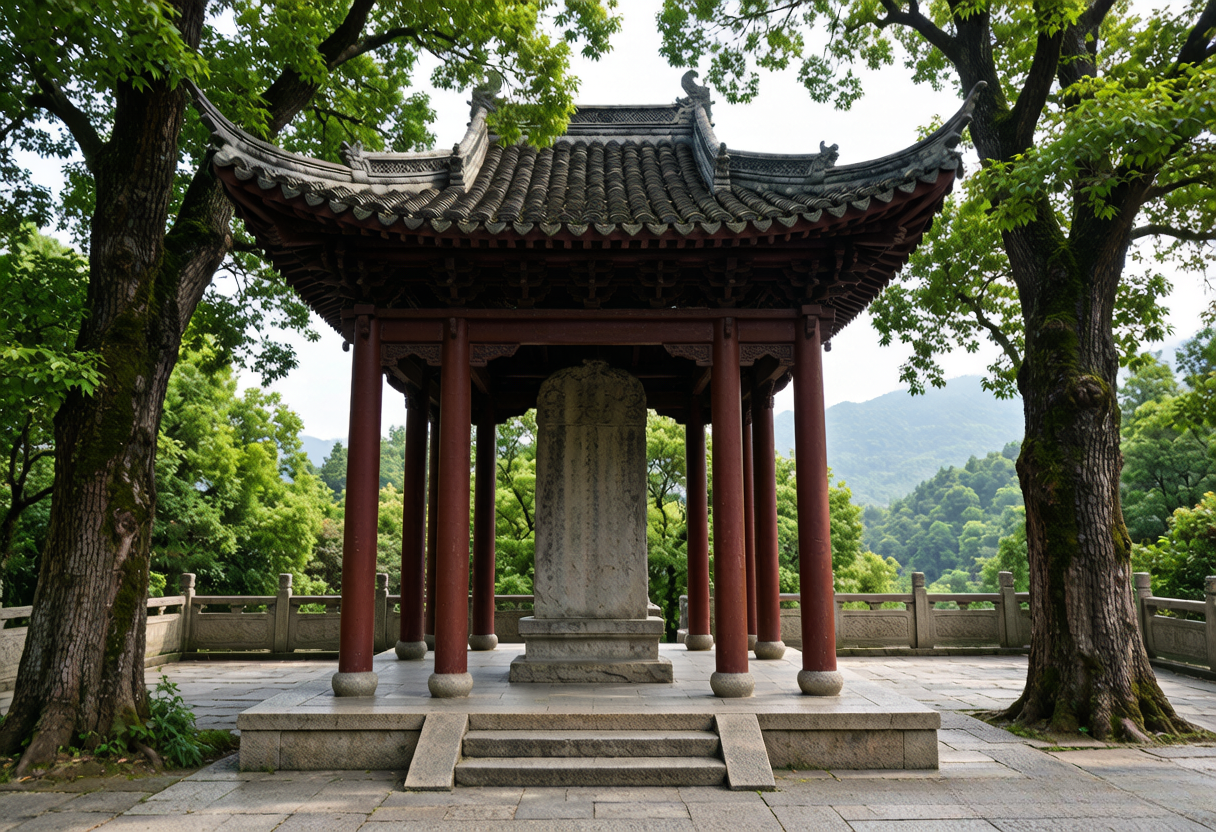
Foreigners might think "Yu the Great's Flood Control" is just a mythological legend, like Hercules in Greek mythology. But the most surprising fact is: Yu the Great was very likely a real historical figure.
Sima Qian recorded Yu's complete lineage in "Records of the Grand Historian" (Shiji): Yellow Emperor, Zhuanxu, Emperor Ku, Yao, Shun, Yu—this isn't mythology, but a traceable family chain.
Archaeologists discovered the "Wangchenggang Site" in Dengfeng, Henan—a city ruin dating back approximately 4,000 years, matching the early Xia Dynasty period. Many scholars believe this was "Yudu Yangcheng," the capital city Yu once established.
"Shiji" records that Yu's father Gun was executed for failing at flood control. Yu inherited a mess from his father—the identity of a "dead man's son." In approximately 2070 BCE, Yu established the Xia Dynasty, the first dynasty in Chinese history.
"Yu, grieving that his father Gun had failed in his work and was put to death, labored tirelessly and thought anxiously. He stayed outside for thirteen years, and when he passed by his own door, he did not dare to enter."
— Sima Qian, "Records of the Grand Historian: Annals of the Xia Dynasty"
Although we haven't found artifacts directly bearing the name "Yu the Great," more and more archaeological evidence suggests: behind the legend, there may really have stood a real person. Four thousand years can erase many things, but it cannot erase the story itself.
If you think this is just mythology, archaeologists will tell you: he might really have existed.
Blocking vs. Guiding — the Wisdom of Flood Control
Yu's father, Gun, was also a flood controller.
Gun's method was "blocking"—building dams everywhere to hold back the water. But water cannot be blocked. The higher the dams were built, the higher the water rose, until finally the dams collapsed and the floods became even more violent. Gun's flood control failed. He was executed for it.
After Yu took over, he changed the approach: since water flows downward, give it a path and let it flow to the sea. He led the people in dredging rivers and digging canals, guiding the flood waters to rush into the sea along the river channels.
This method was called "guiding." Not fighting the flood, but following water's nature, leading it to where it should go.
After successfully controlling the flood, Yu did something else of far-reaching significance: dividing the nine provinces. He divided the realm into Ji, Yan, Qing, Xu, Yang, Jing, Yu, Yong, and Liang. "Nine Provinces" became China's nickname, used to this day.
"The flood waters were vast and boundless; Yu spread the soil over the land."
— "Book of Songs" (Shijing)
This comparison between "blocking" and "guiding" became a way of thinking for the Chinese people. When facing difficulties, should you block or guide? The ancient Chinese told this story: sometimes, following the规律 is more powerful than fighting against it.
"Be diligent in serving the state, and frugal in managing the household."—this quote from "Book of Documents" influenced the Chinese for thousands of years.
Yu Mausoleum — 4,000 Years of Worship
From downtown Shaoxing heading southeast, about six kilometers, you arrive at the foot of Kuaiji Mountain. Looking up, the mountain is covered with ancient trees, birds chirping in the forest, the air filled with the fragrance of soil and leaves.
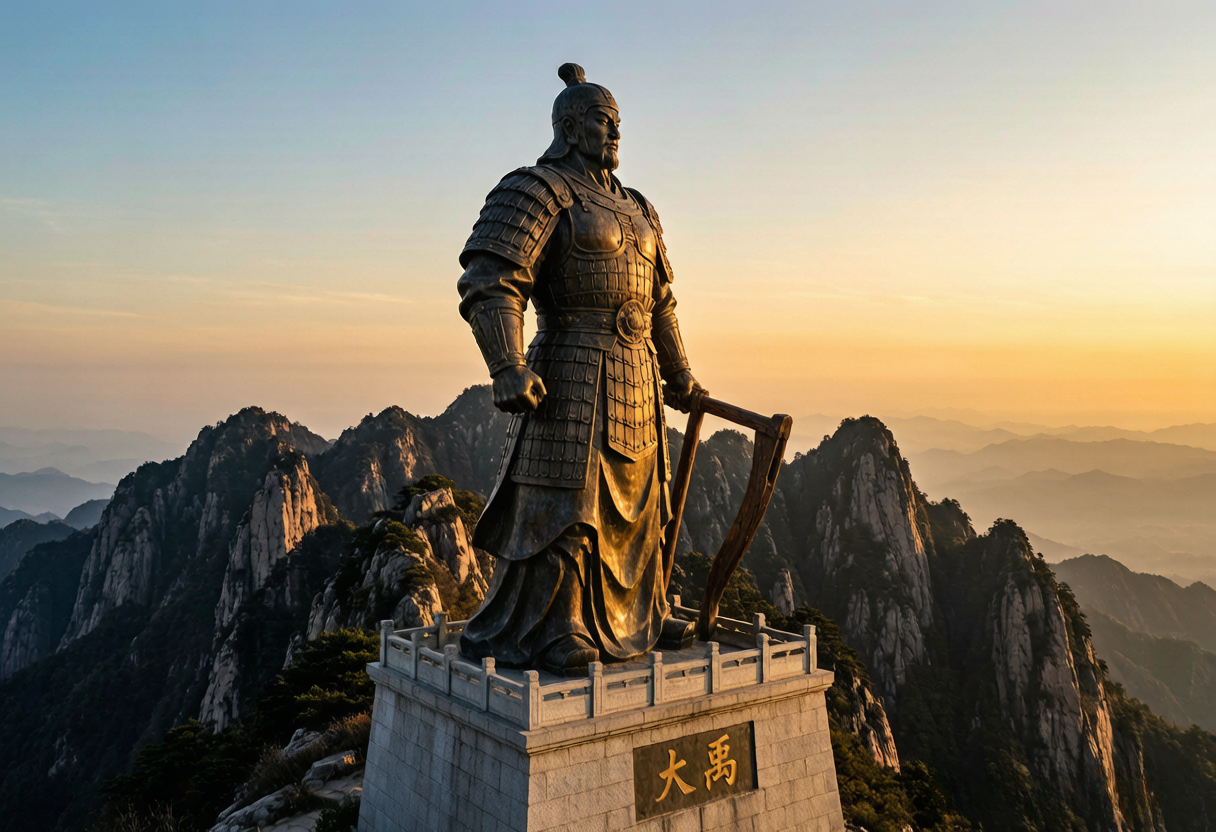
The Yu Mausoleum is hidden in this green shade, covering approximately 120 mu with a building area of about 2,800 square meters. You walk up the stone steps, ancient trees on both sides slicing the sunlight into fragments, bird calls echoing through the valley. You look up—a massive stone statue stands at the mountaintop, facing the distance, holding a wooden plow in its hands.
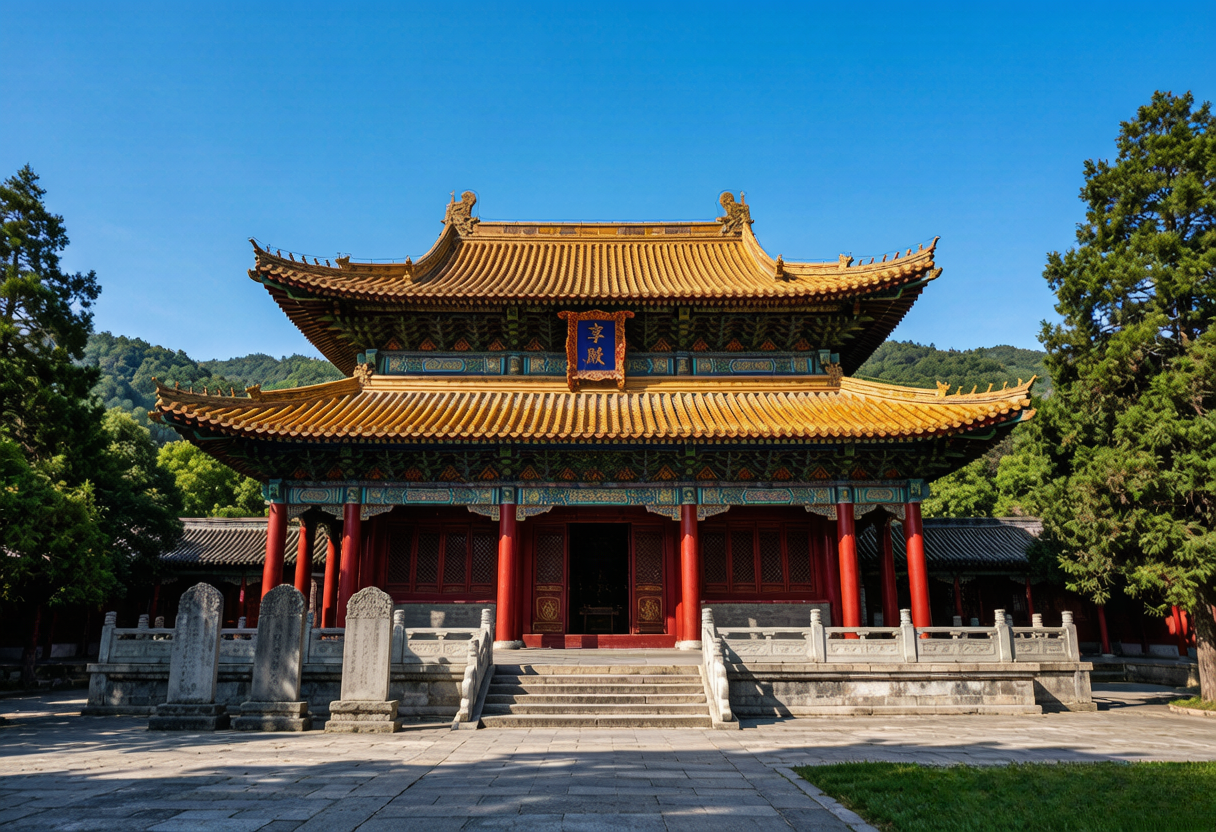
The first place you reach is Xiang Hall. Built against the mountain, it has a grand presence. The hall was rebuilt during the Ming Dynasty's Hongwu period (around 1370 CE), over 650 years ago. Inside stands a statue of Yu the Great, approximately 5 meters tall, wearing imperial crown and robes, holding a jade tablet, his expression solemn. You stand at the hall's entrance, cool air drifting from inside, automatically quieting you.
Walking behind Xiang Hall, you reach Bian Stone Pavilion. Inside stands a Bian Stone—a natural boulder approximately 6 meters tall with a hole through its top. According to legend, this stone was the marker when Yu was buried. The stone bears inscriptions from scholars through the ages, the earliest dating back to the Tang Dynasty.
This stone has stood here for four thousand years.
When you stand before it, you might be the first foreigner in four thousand years to pause at this stone.
"How magnificent are the achievements of Yu! His virtue shines far and wide."
— "Zuo Zhuan"
The tradition of worshiping Yu has continued for four thousand years. In 210 BCE, Qin Shi Huang, the first emperor of China, climbed Kuaiji Mountain to personally offer sacrifices to Yu. Later emperors—including Kangxi and Qianlong—either visited personally or sent officials to pay respects. In 1995, public sacrifices at Yu Mausoleum were restored. Since 2007, the ceremony has been jointly hosted by the Ministry of Culture and Zhejiang Provincial Government, elevated to a national-level cultural ceremony.
In 2006, "Yu Sacrifice Ceremony" was listed among the first batch of National Intangible Cultural Heritage items.
Yu Sacrifice Ceremony — "China's First Sacrifice"
Every year during the Grain Rain season—around April 19-20—Shaoxing holds a grand sacrificial ceremony.
If you visit Shaoxing at that time and stand before the altar at Yu Mausoleum, you will witness a ceremony continuing for four thousand years: participants in traditional costumes, solemn music, offering flower baskets to the statue of Yu, and reading sacrificial texts. The text traces Yu's flood control achievements, expressing reverence for the sage. The ceremony integrates rites, music, dance, and chanting—multiple traditional Chinese elements.
Media both domestically and internationally call it "China's First Sacrifice"—the longest history and most complete transmission of any national sacrificial ceremony in China.
Even if you visit outside the ceremony period, you can still learn about the complete sacrificial process through exhibits and multimedia. The scenic area sometimes organizes small-scale ancient ritual experience activities where tourists can participate and personally feel what ancient sacrificial rites were like.
"Mausoleum of Yu the Great – in Shaoxing. It's one of the top attractions in Zhejiang. Good museums, old architecture, and special atmosphere."
— TripAdvisor User Review
Not Just Yu Mausoleum — A Trip to Ancient Shaoxing
Since you've come to Shaoxing, how can you only visit Yu Mausoleum? This ancient city has so many more stories waiting for you.
At Lanting, you can find China's calligraphy sanctuary. Here, Wang Xizhi, the Eastern Jin calligrapher, wrote the world's first supreme running script "Orchid Pavilion Preface." The story of "floating wine cups along the winding stream" happened here—you can sit by the stream and experience the ancient literati's pleasure of drinking and composing poetry.
At Lu Xun's Former Residence, you can walk into the childhood of China's father of modern literature. Hundred Grass Garden, Three Flavor Study House, Lu Xun's Former Residence... those names that appeared in Chinese textbooks now stand realistically before you.
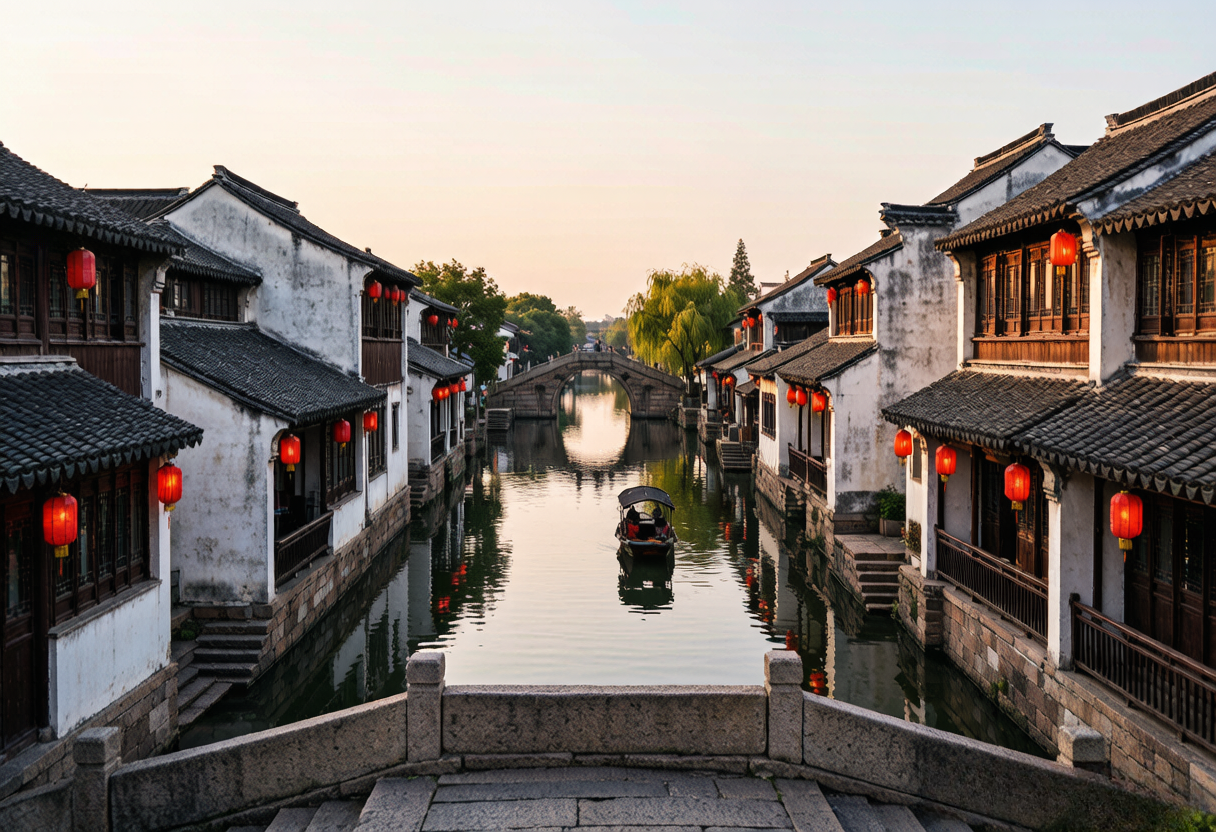
At East Lake, you can take a black-awning boat through the water town's waterways. The boatman will sing local Shaoxing tunes in the Shaoxing dialect, the song floating over the water's surface. The cliff walls by the lake are remnants of ancient stone quarries, creating a unique landscape.
At Cangqiao Street and Baziqiao Bridge, you can drink a cup of Shaoxing Huangjiu wine and taste a fennel bean. The scenes from Lu Xun's novels exist on this old street. Both sides are old buildings from the Ming and Qing periods, white walls and dark tiles, wooden windows darkened by time into deep brown.
At Anchang Ancient Town—about 20 kilometers northwest of Shaoxing—you can see another kind of life: Ming-Qing era streets along the river, every household's doorfront hanging preserved ducks and腊肠. The wind carries the smell of Shaoxing.
A perfect Shaoxing trip could be: climbing Yu Mausoleum → experiencing calligraphy at Lanting → revisiting history at Lu Xun's Former Residence → taking a boat at East Lake → having a glass of Huangjiu at Cangqiao Street. One or two days is enough to make you fall in love with this city.
Practical Information
Address: Foot of Kuaiji Mountain, Southeast of Yuecheng District, Shaoxing, Zhejiang Province
Transportation: High-speed rail from Hangzhou takes about 30 minutes, from Shanghai about 1.5 hours. Bus routes 2, 10, or 136 from downtown Shaoxing go directly to the site.
Opening Hours: 8:00-17:00
Admission: Adult ticket approximately 60 RMB
He Still Stands Here
You finally reach the top of Kuaiji Mountain.
A bronze statue of Yu the Great, approximately 20 meters tall, stands before you. He holds a wooden plow, his gaze fixed on the distant plains and rivers. You follow his gaze—below your feet, the Jianchang water system quietly flows. Four thousand years ago, Yu controlled exactly this kind of water.
In that moment, you suddenly understand: why the Chinese have sacrificed to this man for four thousand years.
Not because he was a god—because he was a person. A person with flesh and blood, a person who missed home, a person who passed by his door three times but never went in.
Four thousand years later, he still stands here. Standing at the top of Kuaiji Mountain, standing on the land he once controlled, standing as an eternal memory.
Next time, come to Shaoxing. Come to see this man from four thousand years ago, try to understand why he was great.
"From Shaoxing's Kuaiji Mountain to Yuzhou in Henan, from four thousand years ago to today—Yu the Great remains the one who controlled floods in the hearts of the Chinese people."
— National Intangible Cultural Heritage
"Passing By His Door Three Times Without Entering"
— Yu Mausoleum · Shaoxing · Zhejiang —