Ancient Engineering · UNESCO
The Grand Canal
A 2,500-Year-Old River Still Working
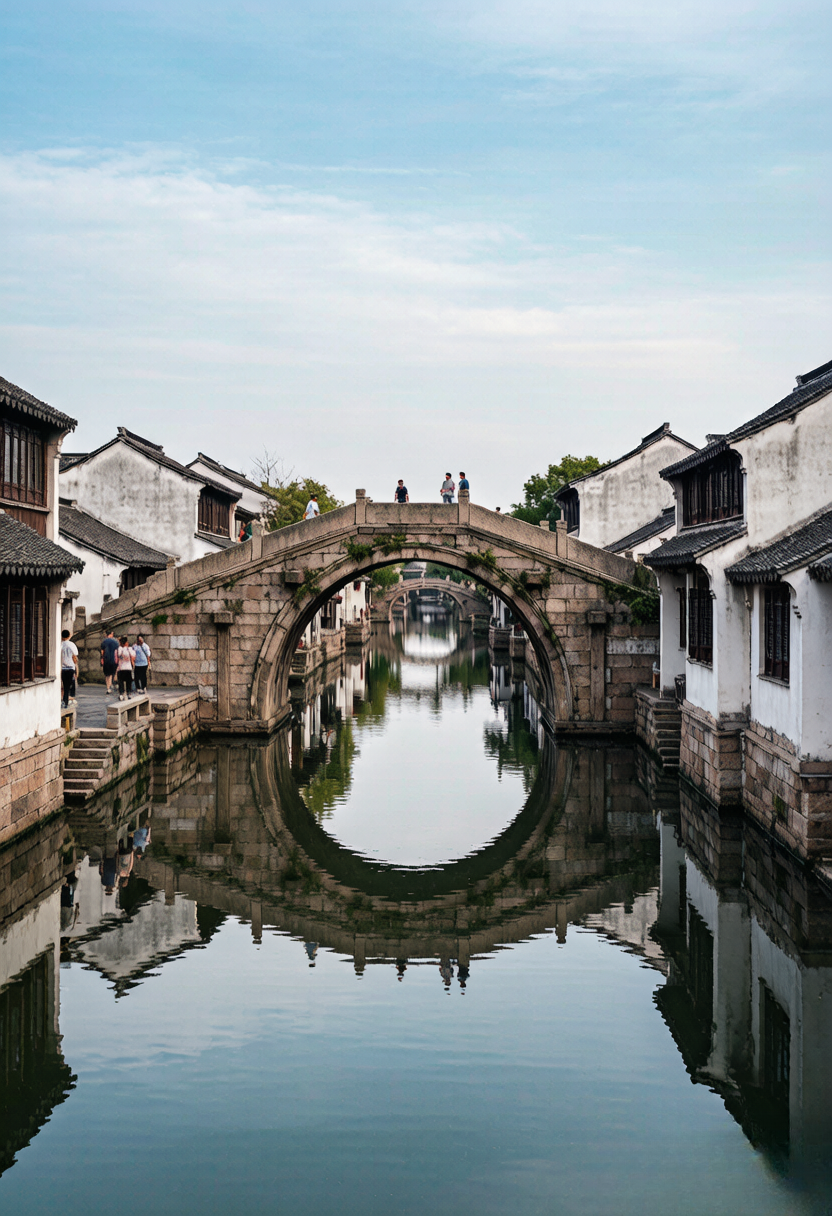
You stand on a bridge in Hangzhou. Under your feet, water has been flowing for 2,500 years. A big cargo ship slowly passes by. It is carrying real goods—not for show, but for real trade. This is the Grand Canal. And it is still working today.
You might think: "It's just an old river, like the Roman aqueducts." But no. The Grand Canal is different. It is not a ruin. It is not just for tourists. It is still doing real work. Today, it carries water from south to north for millions of people. Ancient people used it for grain. Modern people use it for water supply. One river, still alive after 2,500 years.
UNESCO says: "The Grand Canal is the longest and oldest artificial waterway in the world. It is also the largest civil engineering project before the Industrial Revolution." That is a big deal. Think about it: 1,794 kilometers of water, built by hand, more than 2,000 years ago.
President Xi said: "The Grand Canal is a precious gift from our ancestors. It is a living culture. We must protect it, pass it on, and use it well." In 2024, more than 40 million tourists visited the Grand Canal. Would you like to be one of them?
"The Grand Canal is the longest and oldest artificial waterway in the world. It is also the largest civil engineering project before the Industrial Revolution."
— UNESCO World Heritage Committee
It started in 486 BC. A king named Fuchai of Wu stood outside a city called Yangzhou. He ordered his people to dig a canal. They connected the Yangtze River with the Huai River. This was the first canal in Chinese history with a clear date. That city—Yangzhou—is called the "birthplace of the Grand Canal."
About 1,400 years later, another emperor—Emperor Yang of Sui—decided to connect the whole country by water. He used millions of workers. In just ten years, they built a huge canal from north to south. It was one of the biggest projects in human history.
Then, during the Yuan Dynasty (about 700 years ago), a scientist named Guo Shoujing made the canal even better. He shortened the route by 800 kilometers. That is like driving from Beijing to Shanghai and back. But there were no cars then—only boats pulled by people. This change saved many lives.
In the Ming Dynasty (about 500 years ago), 4 million bags of grain were transported north every year. 120,000 soldiers worked on the canal. Can you imagine? Every year, they moved food from the south to feed the north.
In 2014, the Grand Canal became a World Heritage Site. It took 8 years from being listed as a candidate to finally winning the title.
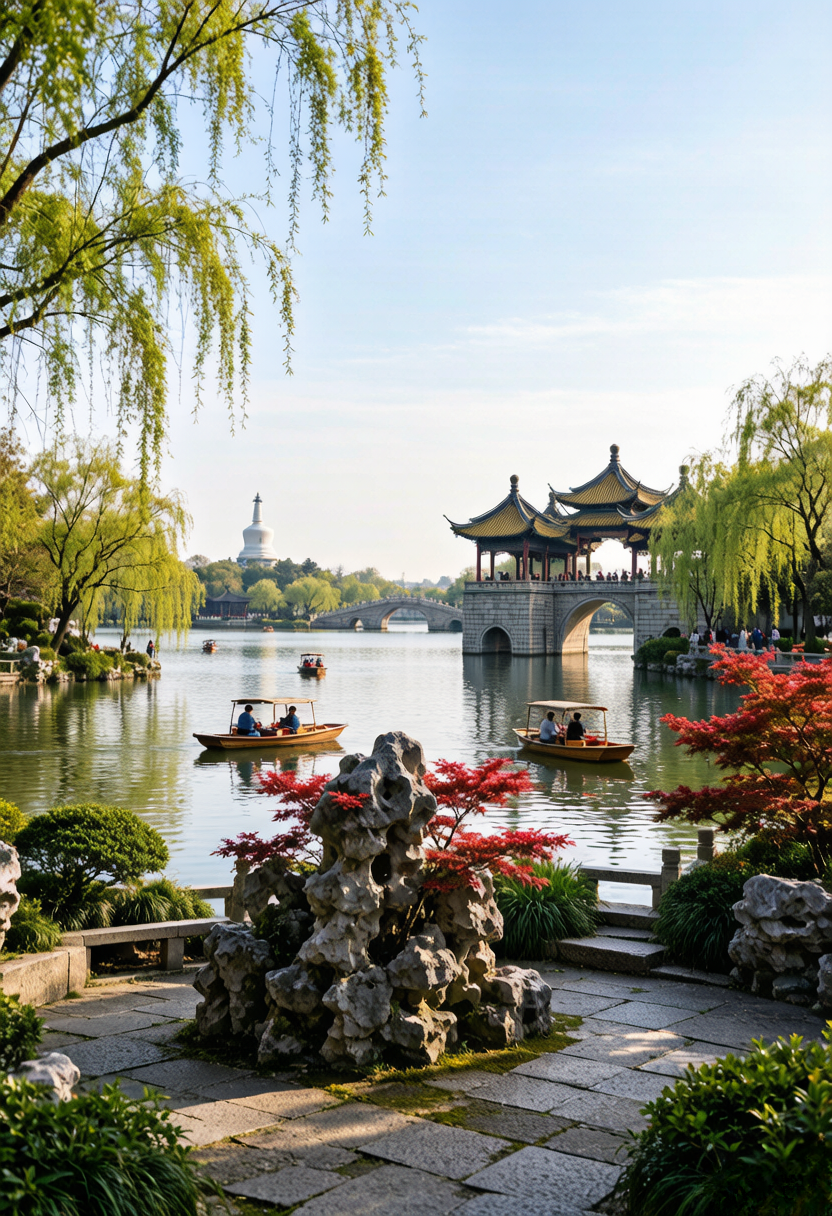
The Grand Canal is not just a river. It is a miracle of engineering. It crosses five big rivers: the Hai River, Yellow River, Huai River, Yangtze River, and Qiantang River. Each river is dangerous. The Yellow River often floods. The Huai River changes its path. How did ancient people deal with this?
The answer is in a place called Nanwang, in Shandong Province. Here, the land is higher than both ends of the canal. Water had to go UP—a big problem! A man named Bai Ying solved it. He designed special stone barriers. With these, he divided the water: 70% went north to Beijing, 30% went south to the rice fields. This is called "seven parts to the Emperor, three parts to Jiangnan."
This project is called "Jiangdu Dujiangyan"—a name meaning it is as great as the famous Dujiangyan irrigation system. Experts say it was the highest achievement of civil engineering before the Industrial Revolution. And there were no modern tools. No computers. No GPS. Just human brains and hard work.
Hangzhou is the southern end of the Grand Canal. This city is famous for West Lake. But the canal is also a big deal here. In 2025, during Chinese New Year, the Hangzhou Canal area was one of the top 3 tourist spots in Zhejiang Province.
The must-see spot is Gongchen Bridge. This is a 400-year-old stone bridge with three arches. It marks the southern end of the canal. Local people say: "For Hangzhou, this bridge is not just about crossing the river. It is a witness to the city's changing life."
Next to the bridge, there is a museum. It is free! The China Grand Canal Museum is open from 9:00 to 16:30 (closed on Mondays). When you walk inside, you feel like you are on a real boat traveling from Hangzhou to Beijing. A 26-meter-long painting shows the whole canal as it was 200 years ago.
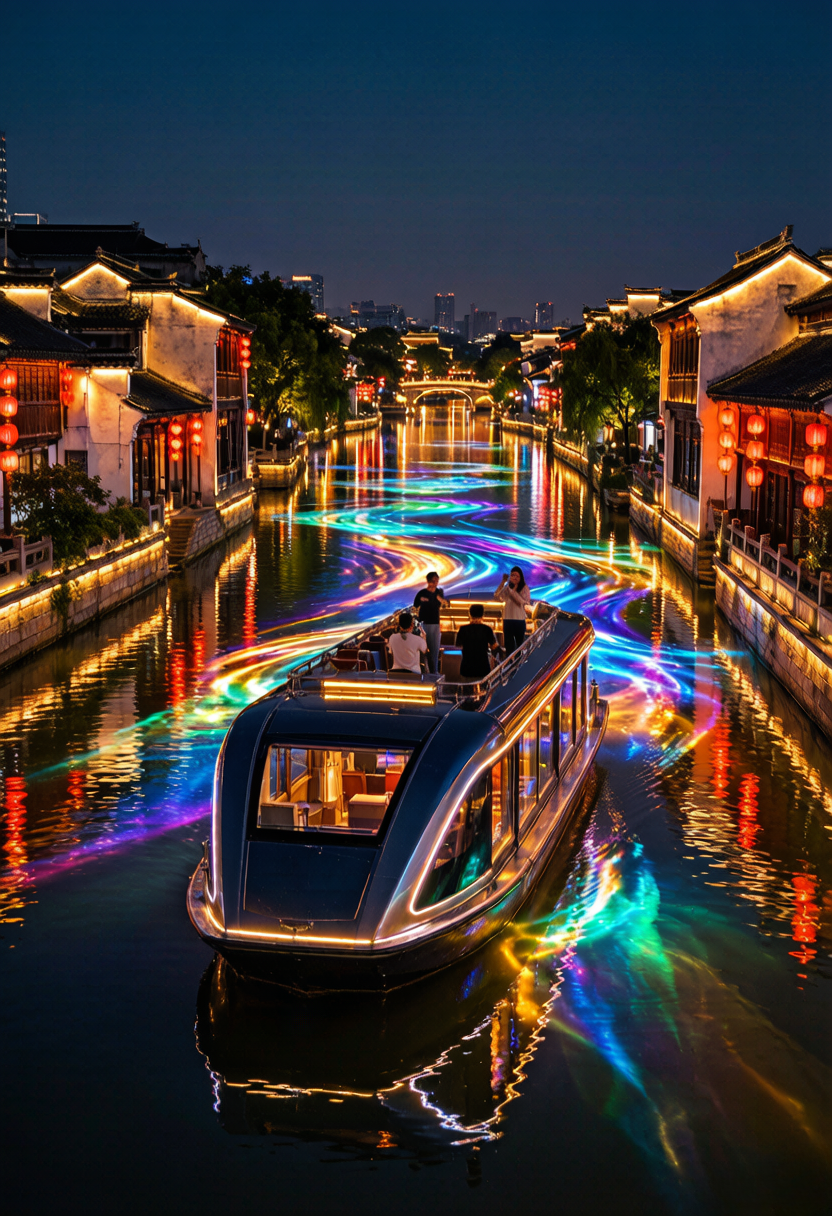
In 2025, a new experience started: the AR Night Cruise. You wear special glasses and see the canal as it was 500 years ago. You see ancient boats, old buildings, people in traditional clothes. It is like time travel. Tickets are 198 RMB for adults, 99 RMB for kids.
Near the bridge, there is the "West Side Historical Block." Old buildings, traditional shops, nice tea houses. You can sit by the canal, drink local tea, and watch the water flow by. Very relaxing!
Yangzhou is called the "origin city" of the canal. It was here, in 486 BC, that the first canal was dug. If you want to understand the Grand Canal, you must visit Yangzhou.
The China Grand Canal Museum here is amazing. The main exhibit is a huge section of an ancient riverbed—25.7 meters long, 8 meters high. You can see layers of soil from the Tang Dynasty (1,300 years ago) to today. Each layer tells a story of different dynasties.
At night, you must try the "Grand Luck Yangzhou" night cruise. This is China's first immersive canal night show. You sit on a boat and watch lights, music, and actors telling the story of the canal. Since July 2025, tourist numbers went up by 65%! People call it "boat in scenery, people in paintings."
Also visit Slender West Lake. It is a beautiful garden with bridges, pavilions, and willow trees. A famous poet wrote: "On the twenty-fourth bridge, under the bright moon, where is the beauty teaching me to play my flute?" This poem made the lake famous for 1,000 years.
"For centuries, the canal has nourished the cities and people along its banks. It is a river of prosperity and happiness for the people on both sides."
— President Xi Jinping (2020, Yangzhou)
Tongzhou is the northern starting point of the Grand Canal. The name "Tongzhou" literally means "transportation hub." This city exists because of the canal. A scientist named Guo Shoujing built the final part of the canal here. He is called the "Father of the Beijing-Hangzhou Grand Canal."
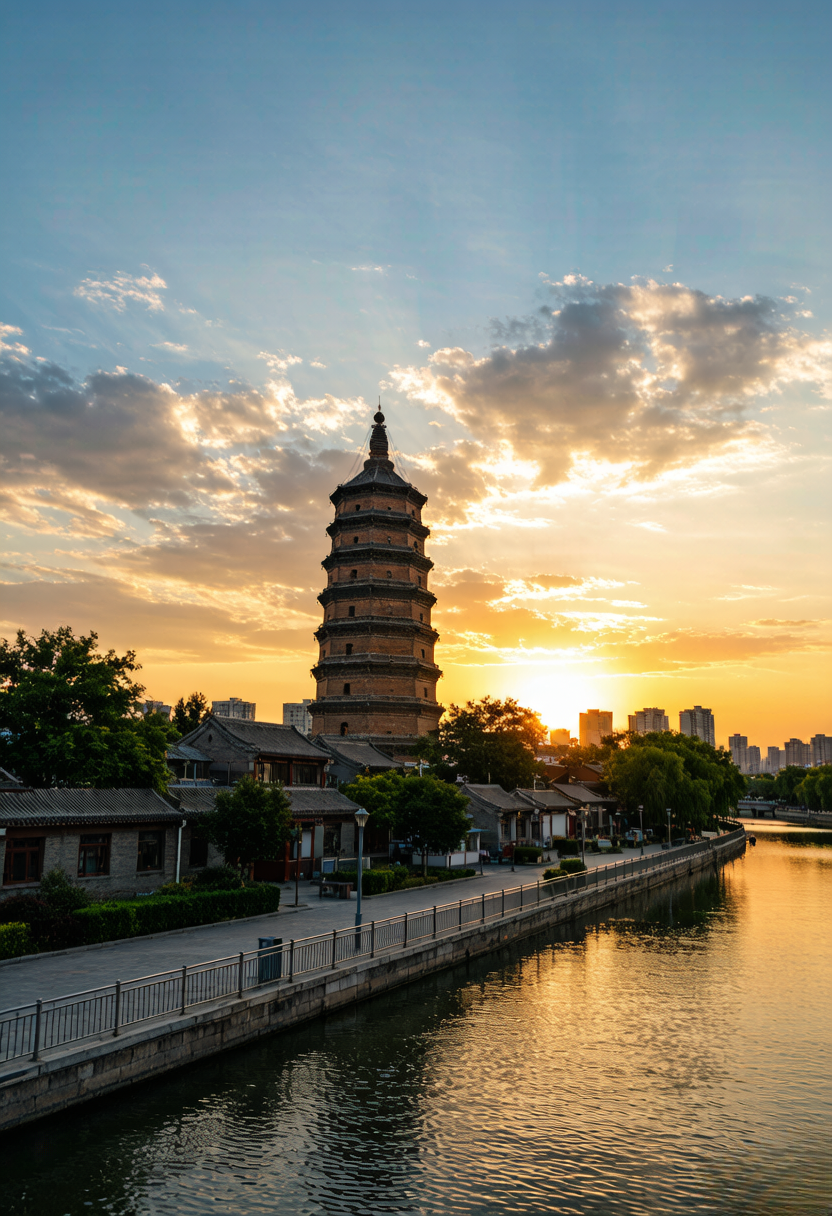
The symbol of Tongzhou is the Randeng Pagoda. It is 56 meters tall—about 18 stories. For hundreds of years, boatmen used this pagoda as a guide. When they saw the tower, they knew Beijing was near. There is a old saying: "One pagoda shadow, and I know I am in Tongzhou."
The Grand Canal Forest Park here is huge—10,000 mu (about 1,600 acres). You can bike, have a picnic, or just walk by the water. It is very peaceful. Birds live here too. The park set up special areas to protect them.
The Grand Canal Museum in Tongzhou has over 1,000 ancient objects. One visitor—an Indonesian student—said: "It feels like entering the future! The interactive games helped me understand the canal. Even as a foreigner, I could easily learn about Chinese culture through the technology."
Tip: Start your canal trip from Tongzhou! Take a boat southward, pass through Cangzhou, Dezhou, Jining, Xuzhou, Yangzhou, and finally reach Hangzhou. It is a unique way to see China.
2,500 years ago, a king dug the first canal in Yangzhou. Today, you can stand on the same river and watch the same water flow by. The ships are still sailing. The story is not over.
The canal is not just a tourist attraction. It is a living river. It brings water to millions of people. It carries history and culture. It connects the past with the present.
Next time you visit China, do not just go to Beijing for the Great Wall or Xi'an for the Terracotta Warriors. Go to the Grand Canal. Visit Yangzhou—where the story began. Visit Hangzhou—where the journey ends. Visit Tongzhou—where the water starts its long trip south.
Follow the 2,500-year-old river. Walk where boatmen walked. See what they saw. Feel what they felt. Some journeys change you. This is one of them.
🎫 Tickets: Most canal areas are FREE! Museums are usually free.
🚄 Best Route: Tongzhou → Yangzhou → Hangzhou
⏰ Best Time: Spring and Autumn (March-May, September-November)
🚢 Must-Try: Night cruise in Hangzhou or Yangzhou
📱 Payment: WeChat Pay and Alipay work everywhere!
"A 2,500-Year-Old River, Still Flowing"
— Beijing · Yangzhou · Hangzhou —