Dujiangyan
The 2,300-Year-Old Irrigation System Still Working
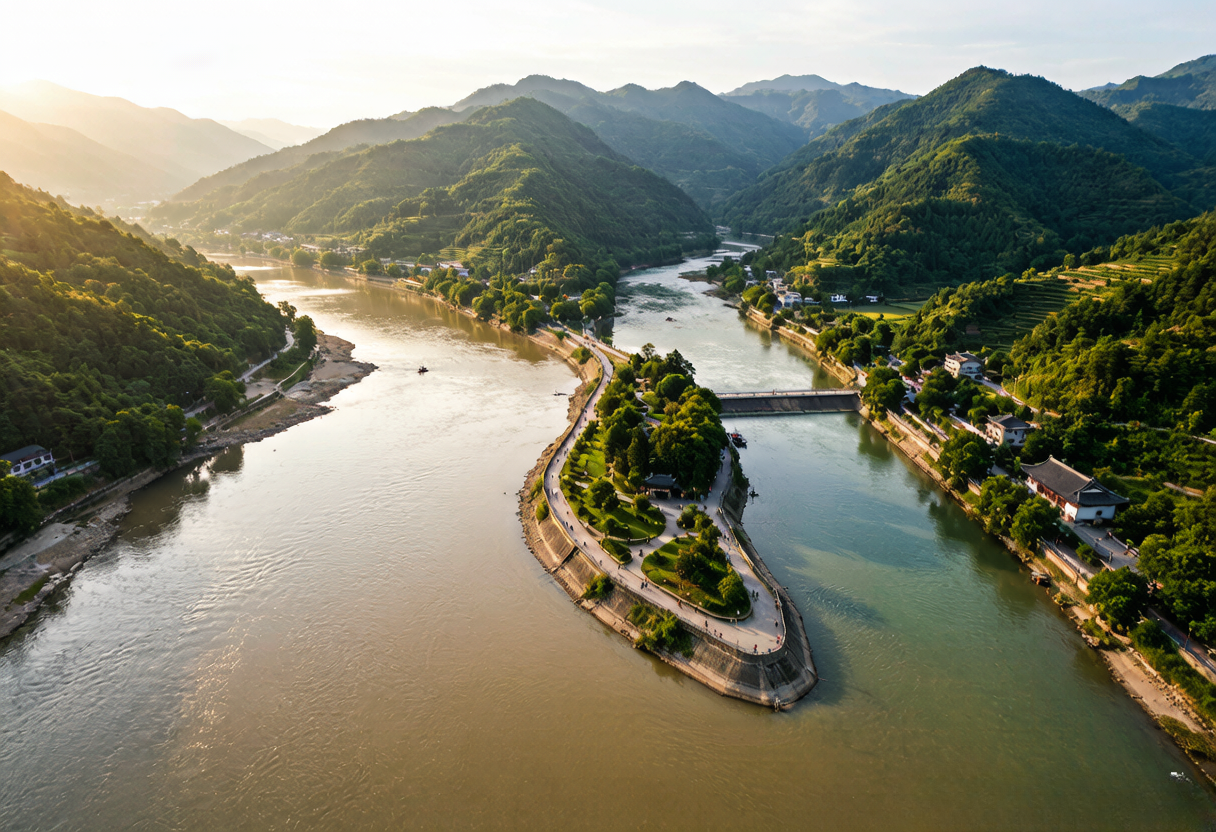
You Stand on the Fish Mouth Dam
The water below is loud. The Min River here splits into two: half goes south, toward the Chengdu Plain; the other half keeps flowing east. Check your phone — this water has been flowing like this for over 2,300 years.
You don't see a dam. No sluice gate. No concrete. Just a low weir and a simple split in the river. This is Dujiangyan — a project built 2,000 years ago that still works today!
Water experts from around the world are amazed. One expert said: "It's incredible! A 2,000-year-old project, and it's still providing water for the Chengdu Plain."
You've probably visited ancient sites that you can only look at, not use. But Dujiangyan is different. It's still working — irrigating over 1.3 million mu of farmland and providing water for over 20 million people.
"The Dujiangyan water conservancy project is globally renowned. What is extraordinary is that it is still operating today and continues to benefit the Chengdu Plain."
— Michel Lino, President of International Commission on Large Dams
2,300 Years Ago: A Man Named Li Bing
In 256 BC, a man named Li Bing became the governor of Shu (roughly the governor of Sichuan province). His job: stop the Min River from flooding.
Back then, the Min River would flood often, rushing into the Chengdu Plain and drowning farms. A poet wrote: "People of Shu almost became fish" — meaning they nearly drowned.
What would most people do? Build a dam to block the water. But Li Bing didn't do that. His idea: let the water flow away on its own, no dam needed.
No excavators, no explosives — just his hands and the local people. He cut through a mountain and created two rivers. From then on, the Chengdu Plain stopped flooding and became known as the "Land of Abundance" — a rich and fertile land.
At Erwang Temple today, you can still see Li Bing's statue. On the wall, six characters are carved: "Dredge deep, build low" — his secret to water control.
"The Shu governor Bing chiseled away the obstacle, diverted the harmful waters of the Mo River, and cut two channels through Chengdu. These waterways were all navigable, and the surplus water was used for irrigation — the people enjoyed the benefits."
— Records of the Grand Historian (Shiji)
Three Smart Designs
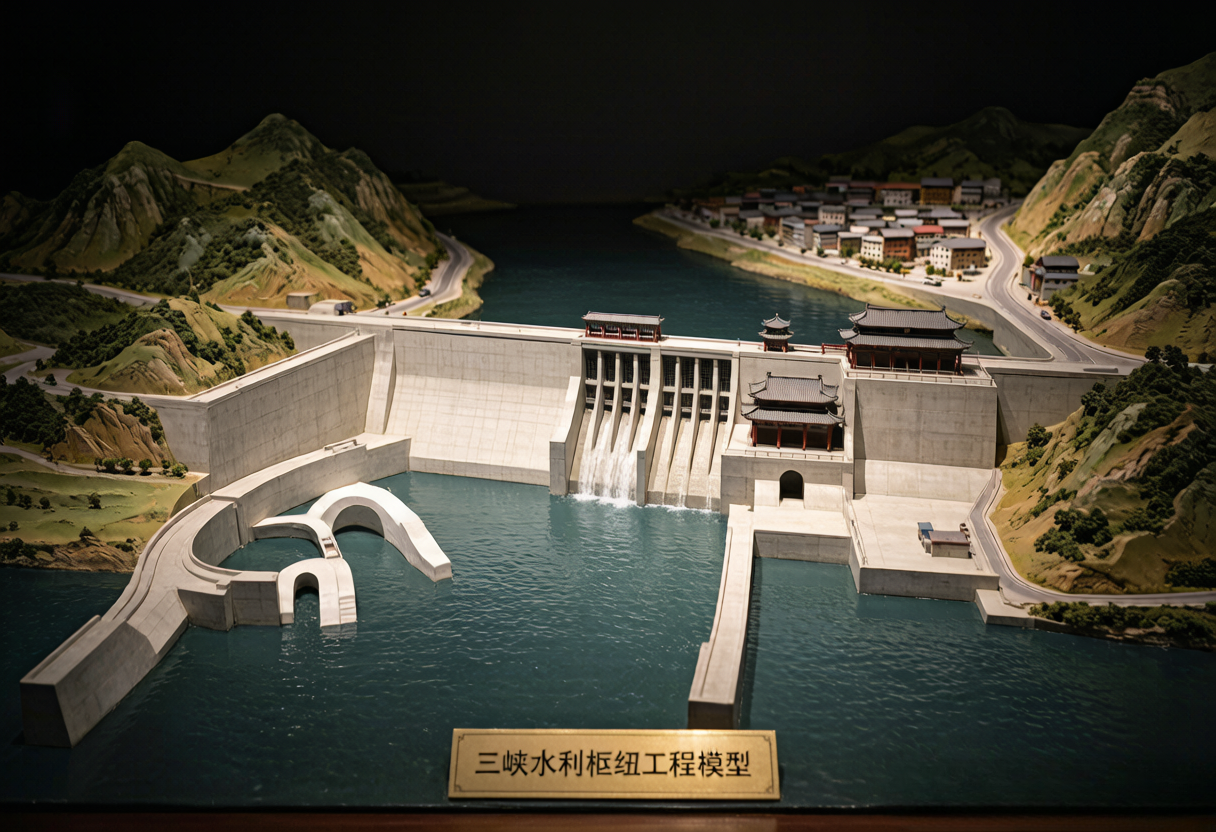
Dujiangyan has three main parts: the Fish Mouth, the Flying Sand Weir, and the Bottle Neck. They look simple, but the ideas are brilliant.
The Fish Mouth — shaped like a fish head, standing in the middle of the river. Its job: in dry seasons, send 60% of water to the Inner River (toward Chengdu Plain); when flooding, send 60% to the Outer River (to flow away). Simple: split the water in half, half for irrigation, half to prevent flooding.
The Flying Sand Weir — a low wall that looks unimpressive. But it uses the power of spinning water to push 75% of sand and silt into the Outer River. Most water projects in the world struggle with silt building up — but not Dujiangyan.
The Bottle Neck — a gap only 20 meters wide, like the neck of a bottle. It controls how much water goes into the Chengdu Plain. Too much water flows over the top; just the right amount passes through.
UNESCO says: "Dujiangyan is a major milestone in water management, and it's still working today."
You stand on the Fish Mouth Dam and watch the water split exactly as designed 2,300 years ago — people back then understood principles that modern scientists only figured out later.
"The Dujiangyan irrigation system, begun in the 2nd century BC, is a major milestone in the development of water management technology and is still functioning today."
Dredge the Shoals Deep, Build the Weir Low
Did you know? The maintenance of Dujiangyan is even more remarkable than its construction.
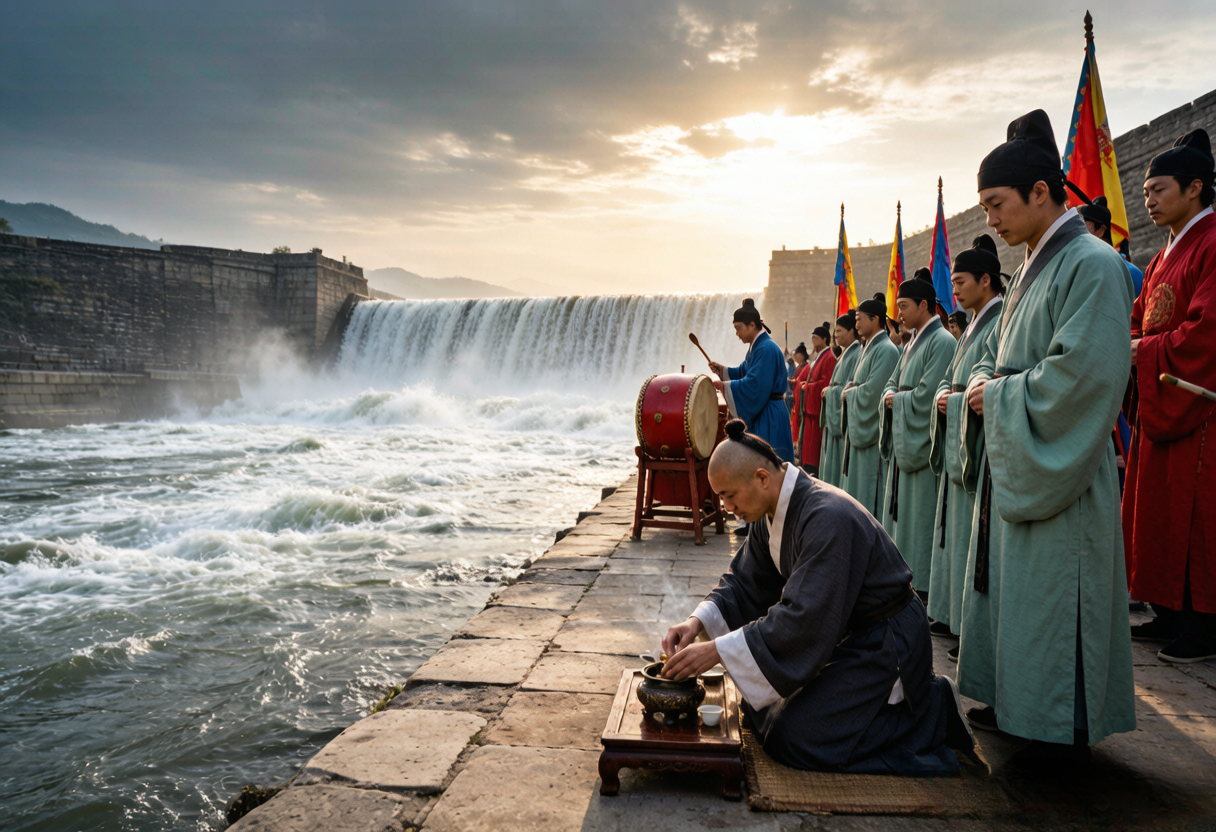
"Dredge the shoals deep, build the weir low" — six characters that have guided over two thousand years of annual maintenance. Every winter during low water season, people use the "mazha method" to build temporary cofferdams, blocking the Outer River from entering the Inner River, to clear sediment and repair the Inner River. Each spring during the Qingming Festival, the cofferdams are removed to redirect Min River water back into the channels.
There's also eight characters: "Cut the corner when meeting a bend, dig the center when meeting straight" — instructing descendants to flexibly adjust the project according to terrain and water conditions.
Every Qingming Festival, Dujiangyan hosts the grand "Water Releasing Festival" — the annual opening ceremony that has continued for over two thousand years. The 2026 Water Releasing Festival, themed "Cherish Water for Eternity, Happy and Peaceful City," saw more than 50 diplomatic representatives from 16 countries participating in Hanfu. When the mazha are cut and water is released, you hear the cheers of people around you — this is not a performance. This is the same event happening every year for two thousand years.
Standing on the Anlan Rope Bridge, a thousand-year-old iron cable spanning the Min River, you feel it sway gently beneath your feet. With the rushing water below and mountain breeze above, you sense a shock that transcends time — a two-thousand-year tradition, vividly unfolding before your eyes.
"Dredge the shoals deep, build the weir low."
— Li Bing's Six-Character Formula, carved on Erwang Temple
Qingming Water Releasing Festival — A Living Millennium Tradition
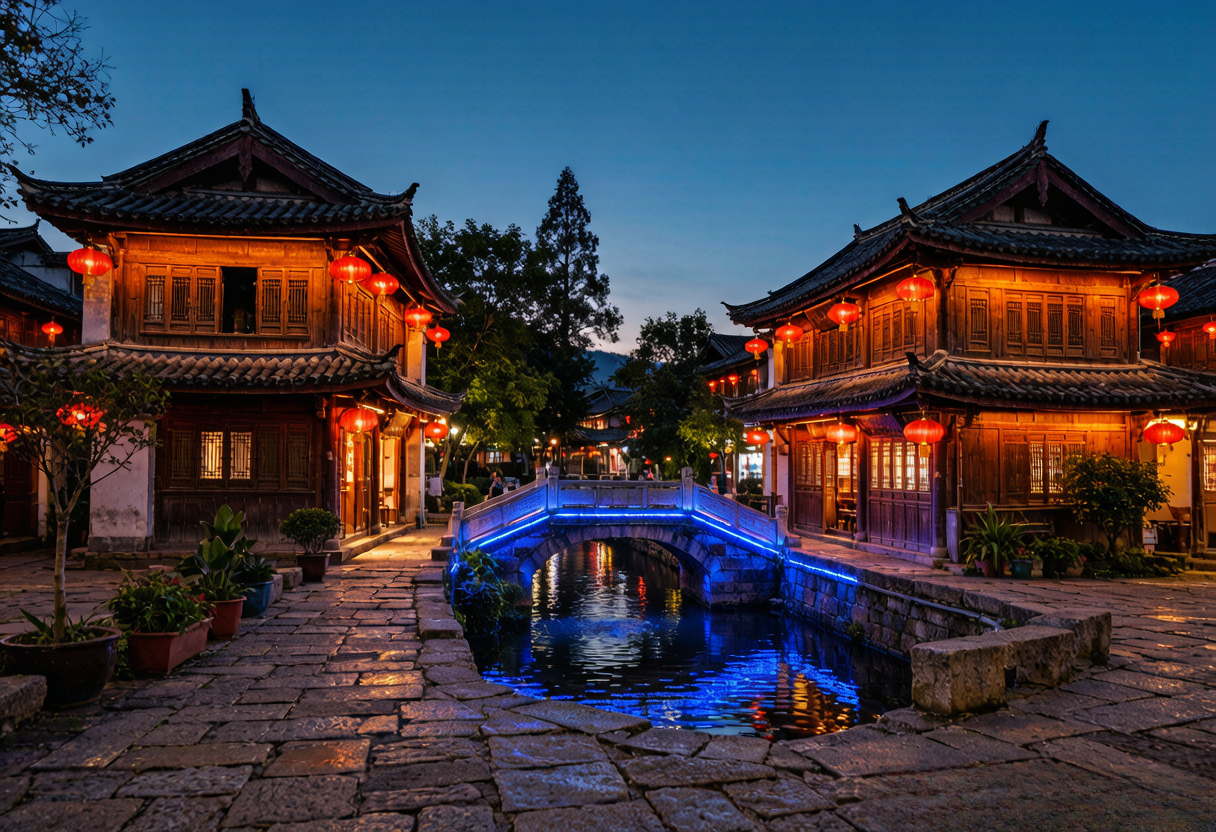
Every year during the Qingming Festival (around April 4th), Dujiangyan hosts its biggest celebration — the Water Releasing Festival. In 2006, this festival was listed among the first batch of National Intangible Cultural Heritage items.
What can you see? Banners flutter, horns blare — men in straw raincoats perform the Mazha Dance, sturdy men wearing ancient Nuo masks perform the sacrificial Nuo Dance. The chief officiant mounts the platform to recite the sacrificial prayer: "In the midst of spring, near the Qingming Festival, we begin the grand ceremony of water worship, sacrificing to the spirit of Lord Li..."
The most thrilling moment arrives: cutting the mazha to release water. Workers swing axes to cut the ropes binding the mazha, the cofferdam breaks apart, and the roaring waters of the Min River burst through the opening. You can hear the water crashing against rocks, feel the ground trembling slightly, smell the moisture in the air.
Locals also engage in "hitting the water head" — throwing pebbles to hit the first flow of water, praying for a smooth year. The 2026 Water Releasing Festival also features activities like "Tracing Li Bing" stamp-collecting, "Spring Marketplace" agricultural-cultural tourism fair, and "Cherish Water, Light Parade."
This is not a performance. This is the same event happening every year for two thousand years. Standing on the diversion dam, watching water flow in the same way as two thousand years ago, you understand: some miracles aren't written in books — they're felt standing by the water.
How You Can Visit Today
How to get there? High-speed rail is the best choice. Take Chengdu Metro Line 2 to Xipu Station, then transfer to an inter-city train to Lidu Park Station — note, not Dujiangyan Station! The journey takes 20-30 minutes, with tickets around 10 yuan. A 10-minute walk from the station takes you directly to the scenic area.
Tickets are 80 yuan (discounted on official accounts), and the combined ticket for Mount Qingcheng + Dujiangyan offers better value. Opening hours: 8:00-18:00 in peak season (March-November), 8:00-17:30 in off-season (December-February). The scenic area has multilingual audio guides and AI smart translation screens supporting 14 languages. French tourist Pierre said: "The whole process felt as natural as booking on a French website." Russian tourist Ekaterina added: "Communication was completely barrier-free, so convenient."
Best route (top to bottom, all downhill, easiest): Qin Yan Tower → Yulei Pavilion (20 yuan for escalator to the top, 360° view of Dujiangyan and Chengdu Plain) → Erwang Temple (six-character formula carved on stone walls) → Anlan Rope Bridge (thousand-year-old iron cable bridge across the Min River, sways gently underfoot) → Fish Mouth Diversion Dam (witness the 40-60 water division and 20-80 sediment removal) → Flying Sand Weir + Bottle Neck (witness "flood discharge and sediment removal" and "water diversion for irrigation") → Lidu Park → Guanxian Ancient Town (exit leads directly to ancient town, bluestone roads, Ming-Qing architecture, beautiful night views).
Entering after 16:00 provides the best lighting for photos. Dutch tourist Anna said: "Seeing the water divided according to ancient methods, I was stunned by the wisdom of ancient Chinese people." Polish tourist Gosia also said: "The Min River is cleverly guided by the ancient Dujiangyan water project. The water management wisdom of ancient people deeply shocked me. China's rich historical culture and unique landscape are the core reasons we came from afar."
Don't miss the combined itinerary: Dujiangyan is not only a water project but also an important habitat for giant pandas. The China Conservation and Research Center for Giant Pandas Dujiangyan Base (Panda Valley) is nearby. During the 2026 Qingming holiday, Panda Valley welcomed 40,300 visitors. Recommended combination: morning at Dujiangyan (water project), afternoon at Panda Valley (giant pandas), evening at Guanxian Ancient Town (food, South Bridge "Blue Tears" night view).
Tickets: 80 RMB (discounted online), combined with Mount Qingcheng offers better value
Transport: Chengdu Xipu Station → Lidu Park Station (20 mins, 10 RMB)
Opening: 8:00-18:00 peak season, 8:00-17:30 off-season
Best Time: Around Qingming (Water Festival) or autumn (cooler weather)
The Water Keeps Flowing
In 256 BC, Li Bing stood by the Min River and made the decision not to build a dam. Over 2,300 years later, you stand in the same place, and the water still flows in the same way.
Starting from Chengdu, just 20 minutes by high-speed rail, you can stand on the Fish Mouth Diversion Dam and witness water from two thousand years ago flowing beneath your feet in the same way as two thousand years ago.
Next time you visit Chengdu, don't just go see pandas. Go to Dujiangyan — some miracles aren't written in books — they're felt standing by the water.
"From 256 BC to today, the water of Dujiangyan has never stopped."
"Dredge the shoals deep, build the weir low"
— Dujiangyan, Sichuan —