Ruili
Yunnan's vibrant border town where China meets Myanmar
ruili at a Glance
Everything you need to know before you go.
Where to Stay
Choose the neighborhood that fits your style.
Ruili Town
The city center offers convenient access to government offices, the jewelry street, and shopping areas. Hotels here range from budget-friendly options like Ruili Hotel to comfortable stays such as Pearl Business Hotel, all within easy reach of local amenities and transport.
Central convenienceJiegao Border Trade Zone
Located near the China-Myanmar border, this area is ideal for cross-border shopping and experiencing border trade. Hotels like Jinlong International Hotel provide clean rooms and easy access to the border gate, where you can purchase ethnic handicrafts and souvenirs.
Border trade hubRuili Fortune Plaza
A modern commercial area with a variety of hotels including the Kyriad Marvelous Hotel, which features a clean pool and comfortable hot springs. The plaza offers shopping, dining, and entertainment options, all within a kilometer from the city center.
Modern comfortMoli Tropical Rainforest
This area is home to the Moli Tropical Rainforest Scenic Area, a representative tropical rainforest attraction in Yunnan. Hotels here provide a peaceful retreat surrounded by nature, ideal for those seeking outdoor adventures and scenic beauty.
Nature escaperuili Highlights
The city's essential experiences.
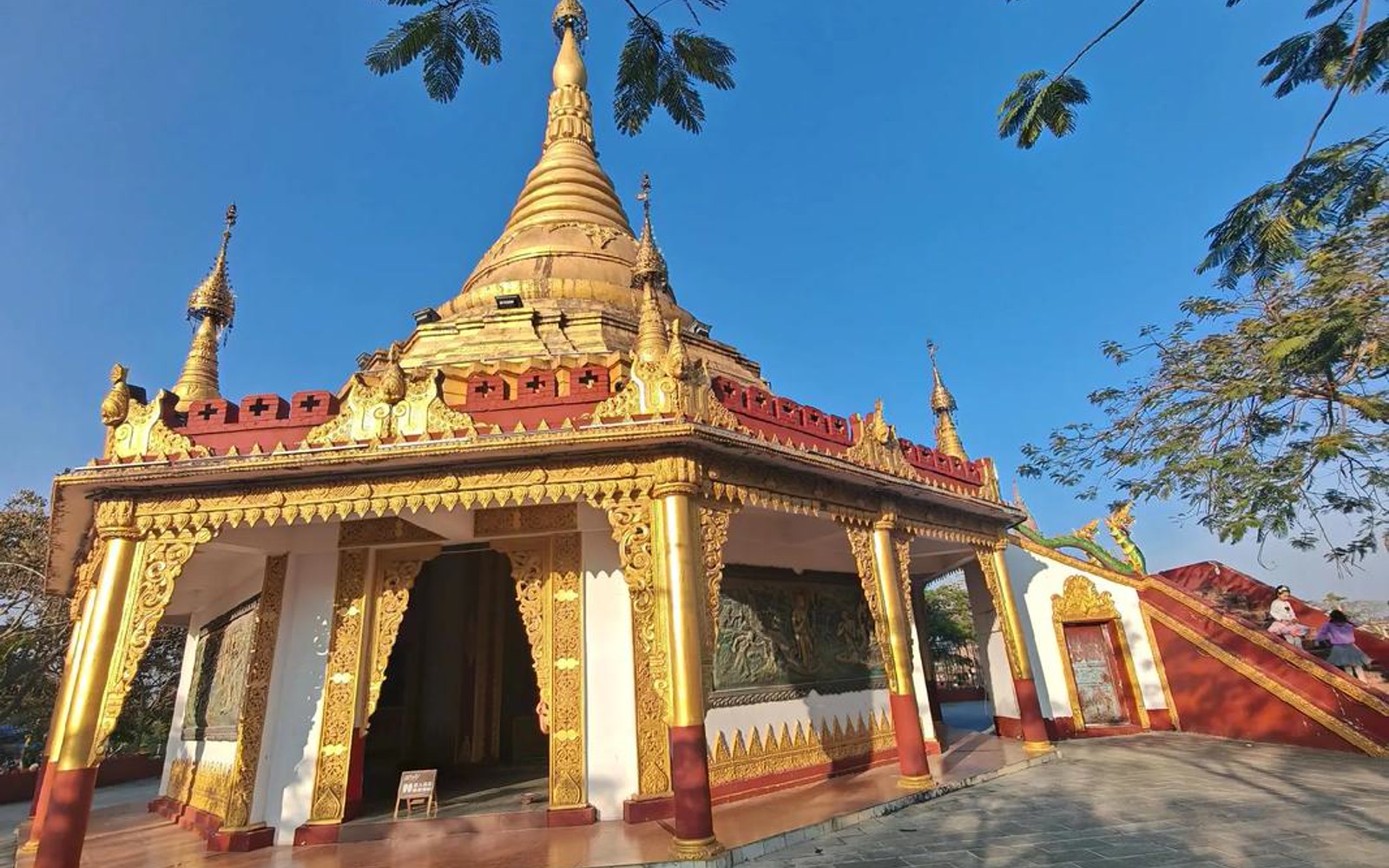
Ruili's oldest Buddhist site, this golden stupa complex of 17 towers dates to the 17th century. The main pagoda rises 39.5m, adorned with gold tiles and tinkling wind bells. During Water Splashing Festival, grand ceremonies draw crowds.
Also known as Manmengding Pagoda, this key Theravada Buddhist stupa in Yingjiang was first built in 1947, destroyed, and rebuilt in 1982. Nearby, ethnic festivals like Jingpo's Munao Zongge and Dai's Water Splashing come alive with song and dance.
A stunning Dai Buddhist temple in Hansa Village, once capital of the ancient Maomao Kingdom. The main hall houses a serene Buddha flanked by disciples, with ceilings painted with peacocks, white elephants, and auspicious motifs. Surrounded by bamboo and banyan trees.
One of Mangshi's best-preserved Buddhist temples, named after a thriving bodhi tree at its front. Though damaged in wars and the Cultural Revolution, it was restored in 1978. Open only during religious festivals, offering a glimpse of local devotion.
A pristine rainforest in Ruili, home to a 60-meter waterfall and a giant Buddha footprint on a rock. With high negative oxygen ions, it's a haven for ancient vines, strangler figs, and wildlife like peacocks and macaques. A truly immersive jungle experience.
A natural limestone cave on a cliff in Mangshi, named for three rock formations resembling fox spirits. The two-level cave spans 50 meters with 16 halls, filled with stunning stalactites and stalagmites in myriad shapes. A hidden gem for spelunkers.
A national scenic area along the China-Myanmar border, featuring rivers, tropical rainforests, and rare wildlife. It's a cultural tapestry of Dai villages, Buddhist stupas, and border-town charm, offering a unique blend of nature and ethnic heritage.
China's westernmost tropical reserve, bordering Myanmar, protects pristine monsoon forests. It's home to rare species like the white-browed gibbon and hornbills, as well as unique flora such as Shorea assamica. A biodiversity hotspot for nature enthusiasts.
A unique geographic marvel where the China-Myanmar border splits a Dai village. The border runs along bamboo fences and ditches, with locals crossing freely. Swing on the famous 'One Swing Two Countries' and you're instantly abroad!
A bustling border area just 500m from Myanmar's Muse, with a national gate and 9 boundary markers. Historically a key stop on the Southern Silk Road, it's now a hub for cross-border trade and cultural exchange. Note: check safety before visiting.
China's smallest city-level town, with a population of just 10,000. Its national gate and the Jiugu Bridge connect to Myanmar, offering easy border-crossing tours. The town's morning flag-raising ceremony is a moving sight, and the border street buzzes with exotic goods.
A charming Dai village whose name means 'place of gold'. Surrounded by fruit trees, bamboo groves, and banyans, it offers an authentic glimpse of rural Dai life. Peacocks stroll by, and the architecture blends traditional stilt houses with modern touches.
A patriotic education base in Yingjiang, this Qing-era Tusi mansion displays 192 relics, including the Tusi seal and items from Dao Anren's life. Nearby stands the 'China Rubber Mother Tree', planted from seeds he brought from Malaysia in 1904.
An ecological garden in Mangshi showcasing ancient trees, silicified wood, and rare stones. It boasts four national records: oldest and most numerous ancient trees, largest tree fossils, finest root carvings, and highest transplant survival rate. A botanical wonderland.
A dazzling golden stupa atop Leiyanrang Hill in Mangshi, the largest hollow Buddhist pagoda in Asia. Completed in 2004, it's a symbol of the Dai people's faith and a bridge of friendship with Myanmar. Open until 9pm for evening views.
A solemn monument in Mangshi honoring the Chinese Expeditionary Force in Yunnan. Inscribed by General Song Xilian, it stands on a high platform reached by steps. A free and moving site for history buffs.
Best Time to Visit
Each season offers something different.
Spring
Mild and dry, with blooming flowers. Ideal for outdoor activities and visiting temples.
Summer
Warm and rainy, with high humidity. Expect occasional showers; pack rain gear and light clothing.
Autumn
Pleasant temperatures and lower rainfall. Great for exploring border markets and cultural sites.
Winter
Cool and dry, with comfortable days. Perfect for sightseeing, but nights can be chilly; bring a jacket.
Suggested Itineraries
Plans for every schedule.
Classic 2-Day
Day 1: Ruili Border Trade Street, Jiegao Border Trade Zone, Wanding Bridge. Day 2: Jiele Golden Pagoda, Moli Tropical Rainforest.
Nature & Culture 3-Day
Day 1: Moli Tropical Rainforest, Jiele Golden Pagoda. Day 2: Ruili Border Trade Street, Jiegao Border Trade Zone, Wanding Bridge. Day 3: Free Time in Ruili Town.
Scenic Drive 4-Day
Day 1: Tengchong to Ruili Scenic Drive. Day 2: Moli Tropical Rainforest, Jiele Golden Pagoda. Day 3: Ruili Border Trade Street, Jiegao Border Trade Zone, Wanding Bridge. Day 4: Free Time in Ruili Town.
Local Tips
Insider knowledge for a smoother trip.
Do not enter village temples, touch fire pits, or disturb sacred trees in Dai and Jingpo areas.
Hotels fill up quickly due to business travelers; reserve in advance regardless of season.
Expect strict security checks; carry ID and cooperate with officers.
Avoid bargaining with Myanmar vendors unless serious; buy from certified shops to prevent fraud.
ATMs are available, but bring cash for remote areas; pack common medicines for the long journey.
Mandarin is widely spoken; communication is generally easy for travelers.
FAQs About ruili
Quick answers to common questions.
Ready to Explore ruili?
Let MagicTrip build the perfect ruili itinerary — tailored to your interests, pace, and budget.