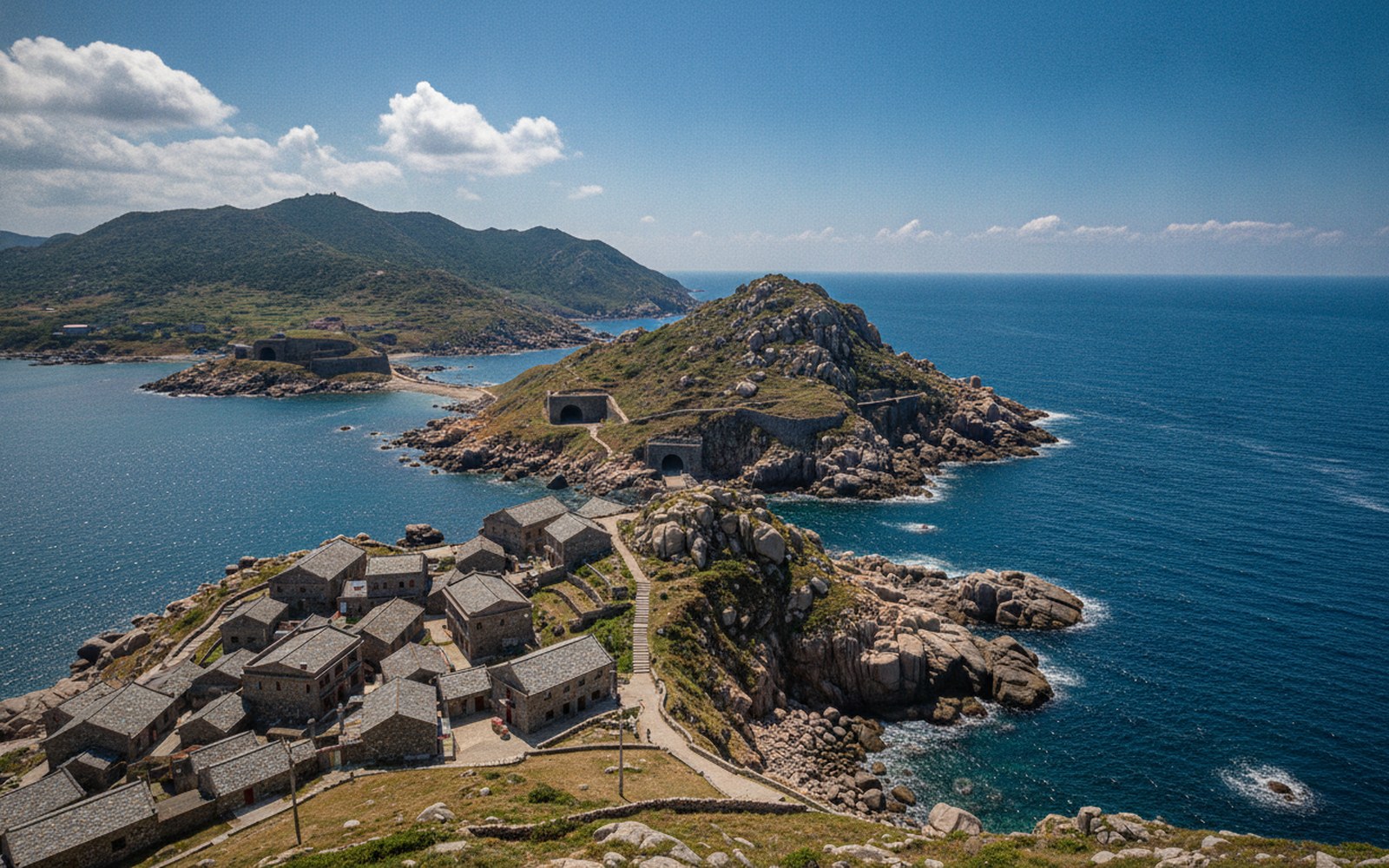
Nangan
Matsu's main island of granite cliffs, military heritage and Min-Dong culture
Nangan at a Glance
Everything you need to know before you go.
Where to Stay
Choose the neighborhood that fits your style.
Jieshou Village
Jieshou Village is the administrative heart of Nangan, home to the county government and key services. It offers convenient access to the ferry terminal and local buses, making it a practical base for exploring the island. Nearby, you'll find simple eateries serving local dishes and small shops for daily needs. This area suits travelers who prioritize convenience and easy transport connections over scenic seclusion.
Best accessJinsha Village
Jinsha Village, located on the eastern coast of Nangan, is known for its traditional stone houses and tranquil atmosphere. The village is close to scenic viewpoints and hiking trails, offering a peaceful retreat from busier areas. While dining options are limited, a few local restaurants serve authentic Matsu cuisine. This area is ideal for travelers seeking a quiet, culturally immersive experience and proximity to nature.
Cultural immersionFuxing Village
Fuxing Village sits in the central part of Nangan, providing a balanced location between the main port and scenic spots. It features a mix of local guesthouses and small eateries, with easy access to the island's main road for exploring by scooter or bus. The village is near historical sites like the Fuxing Fort, appealing to history buffs. This area suits travelers who want a central base with moderate amenities and cultural attractions.
Central baseRenai Village
Renai Village is a residential area on Nangan's west side, offering a more local and laid-back experience. It has a few family-run restaurants and a small market, but lacks major tourist facilities. The village is close to beaches and coastal paths, perfect for leisurely walks and sunset views. This area is best for travelers who prefer a quiet, authentic stay away from crowds and don't mind limited services.
Budget-friendlyNangan Highlights
The city's essential experiences.
A scenic overlook offering panoramic views of Nangan's rolling hills and coastline. Best visited at sunrise for a sea of clouds and golden light over the Taiwan Strait.
The highest point on Nangan, featuring a hiking trail through lush vegetation. At the summit, enjoy 360-degree views of the island and the surrounding ocean.
A tranquil valley known for its golden sandy banks and clear stream. A peaceful spot for a short walk and picnic, away from the main tourist paths.
A military tunnel carved into the mountain, once a secret naval base. Walk through the cool, dim passage to experience the island's Cold War history.
An abandoned military fortress with underground bunkers and gun emplacements. Explore the maze-like corridors and imagine life as a soldier stationed here.
A historic street lined with traditional Fujian-style houses and small shops. Stroll along the stone-paved path to see local life and sample regional snacks.
A grand temple dedicated to the sea goddess Mazu, a key figure in local maritime culture. Admire the intricate carvings and colorful decorations, and join locals in prayer.
A historic hall used for community gatherings and ceremonies. Its traditional architecture and peaceful courtyard offer a glimpse into Nangan's cultural heritage.
A serene temple nestled in the hills, offering a quiet retreat. The incense-filled air and chanting provide a spiritual experience away from the crowds.
A beautiful sandy beach with crystal-clear water, ideal for swimming and sunbathing. In the evening, enjoy a stunning sunset over the sea.
A lively market where fishermen sell the day's catch. Sample fresh seafood like fish balls and squid, or buy some to cook later.
A scenic pavilion overlooking the ocean, perfect for photography. Watch fishing boats bob on the waves and feel the sea breeze on your face.
Best Time to Visit
Each season offers something different.
Spring
Mild and humid, with occasional fog. Light layers and rain gear recommended.
Summer
Hot, humid, and prone to typhoons. Pack light clothing and check forecasts.
Autumn
Pleasant and dry, with clear skies. Ideal for outdoor exploration.
Winter
Cool and windy, with lower humidity. Bring a warm jacket for breezy days.
Suggested Itineraries
Plans for every schedule.
Classic 2-Day
Day 1: Nangan Ferry Terminal, Jinsha Village, Niujiao Beach. Day 2: Beihai Tunnel, Matsu Temple, Fuxing Village.
Cultural 3-Day
Day 1: Nangan Ferry Terminal, Jinsha Village, Niujiao Beach. Day 2: Beihai Tunnel, Matsu Temple, Fuxing Village. Day 3: Nangan Island, Shengtian Cave, Dahan Village.
Extended 4-Day
Day 1: Nangan Ferry Terminal, Jinsha Village, Niujiao Beach. Day 2: Beihai Tunnel, Matsu Temple, Fuxing Village. Day 3: Nangan Island, Shengtian Cave, Dahan Village. Day 4: Nangan Lighthouse, Qingshui Village, Nangan Airport.
Local Tips
Insider knowledge for a smoother trip.
Rent a scooter or use the local bus to explore the island's scenic spots.
Book ferry tickets in advance, especially during weekends and holidays.
Don't miss the war memorial tunnels for a glimpse into the island's military past.
Try local seafood and traditional Matsu dishes at family-run eateries.
When visiting temples, dress modestly and follow local etiquette.
Check weather forecasts daily, as conditions can change rapidly.
FAQs About Nangan
Quick answers to common questions.
Ready to Explore Nangan?
Let MagicTrip build the perfect Nangan itinerary — tailored to your interests, pace, and budget.