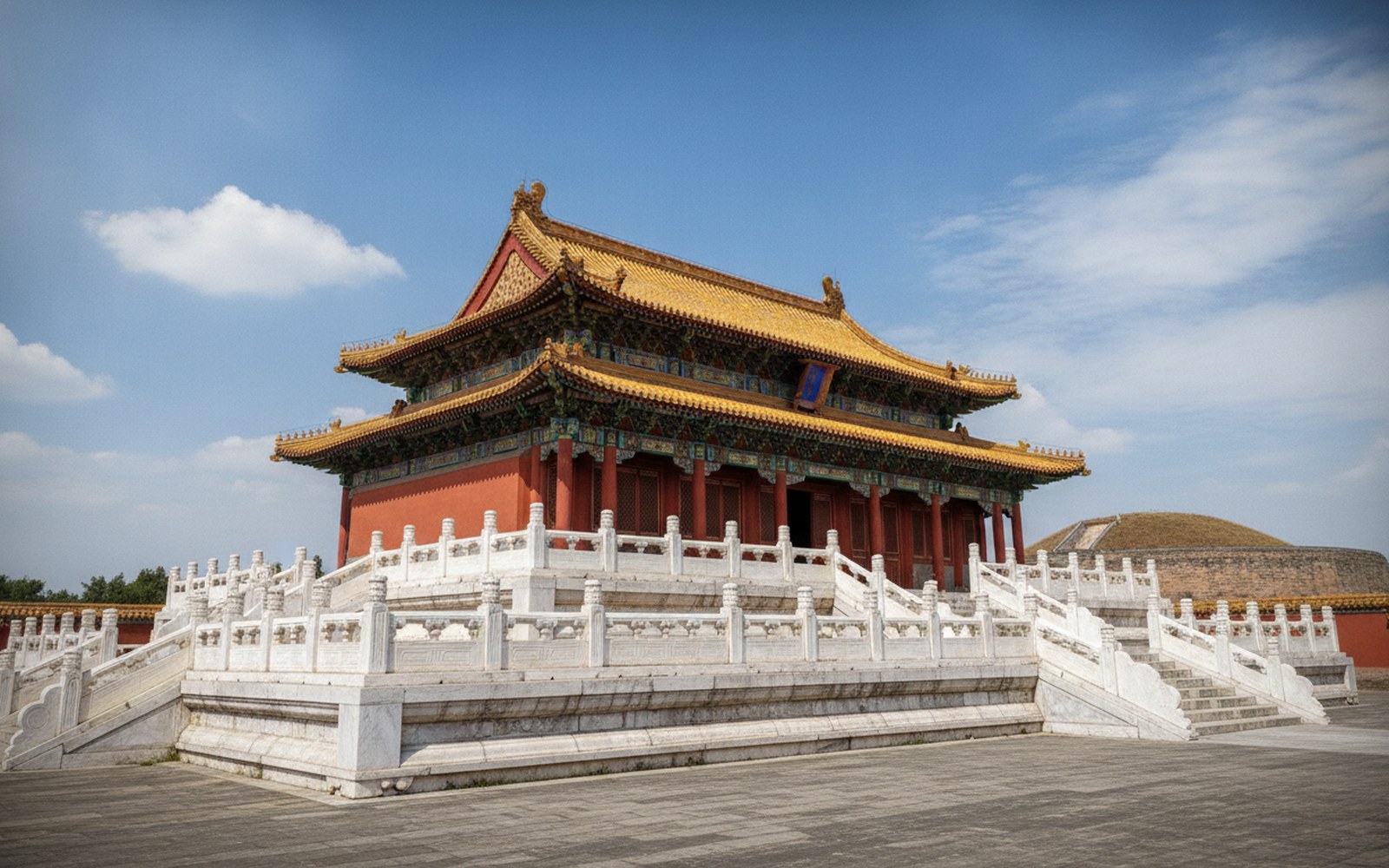
Ming Tombs
A UNESCO World Heritage Site and final resting place of 13 Ming emperors.
Ming Tombs at a Glance
Everything you need to know before you go.
The Ming Tombs are a cluster of imperial mausoleums nestled in a valley at the foot of Tianshou Mountain, about 50 kilometers northwest of Beijing. Built over more than 200 years, the site contains the tombs of 13 emperors of the Ming Dynasty. Visitors can explore the grand Changling Tomb, the excavated underground palace of Dingling Tomb, and the ornate Sacred Way lined with stone statues. This UNESCO-listed complex offers a profound glimpse into imperial architecture, feng shui principles, and Chinese funerary traditions.
Where to Stay
Choose the neighborhood that fits your style.
Changping District
Located just minutes from the Ming Tombs, Changping offers a range of hotels and local dining options, making it an ideal base for early access to the tombs and nearby attractions like Juyongguan Pass.
Best for proximity to the tombs and a relaxed suburban stayBeijing City Center
With extensive accommodation choices and excellent transport links, staying in central Beijing allows easy day trips to the Ming Tombs via subway, bus, or organized tour, while keeping you close to the Forbidden City, Temple of Heaven, and other major sights.
Best for first-time visitors who want to combine the tombs with Beijing's top attractionsMing Tombs Highlights
The city's essential experiences, grouped by what you love most.
The tomb of Emperor Yongle (Zhu Di), the largest and earliest of the Ming tombs. Its Ling'en Hall is a masterpiece of Ming wooden architecture.
The tomb of Emperor Wanli (Zhu Yijun). It is the only Ming tomb excavated, allowing visitors to explore the underground palace.
The tomb of Emperor Longqing (Zhu Zaiji). Its above-ground structures have been restored, showcasing the complete layout of Ming imperial mausoleums.
The starting point of the Sacred Way. It is one of the largest and earliest surviving stone archways in China.
The main gate of the Ming Tombs area, serving as the formal entrance to the imperial necropolis.
Houses a giant stone stele inscribed with the merits and virtues of Emperor Yongle.
A series of 18 pairs of stone animals and human figures lining both sides of the Sacred Way, including lions, camels, elephants, qilin, horses, military officers, and civil officials.
Tomb of Emperor Hongxi (Zhu Gaochi). Known for its simple design, it reflects the frugality of the short-lived emperor.
Tomb of Emperor Jiajing (Zhu Houcong). Built on a grand scale, it is not fully open to the public but can be viewed from outside.
Tomb of Emperor Chongzhen (Zhu Youjian). Originally a concubine's tomb, it was later converted for the last Ming emperor, making it the smallest of the thirteen tombs.
Best Time to Visit
Each season offers a different side of the city.
Spring · Mar–May
Mild weather and blooming landscapes — comfortable for exploring.
Summer · Jun–Aug
Warm days; highland areas stay cool while lowland cities get hot and humid.
Autumn · Sep–Nov
The best season in most of China — crisp air, clear skies, and golden light.
Winter · Dec–Feb
Cold in the north, mild in the south. Fewer crowds and lower prices outside holidays.
Suggested Itineraries
Three carefully-paced plans for your trip.
1-Day Express
Visit the Sacred Way with its stone statues, then explore Changling, the largest and best-preserved tomb, and finish at Dingling, the only excavated underground palace.
2-Day Classic
Day 1: Visit the Sacred Way, Changling, and Dingling. Day 2: Explore Zhaoling and surrounding scenic areas, with time to appreciate Ming dynasty architecture and history in depth.
Local Tips
Insider knowledge for a smoother trip.
Check the official website for current opening hours and ticket prices before visiting.
The Ming Tombs are located in Changping District, about 50 km northwest of Beijing; take a bus or drive.
Visit Changling, Dingling, and Zhaoling, the main tombs open to the public.
Wear comfortable walking shoes as the site covers a large area.
Do not climb on ancient structures and follow all visitor guidelines.
FAQs About Ming Tombs
Quick answers to common questions.
Ready to Explore Ming Tombs?
Let MagicTrip build the perfect Ming Tombs itinerary — tailored to your interests, pace, and budget.