Jinggangshan
Where China's revolutionary spirit meets dramatic mountain landscapes.
jinggangshan at a Glance
Everything you need to know before you go.
Where to Stay
Choose the neighborhood that fits your style.
Ciping Town
The central hub of Jinggangshan, Ciping offers convenient access to the Jinggangshan Museum and Martyrs' Cemetery. It has a range of local restaurants serving Hakka cuisine and shops selling souvenirs. Ideal for first-time visitors seeking cultural immersion and easy transport links.
Best accessDajing & Huangyangjie Area
Located near the historic Huangyangjie battlefield, this area provides a peaceful retreat surrounded by lush forests. Visitors can explore the Dajing village and enjoy hiking trails. Accommodations are mostly guesthouses, perfect for nature lovers and history enthusiasts.
Nature & historyLongtan & Bijiashan Area
This scenic area features the stunning Longtan Waterfalls and the majestic Bijiashan peaks. It's a haven for photographers and hikers, with several viewpoints and picnic spots. Local eateries offer simple meals, and the atmosphere is tranquil, away from the city bustle.
Scenic viewsCiping Old Street
A charming historic street in the heart of Ciping, lined with traditional buildings and artisan shops. It's a great place to sample local snacks and buy handicrafts. The area is pedestrian-friendly, making it easy to explore on foot. Suitable for those who enjoy a lively, cultural atmosphere.
Cultural charmjinggangshan Highlights
The city's essential experiences.
Located 6 km southwest of Ciping, this area features Wuzhi Peak, the 1,586-meter main peak of Jinggangshan, plus the Red Army Guerrilla Cave and Qunluan Lake Shuikou. Hike to the summit for panoramic views.
Also known as Bijiashan, this scenic area lies 35 km southwest of Ciping and comprises three peaks: Yangmei, Wangzhi, and Guandao. The mountain's shape resembles a pen holder, offering unique rock formations and azalea blooms.
At 866 meters, 9 km northeast of Ciping, this area includes the Tongmuling Sentry Post and Shiyan Cave. Explore the cave 12 km away and visit the former site of the Workers, Peasants, and Soldiers Government of Aoxia Township.
Eling, 30 km from Ciping at 1,408 meters, features an ancient stone path with nine bends and ten turns leading to the summit. Pass through the 'Tongxian Dangerous Pass' for a challenging climb and rewarding views.
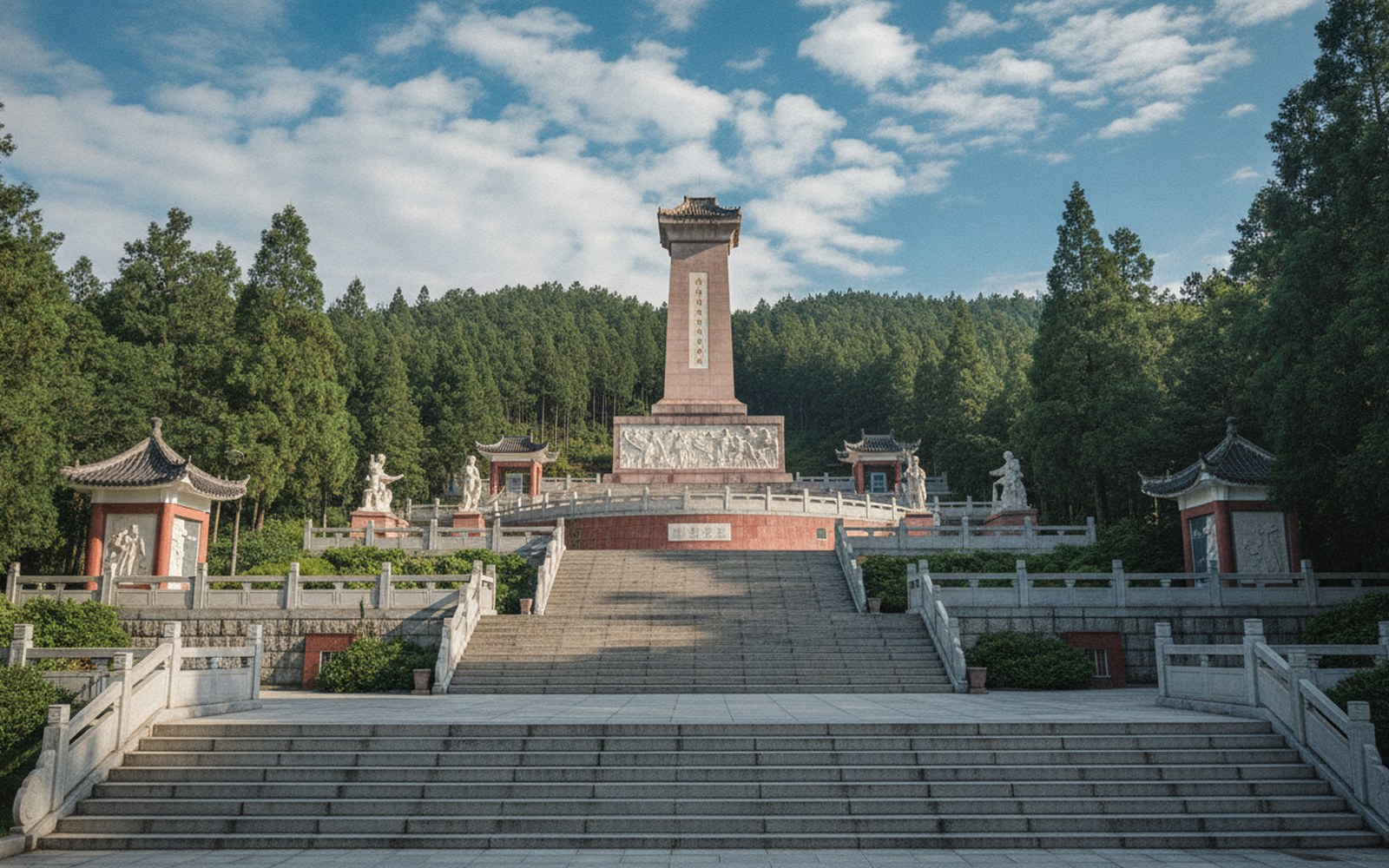
This solemn cemetery covers 400 mu and overlooks the main peak. Surrounded by pines and cypresses, it includes a Memorial Hall, a Forest of Steles, and a monument, honoring the revolutionaries of Jinggangshan.
Huangyangjie, 17 km northwest of Ciping, is one of the five major passes of Jinggangshan at 1,343 meters. It controlled strategic routes and is often shrouded in thick fog, making it a dramatic site of revolutionary history.
This exhibition hall presents the history of the Jinggangshan struggle through a panoramic display. It offers an immersive experience, bringing to life the revolutionary events that took place in this region.
The museum houses artifacts and exhibits detailing the revolutionary history of Jinggangshan. It provides insight into the lives of the martyrs and the significance of the base area in China's revolutionary movement.
Located in Feicui Valley, 7 km northwest of Ciping, Longtan is also known as the Five Dragon Pools. The Wushen River leaps over cliffs five times in under 2 km, creating terraced waterfalls and deep pools. Best visited during the rainy season.
Thirty km south of Ciping, this area has been a strategic military site for centuries. The Xianren Bridge at Xiankou Village served as a vital escape route for the Red Army, and legend says it was protected by immortals.
Jingzhu Mountain boasts rich cultural landscapes and stunning natural scenery, including cloud brocade azaleas, terraced fields, and the Jiulong Guiyi Waterfall. The area is known for its Hakka culture and crystal-clear springs.
These five villages—Dajing, Xiaojing, Zhongjing, Shangjing, and Xiajing—are shaped like wells and surrounded by mountains. They were important for Red Army activities, and Mao Zedong's former residence is in Dajing Village.
Located in Dajing Village, this residence was where Mao Zedong and Zhu De lived during the Jinggangshan period. It offers a glimpse into the living conditions of the revolutionary leaders and their strategic planning.
Ciping is the center of Jinggangshan, almost entirely covered with green spaces and flowers. It was the office site of the Fourth Red Army headquarters and the Hunan-Jiangxi Border Special Committee, leaving many revolutionary sites.
Fifteen km west of Huangyangjie, Maoping is surrounded by mountains and blends with revolutionary sites. Key attractions include Mao Zedong's former residence at Bajiao Lou (Octagonal Tower) and other historical buildings.
Best Time to Visit
Each season offers something different.
Spring
Mild temperatures, blooming flowers. Pack a light jacket as evenings are cool.
Summer
Cooler than lowlands, but rainy. Bring rain gear and be prepared for sudden showers.
Autumn
Clear skies and comfortable temperatures. Ideal for hiking and outdoor activities.
Winter
Cold and damp, with occasional snow. Dress warmly and check road conditions.
Suggested Itineraries
Plans for every schedule.
Classic 2-Day
Day 1: Jinggangshan Revolutionary Martyrs Museum, Beishan Revolutionary Martyrs Cemetery, Huangyangjie Battlefield. Day 2: Dragon Pool Waterfall (Longtan), Bijiashan Scenic Area, Dajing Mao Zedong and Zhu De's Former Residence.
Revolutionary Heritage 3-Day
Day 1: Jinggangshan Revolutionary Martyrs Museum, Beishan Revolutionary Martyrs Cemetery, Jinggangshan Struggle Panorama Exhibition Hall. Day 2: Huangyangjie Battlefield, Dajing Mao Zedong and Zhu De's Former Residence. Day 3: Dragon Pool Waterfall (Longtan), Bijiashan Scenic Area.
Comprehensive 4-Day
Day 1: Jinggangshan Revolutionary Martyrs Museum, Beishan Revolutionary Martyrs Cemetery. Day 2: Jinggangshan Struggle Panorama Exhibition Hall, Huangyangjie Battlefield. Day 3: Dragon Pool Waterfall (Longtan), Bijiashan Scenic Area. Day 4: Dajing Mao Zedong and Zhu De's Former Residence.
Local Tips
Insider knowledge for a smoother trip.
Temperatures are 6-10°C lower than Nanchang; bring a jacket except in summer.
Weather changes quickly; carry a raincoat as umbrellas are impractical in wind.
Mountain roads are winding; bring motion sickness tablets if needed.
Smoking is only allowed in designated areas; extinguish all fire sources.
Do not venture into unopened or dangerous mountain areas.
Food is cheap, but tickets and transport add up. Avoid holidays for lower prices.
FAQs About jinggangshan
Quick answers to common questions.
Ready to Explore jinggangshan?
Let MagicTrip build the perfect jinggangshan itinerary — tailored to your interests, pace, and budget.