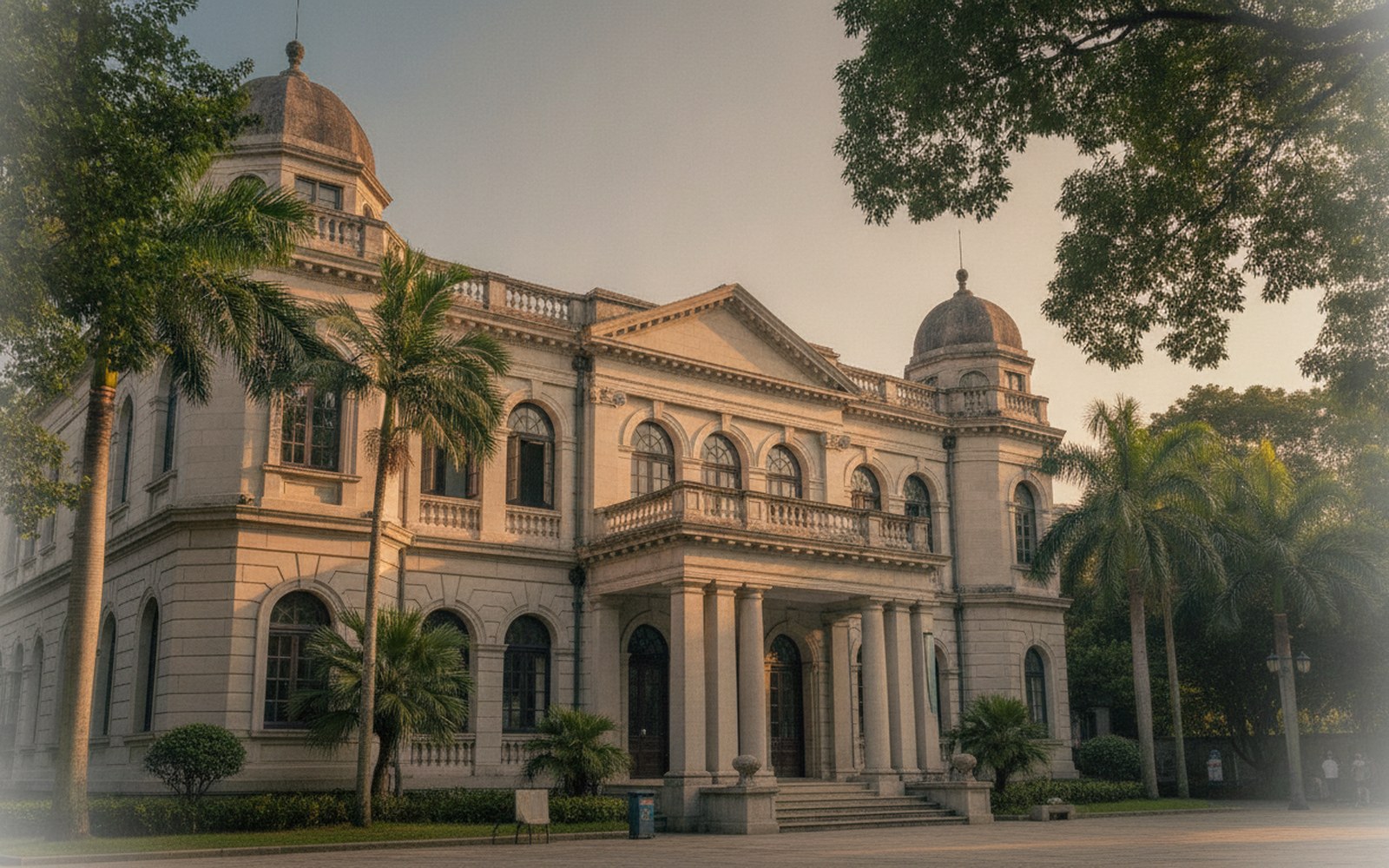
Gulangyu Island
A car-free island blending colonial architecture and Minnan flavors
gulangyu island at a Glance
Everything you need to know before you go.
Where to Stay
Choose the neighborhood that fits your style.
Gulangyu Island
A car-free island reachable by an 8-minute ferry from Xiamen, offering a mix of historic villas, family inns, and boutique hotels. Popular with art-loving travelers, it features landmarks like the Organ Museum and Haoyue Garden, with dining and shops along Longtou Road.
Cultural hubLongtou Road Area
The main commercial street near the ferry pier, with easy access to transport and a variety of accommodations, including the Naya Resort Inn (former German Consulate) and Wan Jing Inn. Surrounded by shops, cafes, and local eateries, ideal for those wanting convenience and nightlife.
Best accessFuxing Road & Interior
A quieter, hillside area with secluded inns like the Gallery Inn, offering a peaceful retreat with artistic ambiance. Close to local schools and residential lanes, it provides a more authentic local experience away from the crowds.
Peaceful retreatHistoric Villa District
Concentrated around Anhai Road and Lujiao Road, this area boasts grand heritage buildings such as Lin's Mansion (built 1895) and NAZA Hotel, featuring European architecture and museum-like settings. Perfect for history buffs and luxury seekers.
Heritage staygulangyu island Highlights
The city's essential experiences.
Built with donations from church members, largely completed in 1934 but finished in 1945. The roof was designed with the assistance of a Du, making it a unique architectural gem on the island.
The first church on Gulangyu, built in 1863. Founded by missionary John A. Otte, it features neoclassical style and has been a landmark for over a century.
The only surviving Gothic Catholic church in Xiamen, designed by a Spanish architect. Its pointed arches and spires make it a standout example of Gothic architecture.
The only church built on Gulangyu after the founding of the PRC. Originally at Huangjiadu, it was destroyed during the Cultural Revolution but later rebuilt, symbolizing resilience.
Features a tall European-style gatehouse with shield-shaped reliefs and Greek columns. A sculpted screen wall and grand staircase connect the gatehouse to the main building.
A nearly 200-year-old residence built during the Jiaqing period, named after a high-ranking official. It is the earliest existing residential house on Gulangyu, now a tea house.
Built in 1898, this building blends Western arched verandas with traditional Chinese sloping roofs. Its parapet walls are decorated with Minnan seven-color ceramic vases.
Designed by John A. Otte, its red dome imitates the Persian Stanbul Mosque. With 82 large columns, it is a striking example of eclectic architecture on the island.
A memorial garden for Dr. Lin Qiaozhi, founder of modern obstetrics in China. Built in 1984, it covers 5,700 square meters and honors her lifelong dedication to medicine.
Built in 1913 by Yang Zhongquan, a businessman who founded an Iron Industry Company. The villa showcases his success and was renamed by his descendants after his death.
A uniquely shaped villa built according to the terrain, with granite foundations and a damp-proof layer. Its rooftop terrace offers distant views of Xiamen's landmarks.
Built in 1920, this Western-style building features multiple colonnades carved from granite. The column capitals are in Doric order, and the facade is highlighted by large columns and arches.
Located at the southern end of Gulangyu, this beach has fine sand and calm waves. With about 6 hours of swimming time daily and warm water for 5.5 months a year, it's ideal for a dip.
The most commonly used pier for arriving on Gulangyu, built in 1976. Its semi-arched design in blue and white gives it a modern, abstract artistic style.
Facing the sea on a high cliff, this T-shaped building features Corinthian columns and curved red brick shafts. Its strategic position made it a commanding presence.
With red and white as main colors, this building features tall white Corinthian colonnades. It appears stable yet elegant, showcasing American architectural style.
Best Time to Visit
Each season offers something different.
Spring
Mild and sunny with gentle sea breezes, ideal for strolling and outdoor exploration.
Summer
Hot and humid, with occasional typhoons in August; check weather forecasts and stay hydrated.
Autumn
Still warm, especially in October, but pleasant for sightseeing; also tea harvest season.
Winter
Mild but indoor spaces can be chilly; pack a light jacket for cooler evenings.
Suggested Itineraries
Plans for every schedule.
Classic 2-Day
Day 1: Former British Consulate, Former German Consulate, Union Church, Catholic Church, Haitian Hall Structure, Huang Rongyuan Hall, Yi Garden. Day 2: Huang Family Villa, Shen's Herb Jelly Stall, Three-in-One Church, Bagua Building, Former American Consulate.
Heritage 3-Day
Day 1: Former British Consulate, Former German Consulate, Union Church, Catholic Church. Day 2: Haitian Hall Structure, Huang Rongyuan Hall, Yi Garden, Huang Family Villa. Day 3: Shen's Herb Jelly Stall, Three-in-One Church, Bagua Building, Former American Consulate.
In-Depth 4-Day
Day 1: Former British Consulate, Former German Consulate. Day 2: Union Church, Catholic Church, Haitian Hall Structure. Day 3: Huang Rongyuan Hall, Yi Garden, Huang Family Villa. Day 4: Shen's Herb Jelly Stall, Three-in-One Church, Bagua Building, Former American Consulate.
Local Tips
Insider knowledge for a smoother trip.
The island is car-free; walking is the best way to explore its charm.
Streets can be confusing; don't hesitate to ask locals for help.
When playing on rocks, watch tide times and return to shore before high tide.
Post office sells them at normal price (1.2 yuan), cheaper than tourist shops.
During holidays, rooms fill up fast; reserve well in advance.
Store bags at the visitor center near the dock for a small fee.
FAQs About gulangyu island
Quick answers to common questions.
Ready to Explore gulangyu island?
Let MagicTrip build the perfect gulangyu island itinerary — tailored to your interests, pace, and budget.