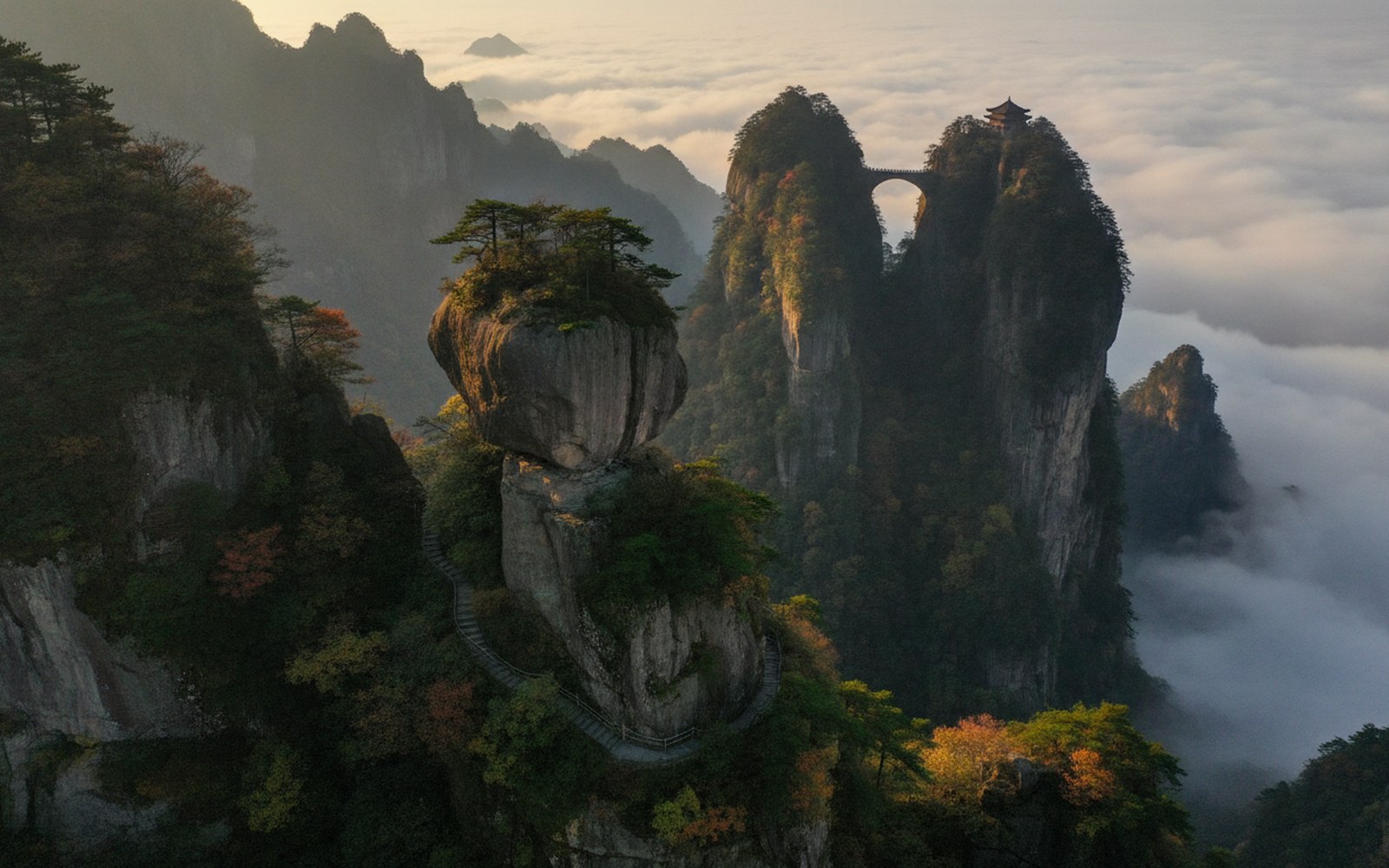
Fanjing Mountain
A five-star scenic mountain and the last Erma settlement with living Qiang culture
Fanjing Mountain at a Glance
Everything you need to know before you go.
Where to Stay
Choose the neighborhood that fits your style.
Mount Fanjing Scenic Area
Stay at the base of the sacred peak for earliest access to the cable car and hiking trails. Surrounded by lush forests and misty cliffs, this area offers simple guesthouses and local eateries serving mountain specialties. Ideal for sunrise chasers and nature lovers wanting to beat the crowds.
Best accessErma Settlement
A quiet village below the mountain, offering budget-friendly homestays and a glimpse of local Miao culture. Stroll through terraced fields, sample home-cooked Guizhou dishes, and enjoy starry nights away from tourist bustle. Perfect for backpackers and cultural explorers.
Budget-friendlyJiangkou County
The nearest town with full amenities, including markets, bus stations, and a range of hotels from basic to mid-range. Easy day-trip access to the mountain via local buses. Great for travelers needing convenience, dining options, and transport links.
Convenient baseTongren City
A larger city about an hour away, offering more accommodation choices, restaurants, and nightlife. Serves as a transport hub with train and long-distance bus connections. Suitable for those combining Fanjing with other regional sights or preferring urban comforts.
Urban hubFanjing Mountain Highlights
The city's essential experiences.
A UNESCO World Heritage site and sacred Buddhist mountain, Fanjingshan is known as the 'Buddhist Pure Land, Peach Blossom Spring Tongren.' Take the cable car to save time and enjoy the Red Cloud Golden Summit, but be prepared for unpredictable weather and bring warm clothing.
At the foot of Fanjingshan, this temple houses a 5-meter-tall Maitreya Buddha statue made with over 200 kilograms of gold and precious jewels. Cross the 67.5-meter Fengyu Bridge to enter and marvel at the 'Golden Summit, Golden Hall, Golden Buddha' splendor.
Rising like a giant bamboo shoot, the Red Cloud Golden Summit is a dramatic pinnacle often encircled by red clouds. Connected by a sky bridge, it offers breathtaking views and is a highlight of Fanjingshan. Climb early to catch the sunrise and avoid crowds.
A pristine canyon with 97% forest coverage, Yamugou features waterfalls, clear streams, and ancient vines. The 3-km sightseeing trail is perfect for a leisurely walk, while the 5-km adventure zone requires special gear. Look for rare plants like the dove tree and wildlife like golden monkeys.
Originating from the eastern foothills of Fanjingshan, the Heiwan River is crystal clear and home to rare species like the spiny-breasted frog and dove tree. Two mountain gates mark the entrance; the new one was inscribed by renowned Buddhist leader Zhao Puchu. Hike along the valley or take the cable car from Yuao.
Tucked in the Fanjingshan range, Miaokuang Canyon is a secluded and deep gorge that draws on the mountain's spiritual essence. Located near the Hangzhou-Ruili Expressway, it's an off-the-beaten-path destination for hikers seeking tranquility and raw natural beauty.
Nestled at the foot of Fanjingshan along the Taiping River, Yunshe Village is known as 'China's No.1 Tujia Village.' Reachable by bus from Tongren or Jiangkou, it offers a glimpse into Tujia traditions and architecture, with a picturesque riverside setting.
This free-entry Dong village sits by the clear Taiping River, backed by lush forests and facing Fanjingshan's misty peaks. With rich historical, ethnic, and Buddhist culture, it's a serene spot to experience rural life and traditional wooden architecture.
Located 5 km from Jiangkou county, this Miao village is famous for its martial arts, including 'climbing a mountain of knives' and 'descending into a sea of fire.' Don't miss the spectacular water dragon dance, a unique tradition performed on the river during festivals.
The only remaining Qiang settlement in the Fanjingshan area, Qishuping is a 'living fossil' of Qiang culture. Preserving ancient customs like the Qiang New Year and traditional wooden arch bridge craftsmanship, it offers a rare cultural immersion.
Spanning 102 acres in the Panxi River canyon, this garden combines modern amenities with pristine nature. See rare plants like the dove tree and fir, and animals such as the Guizhou golden monkey and black bear. It also has an international conference center.
Fanjingshan is renowned for the 'Buddha's Light,' a rare optical phenomenon where a halo appears around your shadow in the clouds. Since the summit is often cloudy, catching it depends on luck. Visit during clear mornings for the best chance.
The Black Bay River (Heiwan River) originates from Fanjingshan's eastern slopes, boasting crystal-clear waters and rare wildlife. The valley features two mountain gates, with the new one inscribed by Zhao Puchu. Hike the ancient stone steps or take the cable car for stunning views.
Best Time to Visit
Each season offers something different.
Spring
Mild with frequent rain; best time for azaleas in April-May. Pack rain gear and enjoy blooming flowers.
Summer
Warm and humid, with more rain; ideal for escaping heat. Bring insect repellent and be cautious of slippery paths.
Autumn
Clear skies and crisp air; perfect for sunrise and moon views around Mid-Autumn. Cooler temperatures, layered clothing recommended.
Winter
Cold and occasionally snowy; the summit may be icy. Only experienced climbers should attempt the hike; check weather conditions.
Suggested Itineraries
Plans for every schedule.
Classic 2-Day
Day 1: Fanjing Mountain Scenic Area (explore the mountain trails and iconic peaks). Day 2: Home of the Erma People and Revitalization of Qiang Culture and Arts (immerse in local Qiang culture and arts).
Cultural 3-Day
Day 1: Fanjing Mountain Scenic Area (hike the main scenic routes). Day 2: Home of the Erma People and Revitalization of Qiang Culture and Arts (visit cultural exhibits and workshops). Day 3: Return to Fanjing Mountain for a different trail or viewpoint, then relax in the surrounding area.
Immersive 4-Day
Day 1: Fanjing Mountain Scenic Area (ascend to the golden summit area). Day 2: Home of the Erma People and Revitalization of Qiang Culture and Arts (participate in traditional activities). Day 3: Fanjing Mountain Scenic Area (explore lesser-known paths and natural scenery). Day 4: Home of the Erma People (deep dive into local customs and crafts) and depart.
Local Tips
Insider knowledge for a smoother trip.
Skip the rainy season to ensure clear views and safety; otherwise, you'll see nothing from the summit.
Summit temperatures are low; bring warm layers even in summer.
Mosquitoes are common in summer; carry repellent and cooling oil.
The Heavenly Ladder is steep; not suitable for beginners, elderly, or children.
Do not feed or harm animals, especially the rare Guizhou golden snub-nosed monkey.
Entrance fee is 110 yuan in peak season, plus 160 yuan for round-trip cable car; plan accordingly.
FAQs About Fanjing Mountain
Quick answers to common questions.
Ready to Explore Fanjing Mountain?
Let MagicTrip build the perfect Fanjing Mountain itinerary — tailored to your interests, pace, and budget.