Delingha
A remote highland city where desert lakes, poetic legacy and mysterious ruins meet on the Qaidam Basin.
Delingha at a Glance
Everything you need to know before you go.
Delingha, capital of Haixi Mongolian and Tibetan Autonomous Prefecture in Qinghai Province, sits at about 2,980 meters on the northeastern edge of the Qaidam Basin. The city is known for its stark desert scenery, twin lakes of contrasting salinity, and the enigmatic Delingha Alien Ruins. Poet Hai Zi's famous work about Delingha adds a literary and melancholic charm. Travelers can explore highland lakes, poplar forests, and local Mongolian and Tibetan culture.
Where to Stay
Choose the neighborhood that fits your style.
Delingha City Center
The compact urban core offers convenient lodging, local restaurants, and access to cultural sites such as the Hai Zi Poetry Memorial Hall.
Best for first-time visitors and culture seekersTwin Lakes & Alien Ruins Area
Located southwest of the city, this area features the freshwater Keluke Lake and saline Tuosu Lake, along with the Delingha Alien Ruins and their mysterious tubular formations.
Best for nature lovers and curious explorersDelingha Highlights
The city's essential experiences, grouped by what you love most.
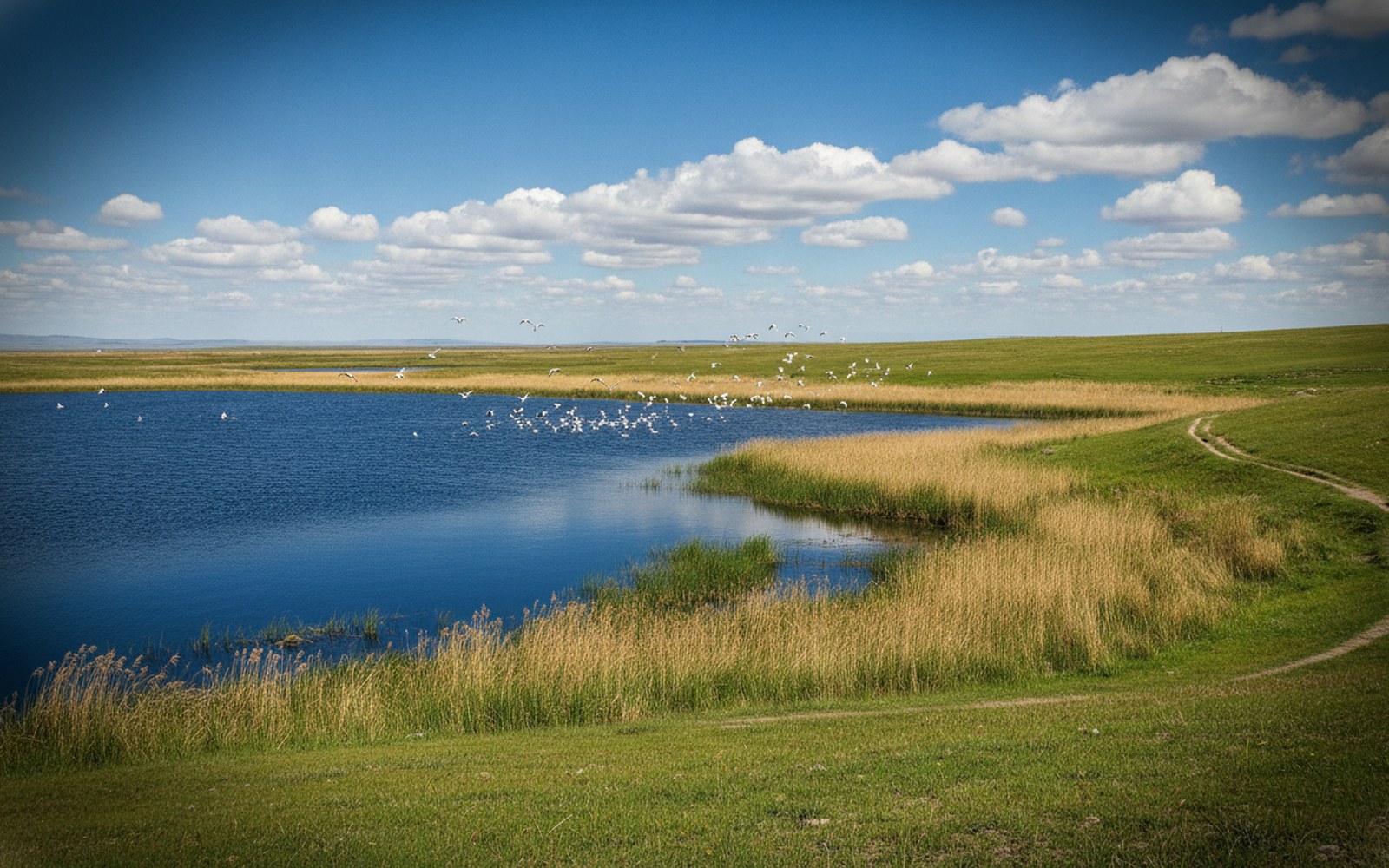
A freshwater lake surrounded by reeds and grasslands, ideal for birdwatching and peaceful walks.
A saline lake adjacent to Keluke Lake, known for its vast expanse and unique ecosystems.
A scenic mountain north of Delingha, featuring ancient cypress forests and panoramic views.
A highland freshwater lake south of the city, an important habitat for migratory birds.
Dedicated to the renowned Chinese poet Haizi, who wrote a famous poem about Delingha.
A modern facility offering interactive exhibits on astronomy and space science.
A landscaped riverside area along the Bayin River, popular for evening strolls and leisure.
Mysterious iron pipe-like formations near Toson Lake, sparking theories of extraterrestrial origin.
A landmark tower in the city center symbolizing ethnic harmony and progress.
Best Time to Visit
Each season offers a different side of the city.
Spring · Mar–May
Mild weather and blooming landscapes — comfortable for exploring.
Summer · Jun–Aug
Warm days; highland areas stay cool while lowland cities get hot and humid.
Autumn · Sep–Nov
The best season in most of China — crisp air, clear skies, and golden light.
Winter · Dec–Feb
Cold in the north, mild in the south. Fewer crowds and lower prices outside holidays.
Suggested Itineraries
Three carefully-paced plans for your trip.
1-Day Express
Start with a morning visit to Keluke Lake and Tuosu Lake, known for their contrasting freshwater and saltwater ecosystems, then explore the mysterious 'Alien Ruins' site. In the evening, stroll along the Bayin River to enjoy the city's illuminated skyline.
2-Day Classic
Day 1: Hike in Bai Shu Mountain (Cypress Mountain) for panoramic views of the Qaidam Basin, then visit the Haizi Poetry Museum dedicated to the poet who wrote about Delingha. Day 2: Take a full-day excursion to Keluke Lake and Tuosu Lake, including the Alien Ruins, and return for a local Mongolian and Tibetan cuisine dinner.
Local Tips
Insider knowledge for a smoother trip.
Plan your trip between May and October, especially June to September when the weather is mild and the lakes are at their most scenic.
Delingha sits at about 2,980 meters above sea level. Take it easy on the first day, stay hydrated, and avoid strenuous activity to prevent altitude sickness.
The Delingha Airport and railway station connect the city to Xining and other destinations. Rent a car or hire a local driver for day trips to nearby attractions.
Due to large temperature differences between day and night, bring layers, a warm jacket, sunscreen, sunglasses, and lip balm even in summer.
Don't miss the twin lakes of Keluke and Tuosu, the mysterious 'Alien Ruins', and the scenic Baishu Mountain area.
FAQs About Delingha
Quick answers to common questions.
Ready to Explore Delingha?
Let MagicTrip build the perfect Delingha itinerary — tailored to your interests, pace, and budget.